Lee Barrett

Lee Barrett believes in the inevitability of self-publishing, embracing the new power that authors have to shape their own destinies.  Learn more about his novel, how he embraces social networking, and the sort of marketing you should be doing as you write.

1. Give me the “elevator pitch” for your book in five to ten sentences.

Barge Pilot is a novel exploring modern fatherhood (at least, modern fatherhood prior to the Great Recession).  Jack Webber is a mostly retired lawyer grappling with the dual burdens of chronic disease and a strained, almost non-existent relationship with his sons.  Faced with the apparent suicide of Jack’s friend, who also happens to be the town drunk, Jack and a well-developed cast of characters try to find their way through the pitfalls of modern manhood.

2. Why did you become an indie writer?

With the exception of a few wild cards like J.K. Rowling and the like, there seems to be a real “career track” for becoming a professional, traditionally published author.  Although writing has always been vital to my personal sanity, that was not a career track that spoke to me.  In fact, I have sort of instinctively believed that I needed to reach a point in life where I finally had something to write about and that required that I have a career, a family, and engage in some of the great adventures that make up life.


Continue reading

Nicholas A. White

Clemson University student Nicholas A. White stays plenty busy with classes and university life, but has recently added self-publishing to his resume.  Learn more about his novel, Forever in Carolina, and the multifaceted approach to marketing he is taking.

1. Give me the “elevator pitch” for your book in five to ten sentences.

Jason Wyatt vowed that he would fulfill his deceased brother’s collegiate-football dreams.  Despite a growing number of injuries, he is willing to risk anything, even his health, to uphold that promise.  With recruiting underway and a football future imminent, he meets Riley, a green-eyed beauty, with a haunting and unforgettable past and an overprotective father.

Jason tries to balance young love with football, and as he nears high school graduation, he is confronted with a new set of life-altering obstacles to both.

2. Why did you become an indie writer?

Since I am still a student and my schedule isn’t too flexible, I decided that the self-publishing route would be the easiest and most efficient way to get this book out there.

3. Have you been traditionally published? Why or why not?

No, this is my first book.

Continue reading

Ethan Jones

Ethan Jones took some time away from his busy writing schedule to discuss his action-adventure series and why he chose the indie writing path.  Learn why book giveaways work for him and why indie authors have to invest so much of their own time and effort to make their projects a success.

1. Give me the “elevator pitch” for your book in five to ten sentences.

Arctic Wargame is the first book in Justin Hall series.  Justin has been demoted because of a botched rescue operation in Libya, which was not his fault.  Now he’s a desk jockey.  Eager to return to field work, he volunteers for a reconnaissance mission, when two foreign icebreakers appear in Canadian Arctic waters.  His team discovers a weapons stash, along with a plan that threatens Canada’s security.  At the same time, the team falls under attack by one of their own and is stranded helpless in the Arctic.  It is now a race against time for Justin and his team to save themselves and their country.

2. Why did you become an indie writer?

I shopped my two novels, Arctic Wargame and Tripoli’s Target to agents and publishers over the course of 2009-2011.  I received some great feedback.  A few agents asked for a partial manuscript and two or three for a full.  But no one was willing to make an offer or sign a contract.  In the meantime, I kept writing.

I had not considered self-publishing because it seemed like a lot of work and I had truly hoped an agency or a publisher would pick up my works.  Upon the suggestion of a good friend, I dusted off my first novel, Arctic Wargame.  I found three great beta readers, all published writers, and we took a new stab at my gibberish.  Then I worked with two great editors and proofreaders, to create the best possible work.  After formatting it professionally, Arctic Wargame finally saw the light of publishing through Amazon.

Continue reading

C.N. Bring

C.N. Bring writes in the military suspense genre and has stuck to her own style of writing despite pressure from traditional publishers.  Learn why she’s skeptical of Facebook as a marketing tool and why word of mouth is so important to promoting your book.

1. Give me the elevator pitch for your book in five to ten sentences.

Commander Celia Kelly is a perceptive Naval intelligence officer rebuilding her life after the tragic death of her husband.  The suspicious suicide of a fellow officer has Celia questioning the mission she’s been assigned.

With the help of a one of a kind secretary, a by-the-book assistant, and a Navy SEAL, Kelly discovers she’s been set up.  Digging relentlessly, nothing is as it seems.  Someone is after twenty million dollars that disappeared when Kelly’s husband died and now that someone is after her.

2. Why did you become an Indie writer?

I was almost published traditionally, but I was asked to change the story too much.  The series is not a romance, but instead a military mystery, suspense.  The traditional publisher wanted to add a formula romance to the story. Though I wasn’t opposed to changes that might enhance the story, I was against losing my original audience. Truthfully, romance isn’t really my thing.  To be successful, we all have to find our own voice unlike anyone else’s. The hardest part about the business is they (publishers) want a safe sell.  They want a familiar story with a new voice.  It’s the publishing catch-22.  So I started to explore indie publishing.

Continue reading

R.M. Kelly

Author R.M. Kelly enjoys the art of writing and was inspired by her work with a small indie press to go into self-publishing.  Learn why she focuses her marketing efforts on the indie community, rather than traditional media, and which vendor she favors for book covers.

1. Give me the “elevator pitch” for your book in five to ten sentences.

My collection of short stories, Shorter Than The Wick, includes three about the Ghost Files team and their tales on a reality ghost hunting show run by idiots who happen to meet spirits from the other side. Another story is about a husband and father looking for any kind of forgiveness from his family during the Arab Spring after a tragedy.  One of my favorites is about the oldest vampire on earth loosing her ability to seduce blood from mortals after falling in love with a very modern man.

2. Why did you become an indie writer?

Because telling stories, creating worlds for a reader to live in, really comes naturally to me.  Writing is simply a part of me and the way I look at the world.  It’s fun and enraging at times but always important for me to have the time and opportunity to tell stories.

3. Have you been traditionally published?  Why or why not?

Well I’m an editor for a small indie e-book publisher, nuever.com, so that was simply what felt like the best approach to publishing. Getting my books out in the new medium as the e-book market grows.

Continue reading

Diana Nixon

Belarusian author Diana Nixon has realized numerous benefits with self-publishing and has begun her own fantasy book series.  Learn more about the sites she uses to promote her work and the one thing any author needs to ensure quality writing.

1. Give me the “elevator pitch” for your book in five to ten sentences.

The name of the book is Love lines.  It’s the first book of a fantasy series under the same title.  It shows the inner world of supernatural beings, their talents and powers.  Love lines is a story about beautiful love and true friendship. It’s a book for all ages with some humor and complicated relationship.

2. Have you been traditionally published?  Why or why not?

I’m a self-published author and I’ve never published my books traditionally.  Before publishing my first book I read a lot of blogs discussing the advantages and the disadvantages of self-publishing.  The control over the process was the main thing that made me choose self-publishing.  I can create covers I like, I don’t have to make changes about the book which I wouldn’t like, and I can choose marketing techniques I’m sure will be successful.  And finally, I want to be sure I have done everything possible and maybe even impossible to promote and sell my book, as sometimes the authors are not satisfied with the same work most publisher do.  I know how I want things to be done and I’m sure no one else can do them better than I do.

Continue reading

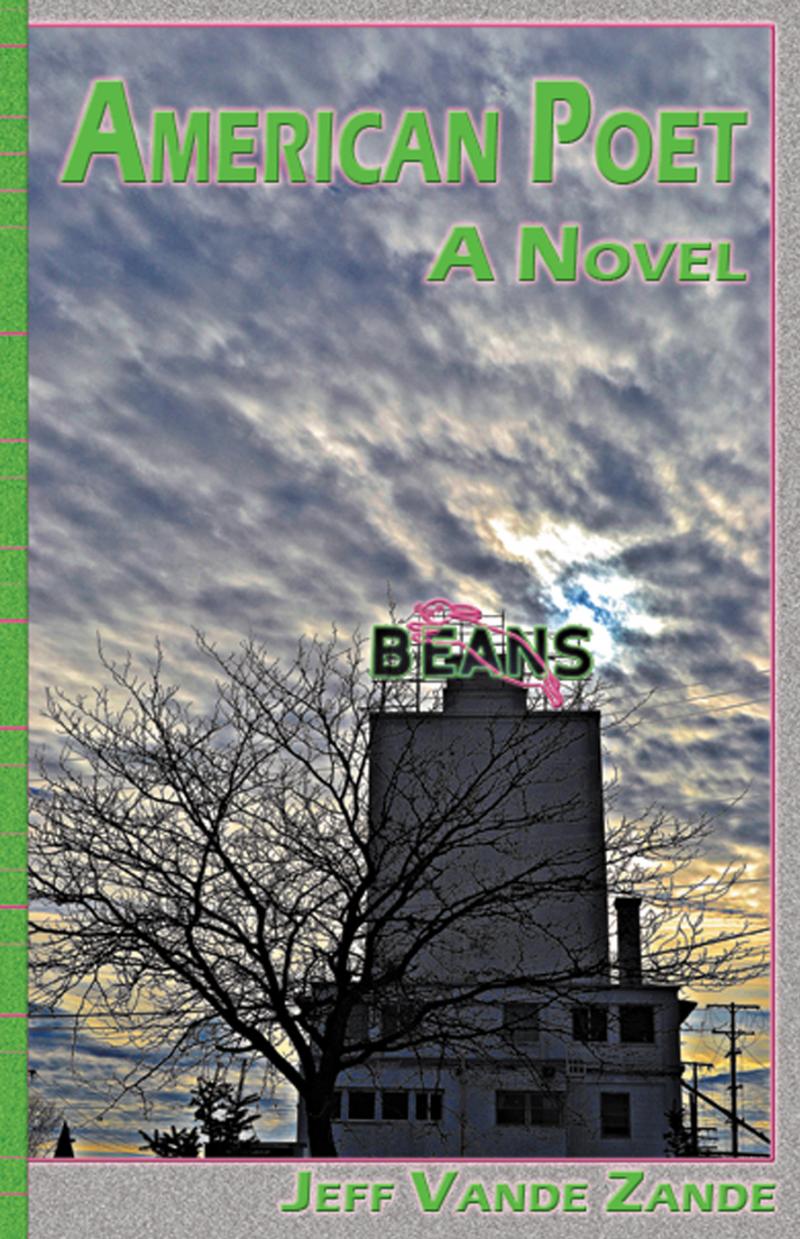
Jeff Vande Zande

Jeff Vande Zande has had success with small press publishing, an experience which has helped him positively adjust his expectations about success.  Jeff discusses that along with his thoughts on book signings and reaching your target audience.

1. Give me the “elevator pitch” for your book in five to ten sentences.

It’s a novel about poetry, Theodore Roethke, fathers and sons, and coming of age in America as an artist.  It’s the story of a young man who comes back to his hometown after an absence, only to find that he hasn’t grown up as much as he thinks.  Denver Hoptner graduated from the University of Michigan with a degree in writing poetry.  He returns to his boyhood home in working-class Saginaw, Michigan, and discovers just how little the world of work cares about his degree.  He struggles, too, to come to terms with his widower father.  After he hears that there’s been a fire in the attic of poet Theodore Roethke’s boyhood home, Denver commits himself to saving the historical residence, even when no one else seems to care.  It’s in action that he finds his true poetic self.

2. Why did you become an indie writer?

I didn’t really have luck with agents.  I received a few letters that said something along the lines of “Beautiful writing, but not sure how to market this.”  In my experiences with smaller presses, I just found that the editors were more interested in the “beautiful” part and didn’t worry so much about the marketing part.  My experiences with small presses have been positive, if not overwhelmingly lucrative.

3. Have you been traditionally published? Why or why not?

I suppose getting published from a small press is “traditional” publishing, just on a reduced scale.  So, yes, all of my books are traditionally published, but all from small presses.

Continue reading

Announcing my new e-book conversion business

I’m pleased to announce the launch of my new e-book conversion business, E-Literate, specializing in formatting manuscripts for sale on the Amazon Kindle and Barnes & Noble Nook.  Because this is a small business, the costs are lower and the turnaround time quicker.

Properly formatting your book is essential to making sure it’s readable on the Kindle and Nook.  But the formatting process can be time-consuming and frustrating.  That’s where we come in.  We do all the intricate formatting necessary to turn your manuscript into a readable file on both e-readers.  The file is then tested and re-tested to check for the highest accuracy possible.  Finally, we send you the file so you can upload and sell it as an e-book.

Pricing is based on the length and complexity of the manuscript, but our rates are highly competitive.  For more details or for a price quote, send us an email at indiewriting [at] gmail [dot] com, or visit our Facebook page.  We look forward to doing business with you!

Kevin Kierstead

1. Give me the “elevator pitch” for your book in five to ten sentences.

We are focused on small-time threats in America right now: terrorists, “lone-wolf” scenarios, gangs, etc.  We don’t see a real threat in the way of an entire country attacking us.  China, though, is fully capable of attacking us and they have a massive amount of strength–the only thing holding them back, if they decided to do it, would be the threat of a nuclear strike, so this book ponders what might happen if they could figure out a way around that problem.  Ultimately, though, with that as the background story, this is a story about survival after a devastating tidal wave that was over 100-yards tall.  One young man, one young dog, one young woman and one old man come together in unlikely ways and begin to fight through their struggles together.

2. Why did you become an indie writer?

Honestly?  I have a problem with authority!  But it wasn’t just that.  I did the whole agent/publisher dance on and off for 20 years.  Back in 1994, when I finished my first novel, I had it accepted by an agency called the Thornton Literary Agency and it was scheduled to be published under the Electric Umbrella but their company went into a hiatus and the rest is history.  That kind of unpredictability along with the growing trend of agents/publishers chasing “what’s hot” vs. looking for new talent in any genre is what pushed me here.  I love nothing more than having total control over my work.  Except for writing.

Continue reading

Victor Dandridge

Victor Dandridge is a cartoonist at heart, and channels his creative energies through his publishing outfit, Vantage:Inhouse Productions.  Find out the surprisingly simple marketing methods that work for him, and why he doesn’t like doing public readings of his work.

1. Pretend for a moment I’m a reader looking for my next book. Pitch me your book in five to ten sentences.

The end of the world began eight minutes ago.  You didn’t know, you can’t stop it, and now the end is here.  What story would the last eight minutes tell of you?

2. What motivated you to become an indie writer?

I’ve been a fan of comics since I was a kid and have always wanted to work in the industry, initially with the goal of being an artist.  And through the years, I started writing my own stories for the comic universe I had created and things just spiraled from there.  I’ve been a part of the small-press comic community for some years and took the opportunity to challenge myself by writing something different.  With my roots already being so tied to self-publishing, it was only natural to pursue doing even a novel that way.

3. Have you been traditionally published?  Why or why not?

No, my plan has always been to establish myself on my own a bit more before I attempt to go traditional.  I want to see what I can amass on my own so if I did decide to try something more mainstream, I know what I’m bringing to the table.

Continue reading