Marcia Barhydt

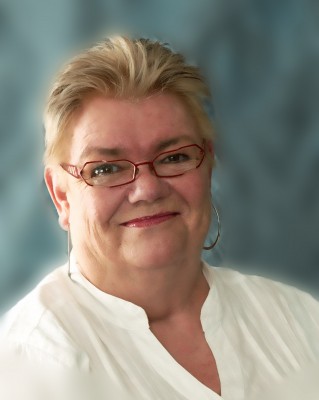
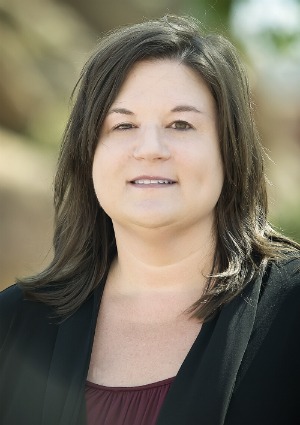
Marcia Barhydt has had success as both an indie author and a traditionally published author.  She talks about working with a publisher and networking with small groups to sell her book.

1. Pretend for a moment I’m a reader looking for my next book.  Pitch me your book in five to ten sentences.

My first book, Celebrate Age, is a collection of articles that I wrote for Timeless Woman about a huge variety of topics of interest to women over 50.  The subtitle of my book is “Thoughts, Rants, Raves, and Wisdoms Learned after 50”.  I talk about a diverse selection of topics including how important our girlfriends are to us now, how it helps our lives to learn how to live in the moment, the pitfalls of online dating for older women, finding balance in our lives, jokes about older women and why they’re bad, and how to get out of the box we sometimes find ourselves in.

2. What motivated you to become an indie writer?

For 32 years I was a flight attendant.  When I retired at age 55, I decided to do what I knew best and became a self-employed customer service trainer.  After about five years of doing that, I started writing a customer service column for a local paper and that led to me writing for Timeless Woman.

Since I didn’t get paid by Timeless Woman, I thought I could make up a small income if I turned my articles into a book.  And I also thought I might be able to touch more women, to give them my thoughts on some of the issues that we face today.  I knew nothing about publishing, so I decided to do it myself.  Ergo, an indie writer!

3. Have you been traditionally published?  Why or why not?

My upcoming book, One Small Voice, will be published by a traditional publisher.  And I’m doing that because I have the money to afford that now and, don’t laugh, but my publisher can do the formatting of this next book for me.  I did the formatting for Celebrate Age and it made me nuts!  I hated doing it!  Self-publishing left me with a good looking book; a publisher will leave me with a great looking book that looks more professional.

4. How have you liked self-publishing so far?

I was fortunate with my first book to know a woman, my printer, who gave me lots of tips about making the cover, the index, and formatting the pages.  I’m glad that I’ve self-published, glad for the knowledge and experience it gave me, and especially glad to know that I could do it again any time I wanted to.
Continue reading

Kathy Lynn Harris

Kathy Lynn Harris has had success as an indie author with her book, Blue Straggler.  She talks about why self-publishing was an attractive alternative to the traditional model and the role pricing has had in selling her books.

1. Pretend for a moment I’m a reader looking for my next book.  Pitch me your book in five to ten sentences.

Ah, the elevator pitch!  Here you go: being a 30-something, fairly directionless single female in South Texas is a world all its own.  Kathy Lynn Harris’s Blue Straggler is a laugh-out-loud, yet poignant, exploration of that experience — from the quirky, memorable characters who make up Bailey Miller’s circle of family and friends to that feeling of your makeup sliding right off in the humidity.  You will easily identify with Bailey’s sometimes humorous, often semi-tragic, choices that eventually lead her out of Texas, to a small mountain town in Colorado, and back.  Along the way, she searches for not only herself but also answers to long-held secrets from her “legitimately unbalanced” great-grandmother’s past.  Bonus: She may even find love with a moody mountain man along the way.

2. What motivated you to become an indie writer?

With the help of traditional literary agents, I shopped two of my novel manuscripts around.  All the big houses told me the stories were “too quiet.”

I travel for my day job and saw that more and more people were using e-readers.  I knew Amazon and Barnes & Noble had programs for publishing e-books.  I revisited my main goal for my writing: to simply have others read my work and enjoy it; not to have my name on a blockbuster published by Simon & Schuster.  So, I thought, why not just put the book out there?  It’s been such a great experience.

3. Have you been traditionally published?

I have had numerous works printed in traditionally published anthologies.  And now, thanks to the success of the e-book version of Blue Straggler, an independent publisher, 30 Day Books, has picked up the book.  The paperback version comes out March 1.

Continue reading

A.L. Collins

Fantasy writer A.L. Collins has turned an endless imagination into a cottage industry of writing.  His unique and creative approach to marketing – even involving scent candles to reference things created in his books – is presented here.

1. Pretend for a moment I’m a reader looking for my next book.  Pitch me your book in five to ten sentences.

People say to learn from the past, but that’s not always an easy thing to do.  Especially when your past has been literally erased from view.  Rigil thought he was normal.  He wanted to protect what little he had from the rest of the world.  But things did not go as planned when a shadow organization of immense power stormed his hometown, burning it to the ground.  Now he’s running for the capital city, praying he makes it in time to warn of the doom lurking overhead.  As he travels with a gypsy, a shapeshifter and a witch, Rigil combats enemies and black magic wherever they may arise.  However, the young man will soon learn that the road through the darkness is a harrowing experience when one tries to go it alone.

2. What motivated you to become an indie writer?

I’ve always loved storytelling.  I adore making people feel things they haven’t felt before.  I think that as I grew older I realized that my imagination was just overwhelming at times, so much so that I lay awake at night dreaming up wild adventures.  A lack of excitement in my younger life coupled with my fascination with people, personalities and characters is what really made me realize that writing is really what I wanted to do.

3. You have not been traditionally published.  Why?

For a few personal reasons I haven’t been traditionally published.  Not every publisher can discover every breakthrough book.  So many good ideas get lost in the shuffle.  And this is also a career just as it is a passion.  I had people to support, friends who counted on me.  I decided to take my future into my own hands.  I hoped that if I was any good at writing these stories, then the fact I didn’t get traditionally published wouldn’t matter.  Maybe the stories would shine through on their own.  I am still looking for options, but I’ll continue writing regardless of my publication status.

Continue reading

Ted Gross

Ted Gross is a short story writer who’s busy with a variety of writing projects.  In this interview he offers a laundry lists of recommendations for indie writers to successfully get their books out there.

1. Pretend for a moment I’m a reader looking for my next book.  Pitch me your book in five to ten sentences.

Ancient Tales, Modern Legends, a short story collection by Ted William Gross, presents the reader with engaging and thought-provoking stories spanning the ages.  Covering subjects of love, loss, pain, desire, need, frustration and hope, these stories are meant to entertain as well leave an indelible impression upon the reader.

This is not a book to dismiss easily.  Enjoy it, grow with it.  You will, in turn, be haunted by it and the stories will remain with you long after you have closed the pages.

As almost all authors will tell you, their work in writing is a labor of love.  “Ancient Tales, Modern Legends” is a collection of stories that were written over many years, sometimes in great pain, sometimes with great joy, and is certainly a labor of love for both the author and the reader.  As colleagues read them, and some were published, I was prodded to publish the rest.  It is my hope that they will make you, the reader, stop and think, perhaps just about the waywardness of life.  They all are short stories in the pure art form of this genre.

2. What motivated you to become an indie writer?

I followed the industry for many years.  I have watched the indie book explosion.  I have also closely watched the trends.  My feeling is that the days of traditional publishers where they were the “bully” on the block has come to an end.  It is an age of “let the reader choose”.  You can write just so many query letters, have just so many books accepted and then cancelled on you before you either give up or find another avenue.  Indie book publishing offers another avenue.  And it is becoming more and more legitimate in the eyes of readers.  And certainly easier to actually go through the “publishing routine”.

In the end, simply a matter of practical thought and decision.

Continue reading

Sean MacUisdin

Sean MacUisdin is a sci-fi writer who lets his imagination tell the story.  Sean talks about balancing writing and marketing and why he’s exploring the use of e-book trailers on YouTube.

1. Pretend for a moment I’m a reader looking for my next book.  Pitch me one of your books in five to ten sentences.

Were you ever afraid of boredom more than the unknown?  Did tedium and predictability, those bywords so often associated with the responsibility of adulthood, give you pause for a moment, and inspire you to do the unexpected?  Meet Alexander Armstrong: seventeen years old, poised to graduate high school and preparing for the comprehensive education and career laid out by his parents. That is until, fueled by an immature desire for adventure, he stole away one night and hopped a train for Vancouver where, in a fit of teenage pique, he signed up for service in the United Nations Off-World Legion.

Eight weeks later, as he jumps from the bed of a transport truck into the mud of the colony of Samsara, twenty light years from Earth, Alexander is confronted not by a sterile and deliberately planned colony of his dreams but by a world of transplanted tribes, warlords, and refugees.  It is a world where the tundra camel and steamboat reign supreme over the trackless steppes and mountainous lakes and rivers; where pirates, Chinese Tongs, Kazakh bandits, and Gliesiun warriors pale before the presence of his decuria leader, Subedar Angus Motshwega, better known throughout the Legion as MacShaka the Tartan Zulu.

2. What motivated you to become an indie writer?

To be honest, I was motivated by what often felt like insurmountable odds in getting my book to print.  Agents, publishers, awards, and no end of luck seemed to be the factors I needed to bring my books to print, so I opted, after a course at the local college, to take the e-book approach.

3. Have you been traditionally published?  Why or why not?

I have only had a poem published in a Canadian anthology.  I tended to write more than market, since I spent much of my time over the last decade away with the Royal Canadian Navy.  It’s only recently with a shore posting that I have had the time to concentrate on marketing my books.

Continue reading

Gilly Fraser

Gilly Fraser has been traditionally published and so has seen both sides of the writing profession.  She advises indies to edit their books and work tirelessly to get them in the hands of readers.

1. Pretend for a moment I’m a reader looking for my next book.  Pitch me your book in five to ten sentences.

If my book Forbidden Love and Other Stories were to be reborn as a curry, it would be hotter than a korma, but not as spicy as a vindaloo.  It would probably be something like a Chicken Tikka Masala!  The four short stories in this collection have nothing in common except romance, and a touch of humor.

In Slippery When Wet, Maxine has to decide if she’s living a dream come true or a nightmare when the man of her fantasy turns up unannounced in a swimming pool.

In the title story Forbidden Love, rock star Jake Lee is drawn back to his roots and the girl who first inspired him.  But has he left it too late to go home?

In The Great Pretender, a tale of love and retribution is played out through the ages – but not unobserved.

And in Melissa and the Cowboy, lust can happen along at the most inopportune moment.

2. What motivated you to become an indie writer?

I love the independence of it.  It’s not an easy option – far from it – but I relish the opportunities and the freedom it affords to the writer.  I’m aware that this freedom is open to abuse by those who are content to publish sub-standard material and so it’s up to those writers who genuinely love their craft to produce the very best work possible.

3. Have you been traditionally published?  Why or why not?

Yes – I had nine books published by Mills & Boon under the pen-name of Rachel Elliot and I’m very proud of that.  I hope the rights will soon revert to me so that I can publish the backlist, though I’m quite keen to rewrite the books to some extent to make them fresh and up to date.

Continue reading

Kathryn Jones

Kathryn Jones has worked with a local publisher, but chose to self-publish after learning she could make more money doing it herself.  Here she explains her use of postcards and CreateSpace as part of an overall marketing strategy.

1. Pretend for a moment I’m a reader looking for my next book.  Pitch me one of your books in five to ten sentences.

Struggling?  Want to make your life better?  Perhaps you feel as if your life is already taking you down the right path.  Want to improve it?  Try talking to God.  Conquering Your Goliaths: A Parable of the Five Stones is for anyone desiring to travel beyond mediocrity, pain and fear.  Want to take your life to the next level?  You’ll want to read this book.

2. What motivated you to become an indie writer?

I like having my hand in all of the variables of publishing: book cover creation, formatting, marketing….

3. Have you been traditionally published?  Why or why not?

Not traditionally in the sense of a national publisher picking up my book, but my first book was published by a local publisher.  I did most of the marketing and figured that I could make more money doing the book myself while still being able to market my book.

4. How have you liked self-publishing so far?

I love it!  My husband is a big help; he has learned to do all of the formatting, all of the technical stuff to get a book looking great, and I help him decide on a cover and the general layout of the book.  CreateSpace is a great place to get your work published.  Less than $50 is spent getting a title in print, and books are printed as they are sold (POD) so the investment is small.

Continue reading

Stuart Carruthers

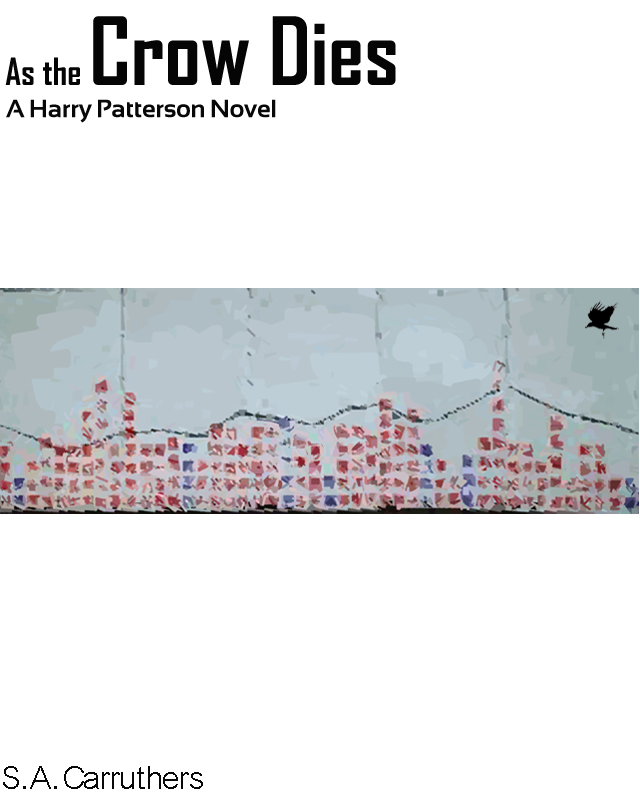
Stuart Carruthers, author of As the Crow Dies, had two very good reasons for skipping the traditional publishing route: speed and creative freedom.  He explains why reviews are important and why you should create a buzz around your book before it’s released.

1. Pretend for a moment I’m a reader looking for my next book.  Pitch me your book in five to ten sentences.

A high speed, action packed novella set in China.  Hong Kong resident and journalist Harry Patterson is sent to investigate a mundane story about a new CEO at a technology company.  But when there’s a murder and the secret service are involved, Harry’s world gets turned upside down and it leads him to discover more about the underbelly of China than he ever knew.

2. What motivated you to become an indie writer?

Fear of rejection!  But seriously I think it’s a sure fire way to get your book out to the public in the quickest time.

3. Have you been traditionally published?  Why or why not?

No.  I opted not to spend my time touting the book to agents for a couple of reasons: (i) speed; it takes a long time to get an agent and then if you get lucky, sell it to a publisher who then takes a year to get it to market (ii) I have more creative freedom; if the book doesn’t sell, I can revise the description and the content to push things in a different direction.

4. How have you liked self-publishing so far?

It’s early days, I only published the book at the end of January, so I haven’t really come to grips with marketing it or myself.

Continue reading

Paul Mila

Paul Mila, author and underwater photographer, makes the ocean an integral part of his writing.  Although he uses social media, he also makes presentations at trade shows and speaks before groups to market his book.  He discusses this and a host of other techniques he suggests.

1. Pretend for a moment I’m a reader looking for my next book.  Pitch me one of your books in five to ten sentences.

Dangerous Waters is the perfect book if you’re looking for an enjoyable, easy beach read while relaxing under a coconut palm.  Appealing to divers and non-divers alike, the story is a fast-paced, action-adventure thriller about a young woman’s struggle to overcome adversity.  Dangerous Waters has all the ingredients for a gripping undersea adventure: ferocious sharks, friendly dolphins, nefarious criminals, and enough chemistry between an athletic, sexy heroine and a bold, yet sensitive, hero to spark romance in the steamy Caribbean.

2. What motivated you to become an indie writer?

I accidentally fell into the indie class as a result of deciding to forge ahead despite rejection from the traditional publishing channels.
My philosophy: I’d rather be self-published than non-published.

3. Have you been traditionally published?  Why or why not?

Nope.  Why not?  It’s not for lack of trying, since I sent numerous query letters to agents for each of my three novels before deciding to self-publish.  Who knows why the traditional community of agents and publishers rejects authors and manuscripts?  They have many reasons.

4. How have you liked self-publishing so far?

Self-publishing has been both wonderfully rewarding, and also extremely frustrating.

Rewarding because of the many unsolicited e-mails I’ve received from readers who enjoy my books, and from the incredibly interesting people I have met, and with whom I have become friends, along my literary journey.

Frustrating because you are continually fighting the never-ending credibility battle: convincing bookstore to carry your books, convincing reviewers to review your self-published book, convincing people to buy your book.

Continue reading

Petra Kidd

Petra Kidd is a short story writer who is new to self-publishing but has already learned a great deal.  She explains why marketing must be a constant focus of authors, why she doesn’t use KDP Select, and why she works hard to avoid spamming potential customers.

1. Pretend for a moment I’m a reader looking for my next book.  Pitch me one of your books in five to ten sentences.

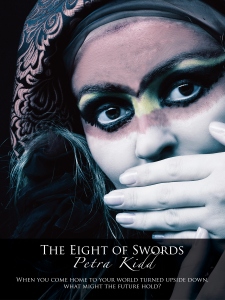
The Eight of Swords takes you through Jayne Patchett’s thoughts and emotions when she arrives home to find a family of Romanian gypsies has taken over her house.  It makes you wonder what you would do in the same situation.  Her reactions might surprise you and you will be compelled to read on to find out what her actions are upon this discovery.

It’s a short story but a big story!

2. What motivated you to become an indie writer?

I had been studying the rise in e-publishing with interest for some time.  The idea of having total control over the cover design, format and getting instant feedback particularly appealed to me.  I am not a terribly patient person and I like to see results quickly.

3. Have you been traditionally published?  Why or why not?

I wrote a couple of novel manuscripts around ten years ago and spent some time sending them out to agents only to receive rejections. Although I was keen to carry on writing, I’d just started a business and that took over my life so seeking a traditional publisher went by the wayside.  In a way I am glad I didn’t have success at that time.  With hindsight I can see how much my writing has improved and I have learned a lot over the past ten years.  I wrote a weekly column for the Eastern Daily Press around five years ago and that was a real turning point for me.  It was very encouraging to have such a large regional paper be prepared to pay me for my writing and it gave me confidence to continue.

Continue reading