Anderson O’Donnell

Anderson O’Donnell specializes in dystopian fiction and constantly feeds his healthy addiction to the art of writing.  Anderson talks about making the most of social media and going beyond its superficial uses to enhance his marketing efforts.

1. Pretend for a moment I’m a reader looking for my next book.  Pitch me your book in five to ten sentences.

Kingdom is a thrill-a-minute, bio-punk myth that manages to wrestle with the most pressing issues of the new millennium.  It’s a novel of tomorrow night, when the big party gets raided by the monsters we’ve been building for the last half-century.  Hip and hellish, wild and weird, Tiber City is the dystopian megalopolis into which we will all soon move—whether we know it or not.  Toss William Gibson, Andrew Vachss and David Fincher into the petri dish, irradiate them, then infuse the result with Transylvanian meth, and you’ll have some sense of what the reader can expect.

2. What motivated you to become an indie writer?

Frustration with how risk-adverse the traditional publishing industry has become.  I get it: sales margins are razor thin, and the natural inclination, in any industry, is to reduce risk.  But for the writing and publishing industry, risk reduction means going all in on books by a recognizable brand name—Snookie, for instance.  I mean, that’s their answer…Snookie.  But like I said, I can’t blame them.

3. Have you been traditionally published?  Why or why not?

No, I haven’t been traditionally published, but not for lack of effort.  I sent out query letters to a number of agents and publishing houses, and while Kingdom attracted some interest, nothing panned out.  But I received good feedback from a few other traditionally published authors, enough so I decided not to stick the project in the desk drawer.  I believe in Kingdom; and I think readers are going to respond to the world I’ve created.
Continue reading

K. Ford K.

K. Ford K. went from freelance writing to indie publishing, finding frustration along the way with traditional publishers.  Now enjoying the freedom of self-publishing, K. discusses the varied tools she uses to reach readers.

1. Give me the “elevator pitch” for your book in five to ten sentences.

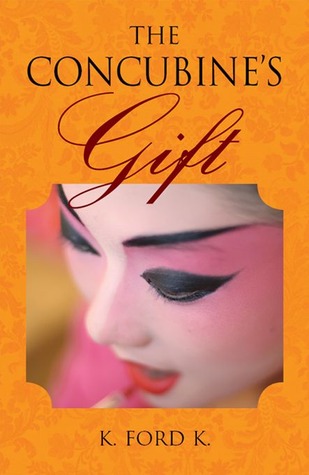
What if a timid, sexually-inhibited woman suddenly developed the psychic ability to see what everyone else needed to be blissfully happy in bed?  And what if she started blurting out sexual advice against her will?  That thought was the seed for my new novel, The Concubine’s Gift, and the poor, long-suffering character of Bernice Babbitt was born.

2. Why did you become an indie writer?

I became an indie author by choice.  I was a freelance writer, publishing articles and short stories in newspapers and magazines and had several near misses with major publishing houses.  Many times they decided to publish my novels and then changed their minds at the last minute.  I was starting to feel like I was in an abusive relationship.  Editors told me they loved my work; I cozied up to them and then they slapped me with a rejection. After awhile I was back and the same thing happened all over again.  ‘Indie-authorhood’ has been wonderful.  I love being in charge of my own career and being able to make all the editorial and marketing decisions about my novels.  I’ve been lucky in that readers have been very supportive.

3. Tell me about the marketing techniques you’ve used to sell your books.  Which ones have been the most successful?

Some of the marketing techniques that have been the most successful were getting book bloggers to review my book and being active on the Goodreads site.  I have hosted lots of book giveaways and those are always fun.

4. Are there any marketing techniques you intentionally avoided or discontinued, and if so, why?

I have my novel listed on Amazon’s KDP Select.  The best thing is the free days of promotion but I think I will discontinue after one more month so that I can list the book on other sites such as Smashwords.

Continue reading

A.D. McLain

A.D. McLain writes across a variety of genres, most notably in paranormal romance, and has seen both the indie and traditional sides of publishing.  She discusses her latest work, Suriax, and explains the variety of direct marketing tools she uses to reach new readers.

1. Pretend for a moment I’m a reader looking for my next book.  Pitch me your book in five to ten sentences.

If it was legal to kill, would you?  Welcome to Suriax, a city where killing is accepted as normal and laws mean everything.  Kern must grapple with questions of morality, destiny and a queen who wants him dead.  Throw in a pact with a god and you have an event that will change the people of Suriax forever.

2. What motivated you to become an indie writer?

I love the freedom to set my own prices, run my own contests and free promotions, design my own cover and have control over when the book is released.  Whether you self-publish or go through a publisher you have to do almost all your own marketing.  The only difference is how much you get paid for your work.

3. Have you been traditionally published?  Why or why not?

I went through publishers and agents for my first two books.  That experience was disappointing.  The marketing my publishers did for me was miniscule, and I was constantly sent emails on how if I just paid them x amount of dollars they would do some additional marketing.  After six years of doing all my own networking and learning everything as I went along, I met other authors who went the self-publishing route.  The free services provided by sites such as Smashwords and Createspace are a far cry from the vanity publishers of the past.  There isn’t as much of a stigma now in self-publishing.  I don’t think I will ever go back to the old way.  I learned a lot from my other publishers, and I don’t regret the experiences, but I am glad I have another option.

Continue reading

Diane Schochet

When Diane Schochet befriended another writer who in turn started her own publishing company, she was able to publish her book and see her literary dreams realized.  Diane talks about her book, the specific marketing tools she uses, and a tip that worked for her son’s book as well.

1. Pretend for a moment I’m a reader looking for my next book.  Pitch me your book.

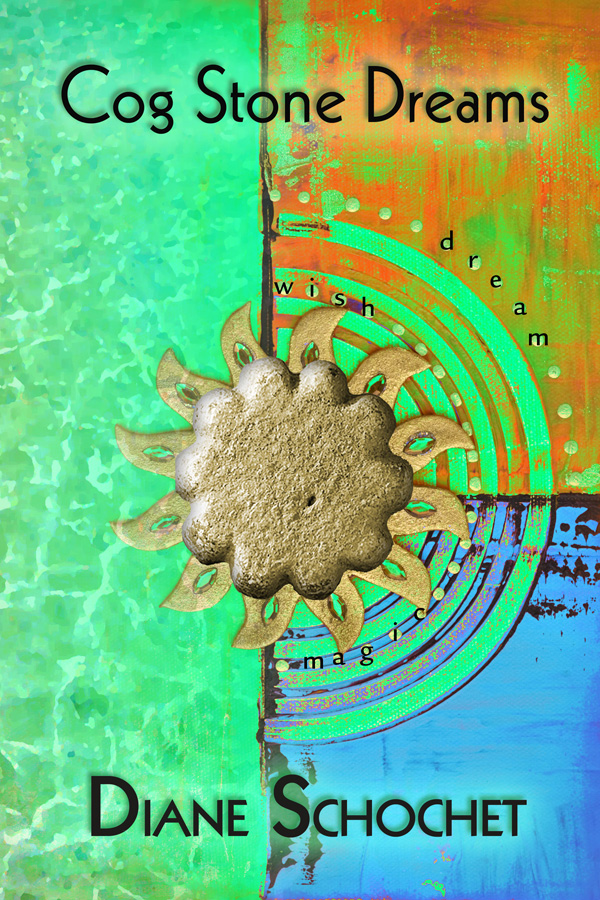
Cog Stone Dreams is about Dessa and her mystical, magical, humorous love story.  It is about the bow and arrow murder she witnesses, 9,000 years of history she encounters in her dreams, and includes Jewish themes and the perfection, degradation and restoration of wetlands in California.

2. What motivated you to become an indie writer?

I’m not an indie writer.  A couple of years ago, I took an online advanced UCLA novel writing class.  A classmate liked my writing.  I liked hers.  We met and became friends.  Then in 2011 she informed me that she was becoming a publisher.  Her deceased aunt, Carol Fenner, had left her literary collection to my friend.  Carol, who had won Newberry awards, a Coretta Scott King award and two other awards, had one book that hadn’t been published.  My classmate decided to publish her book, my Cog Stone Dreams book, and some books that she had written, and opened Red Phoenix Books.

Doctor Claudia Alexander, my publisher at Red Phoenix Books, is a scientist.  She says my genre is environmental fiction.  But I’m not a scientist so I say my book is Jewish magical realism.  (Think Isaac Bashevis Singer.  I’m aiming high.)  However, the environment may be a better selling point.  The story is mostly set on Southern California wetlands.  Amazon.com puts books about wetlands in their Lakes and Ponds category.  Today the Kindle Edition of Cog Stone Dreams is the number 17 bestselling and the number 1 best rated in the Lakes and Pond category.  It has been among the top three Lakes and Ponds book for three months now.

3. Have you been traditionally published?

Yes.  Non-fiction articles in magazines.

Continue reading

Jessica Caris

Jessica Caris likes to explore the boundaries and ranges of the human experience with her writing.  The author of Breeding in Captivity and a former television writer and literary publicist, Jessica discusses her focused marketing techniques.

1. Give me the “elevator pitch” for your book in five to ten sentences.

Naomi Carter is a fast-rising, romantically-challenged professional, who aches to get married and have a family.  After many first dates which never lead to a second, she is introduced to a handsome client.  A whirlwind courtship ensues, and she blinks an eye and is married, finally!  Like bad egg salad, things spoil quickly, and she suddenly finds herself pregnant, mother to a toddler, and divorcing. With all of her accounts mysteriously cleared, our spoiled princess is broke.  Travertine gives way to Pergo and Hermes is replaced by Target.  Just as she clawed her way up the corporate ladder, our heroine finds the moxy to overcome circumstances that would have reduced many women to a long “goodnight” with a fistful of Vicodin and bottle of Belvedere.

This book will remind any woman, young or old, married or single, who has ever thought her life was “ruined” or “over”, that a superhuman strength she never knew existed, resides deep within her.

2. Why did you become an indie writer?

I’ve always been a writer in some capacity.  I’ve written for TV at CNN and Bloomberg and as a corporate writer have had articles published, mostly in national trade magazines, such as Barron’s, Career College Central or Tennis Magazine, to show the wide and wacky range of industries I represent.  The dream to write a book was always there but when I was pregnant and going through a divorce, I was incredibly hormonal and emotional. The experience inspired me to finally embark upon my first book.  I eat books for dinner some nights, and when I was going through this transition in my life, I was disappointed at the lack of fiction writers brave enough to cast a single mother as a heroine, and one who was inspirational, fun and funny.

My father is a beautiful writer and a clean, Spartan, funny one.  When I got those first few sentences out, he was tireless in his encouragement. It’s so hard not having a perception of whether your manuscript is good or birdcage-worthy.  He saw that it was a catharsis during a time of crisis and probably knew it was emotionally beneficial for me to work on it.  He never got bored hearing about how I was developing my character or changing the narrative voice or killing a scene.

Continue reading

Larissa Hinton

YA writer Larissa Hinton is always working on both her writing and her marketing efforts.  Read more about some of the specific services she uses and her advice for finding your target audience.

1. Give me the “elevator pitch” for your book in five to ten sentences.

An anthology that will quench your thirst for more than the ordinary.

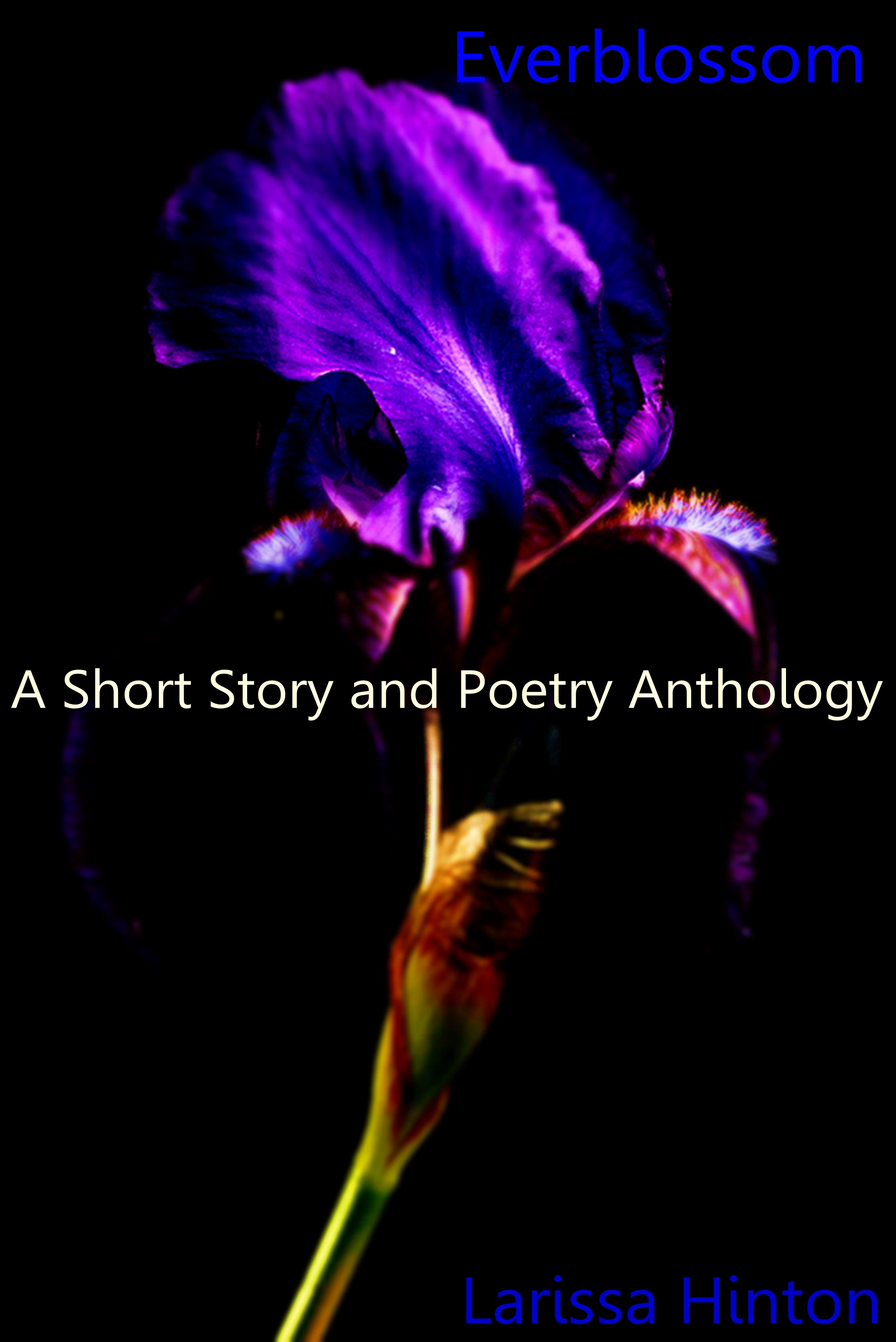
Everblossom is a journey through poems and short stories that may seem ordinary on the surface but which digs a little deeper as the world not only shifts, but changes.

The author who brought you Iwishacana/Acanawishi now brings you a dash of everything from dark fantasy to the paranormal to even romance.  So prepare yourself to delve into the three stages of the flower from bud to blossom then back to seed; you’ll go through them all with a whole new perspective on what it all truly means.

2. Why did you become an indie writer?

Ah, the question everybody wants to know.  Well, before I self-published, I was a staunch traditional publisher junkie.  I sent out query letters to publishers and agents every summer.  And I dreamed of that one day of getting the dream contract.

When the dream became a reality, I could hardly believe it.  There I was, the email of my dreams congratulating me on obtaining a contract and all I could do is cover my gaping mouth and think, “Oh.  My.  God.”

But of course, the contract was faulty so I walked away.  That was the hardest thing I had to do but I survived and started querying once again.  The more I queried, the more I got frustrated that no one saw my talent.  If I was talented to get a contract once, I could get it again. That’s what logic says.

And during this time, a lot or people from Critique Circle loved my book and wanted to buy it and were wondering when I was going to be published.  And it wasn’t just one person, it was multiple people.

Yet no contract came.  Instead, a professor talked about self-publishing and spouted about how much more money an author could make, but I just ignored him until Amanda Hocking’s story came to light.  Then came JA Konrath’s blog.  I read it and I couldn’t help but agree with his arguments.  And he made me laugh.  So after puzzling over the logic and what I thought was my dream of trad publishing, I decided to self-publish.

In short: I decided to self-publish because I was tired of waiting for someone to give me the green light.  Instead, I decided to believe in my books and my readers to find them.  I decided to self-publish and not look back.  And I’m glad I did.

Continue reading

Glenn Langohr

His time in prison, and the life he turned around afterwards, form the basis of Glenn Langohr’s writings.  Learn how he got all seven of his books in the top 100 of their categories and what you can learn by studying other authors.

1. Pretend for a moment I’m a reader looking for my next book.  Pitch me your book in five to ten sentences.

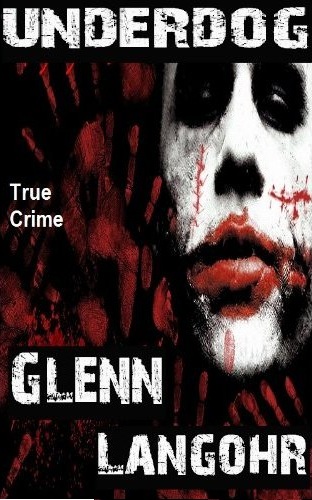
Curious about the drug war, gangs, or the atmosphere in the hardest core prisons in California?  I take you on a journey from a runaway childhood, to addict and drug dealer, into the drug war for an inside look at Mexican cartel wars, corrupt narcotic detectives and a California Prison Union bent on breeding bigger criminals.  Here’s a couple of reviews for my crime thriller, Underdog (Prison Killers Book 4).

“Ex-con Langohr can describe the hell of life inside better than any other writer.  His vivid passages on just surviving in prison describe a nightmare we’d rather not know about.  He compares the plight of abandoned dogs, locked and horribly mistreated in rows of cages in animal shelters, to California prison inmates, locked and abused in the same cages.  Not a book for the faint of heart.  We who sleep peacefully in our beds at night, unaware of the savagery going on behind prison walls, can only thankfully say: ‘There, but for the grace of God, go I’.”  John South, American Media

“With lazer-like precision Glenn Langohr lays bare the festering under-belly of our criminal justice system in a driving, graphic narrative that somehow finds the humanity in this most inhuman setting.” Phillip Doran, TV Producer and Author

2. What motivated you to become an indie writer?

My first novel Roll Call was written from prison and when I got out, I read the Publishing Guide for Dummies and studied a lot of other self-publishing guides.  What I learned excited me to the point I went with Amazon and Createspace to put it in print and on the Kindle.

3. Have you been traditionally published?  Why or why not?

For all seven of my books, I’ve gone indie.  I love the control and freedom of being able to lower the prices, personally engage with readers, and not have to give most of the profits away.  I have published a few articles about the drug war and prison conditions in magazines to build up the expert status on the subjects.

Continue reading

James Strait

James Strait has authored two books and has a third on the way.  He offers some good, detailed advice about how to get on the radio to promote your book, as well as which marketing techniques to avoid.

1. Pretend for a moment I’m a reader looking for my next book.  Pitch me your book in five to ten sentences.

Pretend that there’s a modern democratic republic that has lost its way. Imagine a society in chaos, a political structure compromised by power hungry sociopaths.

Fade to an ultra modern think tank, one whose expertise is genetics, and one that’s discovered that every human cell has a time stamp. And that having the ability to turn the time stamp on and off allows for a clone of any age to be rebirthed.

Picture a cabal of desperate modern times political operatives, with a brand new twenty-first century copy of Thomas Jefferson. Then think the predictable, that the modern Jefferson takes extreme exception to his being rebirthed, that he escapes the clutches of his new artificial deities, and that he goes on the run.

Such is the story line of the newly minted action-adventure novel, Thomas Jefferson is Missing.

2. What motivated you to become an indie writer?

Nothing more than the desire to have some of my thoughts go down in literary history.

3. Have you been traditionally published? Why or why not?

Yes, my first book, Weird Missouri, was traditionally published by Sterling. However, Sterling does not publish fiction; thus, my second book, a novel, has been published independently. I chose an independent house that was within an hour’s drive from my home in order to have some physical connectivity, hoping for some hands-on control of the process.

4. How have you liked self-publishing so far?

While not perfect, it has been a learning experience, a chance to grow, so I’ve loved it.

Continue reading

William Steele

In his engaging and well-reviewed autobiography, My Journey, Major General William Steele recounts his life and military experience.  He discusses why it was so important to acquire an editor and the specific, targeted marketing techniques he uses.

1. Pretend for a moment I’m a reader looking for my next book.  Pitch me your book in five to ten sentences.

This is a unique autobiography and one worthy of your time.  Consider the following reviews:

My Journey is a wonderful story of one man’s lifetime of dedication to his family and to the nation.”—Howard “Bo” Callaway, Secretary of the Army (1973-1975)

“[It is] a story of his life in childhood, in the U.S. Army, in corporate America, and upon his retirement.  [It] includes many interesting and moving details in his life recalled with great clarity . . .”—General William R. Richardson, U.S. Army (Ret.), Commander of the U.S. Army Training and Doctrine Command (1983-1986)

“It is splendid, engaging, written in an appealing conversational style, candid, and told with becoming personal modesty.”—Dr. Lewis Sorley, military historian and author of Westmoreland

2. What motivated you to become an indie writer?

Actually I intended writing about my life to provide some historical record for my family and future generations.  But I wanted it to be written and printed in a professional manner.  I hired an editor to help me achieve that goal.  After looking at the draft, she thought that others might benefit from my experiences and suggested that it be edited and published with that in mind.  At that point we decided to do so.

3. Have you been traditionally published? Why or why not?

No, because I did not start with publishing as a goal and did not approach a publisher for that purpose.

Continue reading

Gary Goldstein

Gary Goldstein turned his personal struggles into an inspiring story about the wages of addiction and the mistreatment he endured in prison.  Learn more about his unorthodox and creative marketing approach and his advice to new writers.

1. Pretend for a moment I’m a reader looking for my next book.  Pitch me your book in five to ten sentences.

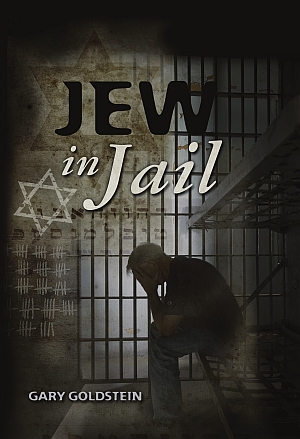
Jew in Jail is the remarkable true story of the nearly six years I spent incarcerated for robbery, which was a direct result of my past addictions to alcohol, drugs and gambling.

If you are fascinated by prison tomes, this book is for you.  It deals with not only the ins and outs of the New York State prison system, but my attempts at recovery from a lifetime of alcohol, drug and gambling abuse, all the while dealing with the constant prejudice and mistreatment I experienced at the hands of the corrections officers and my fellow prisoners alike.  If you have ever been an addict, or know a family member, spouse, friend, or co-worker who is currently battling an addiction, then this book will open your eyes and provide insights into this dreaded disease, and what it takes to get clean and sober.  Read Jew in Jail today.  It just might save your life, or the life of someone you love!

2. What motivated you to become an indie writer?

I had a story to tell, and wanted to help people avoid all of the mistakes and pitfalls I made in life.

3. Have you been traditionally published?  Why or why not?

No, Jew in Jail was self-published through CreateSpace.  As a first-time, unknown author, I found it difficult getting accepted by traditional publishers.

4. How have you liked self-publishing so far?

Being hands-on, I like the fact that I am involved in every aspect of the process.  But, by the same token, doing so much of the work pertaining to the marketing of my book leaves little time for anything else.

Continue reading