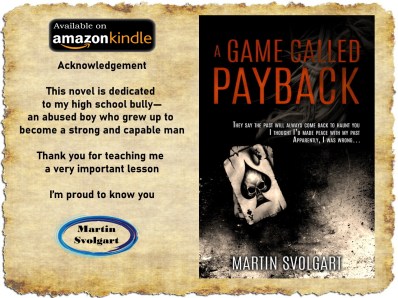
Martin Svolgart has had experience with traditional and self-publishing, and does a good job of comparing them. Learn the pros and cons of each, and why viewing yourself as a brand is so important.
1. Tell me briefly about your latest book – what is it about and what motivated you to write it?
A Game Called Payback is my debut under this name – a psychological crime thriller with bullying as its main theme. Normally, I write under pseudonyms. But the topic here was gathered mostly from my past, and I learned so much from it that I thought it deserved my own name. Mainly because I dedicated the book to my high school bully.
It’s far from an autobiography. In the end, only one sentence ever said to me made it into the book, and the rest is crafted to be entertaining and exaggerated to bring home the moral of the story.
2. How have your sales been?
Really awful. But that’s the fate of most first books, and it’s even a standalone, so it’s going to be uphill. So I don’t take it that hard.
3. You’ve used both self-publishing and traditional publishing. Which do you prefer, and what are the pros and cons of each?
With self-publishing, I enjoy having full creative freedom because I have a professional team behind me: editor, proofreader, and cover artists. Marketing, however, is the one aspect that is difficult for a debut since building a brand, a network, and a platform takes a very long time. But most of that is needed by traditionally published authors, too; they just have help on exposure from the trad publisher’s platform.
I also write under HP Caledon (sci fi/space opera), and that series is traditionally published. I chose that route back then because I’m not a native English speaker, and I didn’t have the team I do now (we met at the publishing house and instantly connected). I needed to learn about the English market, so I went with traditional publishing to learn from the pros and to have a professional team help my story get out right.
Traditional publishing can feel slow! And your hands are kinda tied regarding many of the marketing tools that work really well for indies. For instance, there’s a limited number of books you can use for promotional purposes when it’s not for reviews. Indies have full right, so they can build a platform easier through giveaways, etc. Also, Kindle Unlimited for a new name is a Godsend because people dare to take chances with them. Traditional publishing doesn’t allow that in a market now mainly geared toward finding readers via indie author channels.
 Angelica Markus has crafted her own writing style from the stories she loves. Read about her marketing techniques and why she says you may need more than one editor.
 S.P. Jayaraj knows the hard work it takes to make it as a self-published author. Find out how he uses book fairs and Patreon to attract more readers.
 Multi-talented Tony Flood has written about celebrities and created his own fantasy adventure book. Learn how he’s used press releases and a variety of social media platforms to market his books.
 British author Vincent Formosa combines his background in history with his love for aviation. Read about how he navigates a crowded self-publishing field and why Twitter is not the platform best suited for him.
 Janos Meteo uses what he calls “grassroots guerrilla marketing” to get his books into as many hands as possible. Read about his efforts to overcome the challenges of self-publishing.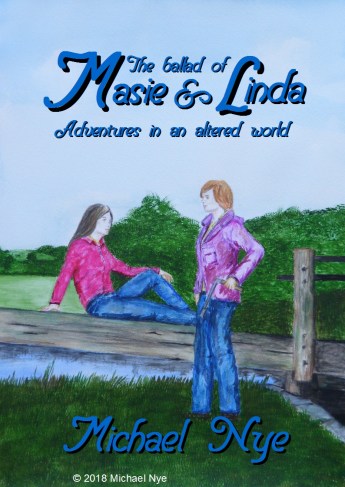
 Kris Wampler
You must be logged in to post a comment.