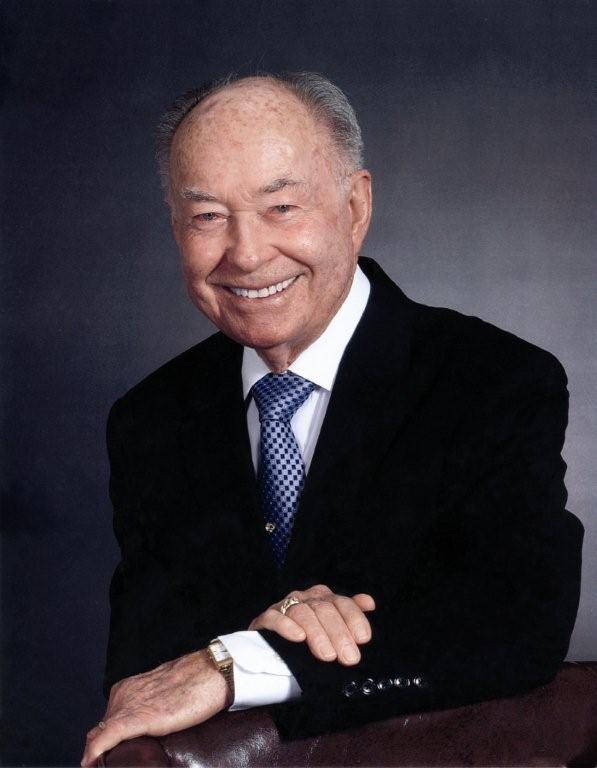
James Strait

James Strait has authored two books and has a third on the way.  He offers some good, detailed advice about how to get on the radio to promote your book, as well as which marketing techniques to avoid.

1. Pretend for a moment I’m a reader looking for my next book.  Pitch me your book in five to ten sentences.

Pretend that there’s a modern democratic republic that has lost its way. Imagine a society in chaos, a political structure compromised by power hungry sociopaths.

Fade to an ultra modern think tank, one whose expertise is genetics, and one that’s discovered that every human cell has a time stamp. And that having the ability to turn the time stamp on and off allows for a clone of any age to be rebirthed.

Picture a cabal of desperate modern times political operatives, with a brand new twenty-first century copy of Thomas Jefferson. Then think the predictable, that the modern Jefferson takes extreme exception to his being rebirthed, that he escapes the clutches of his new artificial deities, and that he goes on the run.

Such is the story line of the newly minted action-adventure novel, Thomas Jefferson is Missing.

2. What motivated you to become an indie writer?

Nothing more than the desire to have some of my thoughts go down in literary history.

3. Have you been traditionally published? Why or why not?

Yes, my first book, Weird Missouri, was traditionally published by Sterling. However, Sterling does not publish fiction; thus, my second book, a novel, has been published independently. I chose an independent house that was within an hour’s drive from my home in order to have some physical connectivity, hoping for some hands-on control of the process.

4. How have you liked self-publishing so far?

While not perfect, it has been a learning experience, a chance to grow, so I’ve loved it.
Continue reading

William Steele

In his engaging and well-reviewed autobiography, My Journey, Major General William Steele recounts his life and military experience.  He discusses why it was so important to acquire an editor and the specific, targeted marketing techniques he uses.

1. Pretend for a moment I’m a reader looking for my next book.  Pitch me your book in five to ten sentences.

This is a unique autobiography and one worthy of your time.  Consider the following reviews:

My Journey is a wonderful story of one man’s lifetime of dedication to his family and to the nation.”—Howard “Bo” Callaway, Secretary of the Army (1973-1975)

“[It is] a story of his life in childhood, in the U.S. Army, in corporate America, and upon his retirement.  [It] includes many interesting and moving details in his life recalled with great clarity . . .”—General William R. Richardson, U.S. Army (Ret.), Commander of the U.S. Army Training and Doctrine Command (1983-1986)

“It is splendid, engaging, written in an appealing conversational style, candid, and told with becoming personal modesty.”—Dr. Lewis Sorley, military historian and author of Westmoreland

2. What motivated you to become an indie writer?

Actually I intended writing about my life to provide some historical record for my family and future generations.  But I wanted it to be written and printed in a professional manner.  I hired an editor to help me achieve that goal.  After looking at the draft, she thought that others might benefit from my experiences and suggested that it be edited and published with that in mind.  At that point we decided to do so.

3. Have you been traditionally published? Why or why not?

No, because I did not start with publishing as a goal and did not approach a publisher for that purpose.

Continue reading

Jonell Kirby Cash

Jonell Kirby Cash used something a little different than either self-publishing or the traditional route.  Learn about the innovative method she used and the one-on-one experience that came with it.

1. Pretend for a moment I’m a reader looking for my next book.  Pitch me your book in five to ten sentences.

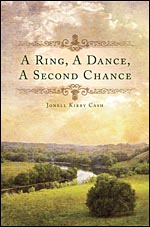
A Ring, A Dance, A Second Chance.  The book is Katie and Taylor’s love story.  They dated in high school, but married others, and both are now widowed and live alone.  Their odyssey begins when, out of the blue, forty-something years since they last talked, Taylor calls Katie.

2. What motivated you to become an indie writer?

As I grew older my responsibilities changed and so did my interests.  I noticed there were few works of fiction and fewer movies that caught my attention or offered a reading or viewing experience that was meaningful.  Often, my friends and I would whine that we couldn’t find novels with characters that had any resemblance to us (the 50 plus) and we’d say we wished that older people would become more active in the writing arena…and we’d wonder if writers just got tired or lost their creativity.

When I whine I usually look for an option.  Since I’d always planned to write a novel, but never had allocated time to learn how to write fiction, I decided I should give it a try—I’d never be any younger.

I’d published in my academic field (five books).  I enjoy writing, I understand communication, and I had the basic skills of grammar.  I’m also a psychologist; therefore, I understand human nature.  So, in the seventh decade of my life I decided I had the time to enjoy learning to write from a novelist point of view.  This decision was the motivator to get me started on this venture—the first step in the process of writing a novel.

Continue reading

Patricia Herlevi

Patricia Herlevi reflects on her music background as she discusses her book, Agnes et Yves: Ma Vie en Bleu.  Learn how she makes marketing work without having to break the bank.

1. Pretend for a moment I’m a reader looking for my next book.  Pitch me your book in five to ten sentences.

“French Kiss” meets arts journalism meets Parisian artists meets Katherine Hepburn.  In hot pursuit of an affair with a Spanish Don Juan, Francophobe Agnes’ plans are derailed by a French painter and transportation strike.  Bonjour Paris!

I wrote this novel as an old fashion style comedy with some mistaken identity, especially around “Pablo”, plots twists, and a surprise ending.  I adapted the novel from a screenplay of the same title, but for the novel I brought back the mother character, and brought in more psychological baggage which I dealt with through comedy of errors.

2. What motivated you to become an indie writer?

Thinking back to my music career which spanned from 1986 to 1996, I have a knack for do-it-yourself projects.  I also think that it is a real confidence builder to take on a project yourself and see how far you can take it.  My motivation for going it independent with music came from a music industry with a closed door policy.  I sent out over 50 demo tapes over the years, and received a large pile of rejection letters.  I still wanted to record and perform music so I found a way to do that without a recording contract.

Now that I am authoring books, I thought I would see how far I could go on my own in building a target audience, and cooperating with other independent authors.  The learning curve is steep, especially at my age, but I have to admit, I enjoy the challenges.  Those challenges spark creative solutions.

3. Have you been traditionally published?  Why or why not?

No, I have not traditionally published any books yet.  I am not averse to publishing books traditionally.  I contacted agents and went the normal route, receiving a fair share of rejection letters and some encouragement.  Then a friend suggested I try Lulu.  At first this felt daunting so then I went with CreateSpace instead.  Since my novel has commercial appeal, especially for the Francophile markets, I don’t know the reasons why it has not been picked up by a commercial publisher or agent.

Continue reading

Frank Coles

Frank Coles brings a wealth of experience to his writing and has enjoyed success in indie and traditional publishing.  Learn how he’s mastered marketing across a variety of media (social and traditional formats) and why reviews are so important.

1. Pretend for a moment I’m a reader looking for my next book.  Pitch me your book in five to ten sentences.

Dark Market (Assassin’s Rule): Kill anyone, anywhere, anytime.  Never get caught.

John Savage is a special force of one.  A corporate investigator who had to leave when an investigation went wrong.  He’s become a 21st century warrior serving overseas, but not for any one government, only the highest bidder.

When he finds a dead body with links to his old life, he returns and finds that what forced him out was only the beginning of a conspiracy to commit murder on a grand scale: the Dark Market, in which anyone can take part and anyone can be a victim.  Now Savage must battle to finish what he started.

2. What motivated you to become an indie writer?

I get a buzz from writing, the blank page is like siren call from another world for me.  I’ve been writing professionally in one way or another for nearly two decades – TV, journalism, advertising, branding.  Writing has taken me to the North Pole and all around the world.  Then I became an ‘author’ four years ago.  Since then my writing output has dropped.  It became all too much about guessing what agents, editors and sales departments were up to.  Learning all about the shadier parts of the business that are in plain view and pitching all the time – but so slowly – because the business is so slow.

Now don’t get me wrong, my bread and butter has always been pitching, whether it’s TV programs and formats or journalism and brand concepts.  But there is a big disconnect in publishing between, well, everything: traditional and indie, agents and editors, slush piles and proper business development, taking risks and playing it safe, publishing times.  It’s a book in itself!

Continue reading

Kenneth Weene

Kenneth Weene works through a small publishing house through which he and other authors do their own marketing.  Learn more about that, Kenneth’s book trailers, and his advice on how to properly use social media in your marketing efforts.

1. Pretend for a moment I’m a reader looking for my next book.  Pitch me one of your books in five to ten sentences.

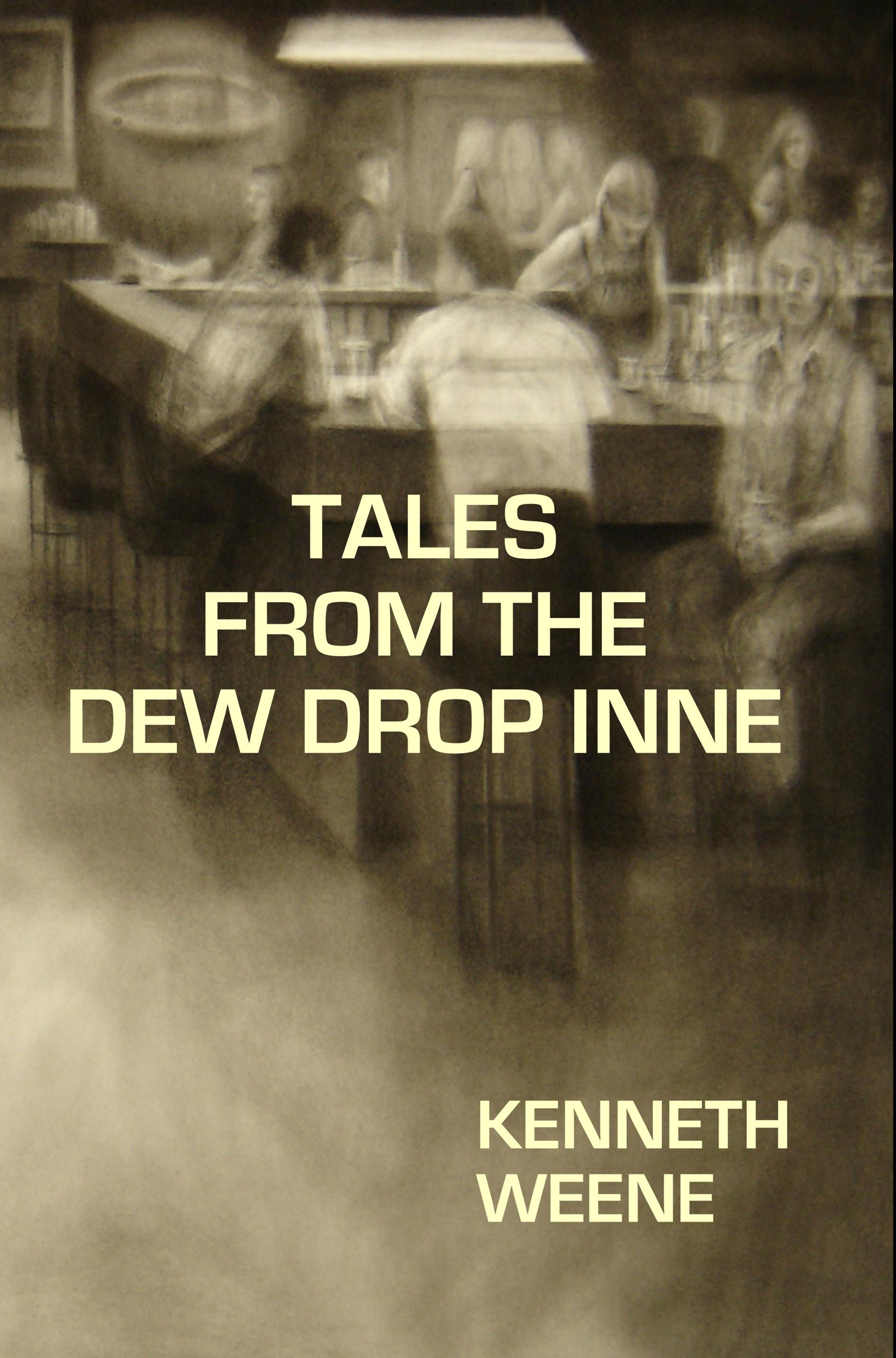
Set in a small bar in Albuquerque, New Mexico, Tales From the Dew Drop Inne tells the collective bittersweet stories of the people who make the place their home – people who have not fallen off the social ladder but who are hanging on desperately at the bottom. These integrated stories of men and women, who may not be successes but who still are so very human, offer laughter, pathos, and a sense of camaraderie.

2. Have you been traditionally published?  Why or why not?

My books are halfway between traditional and indie publishing.  All Things That Matter Press is a small house so we, the authors, have to do the marketing ourselves.  But as a publisher they offer cover design and editing as part of the contractual deal.  They take no money but make their profit from our sales.  Would I prefer to move to a “larger” house, one that could provide more marketing service?  Sure.  But I do appreciate the sense of family that we have created.  The owners of All Things have been very supportive, and many of the authors work together and are wonderfully supportive.

I must admit that I would never want to self-publish or go with one of those “indie publishers” that sell their services.  That would feel like I was their mark rather than their valued writer.

Continue reading

Michael Davidson

Michael Davidson has not only become a successful indie author, but has used his experience to create his own publishing company.  Learn more about his imprint and his success in using book reviews to publicize his writing.

1. Pretend for a moment I’m a reader looking for my next book.  Pitch me your book in five to ten sentences.

The last time I pitched my book I hit the batter.  Just don’t say I didn’t warn you.  Austin Nights is the unadorned love story of two people who move to Central Texas from Miami Beach, one lost, the other lost but with direction.  And there’s a cat.

2. What motivated you to become an indie writer?

Other indie writers.  Seeing them do it.  Realizing it was possible.

3. Have you been traditionally published?  Why or why not?

Some short stories of mine have been traditionally published, both in this country and in Canada.  I went through the usual process of submitting material, getting an excited response from the editor, making changes, and getting remunerated with either contributor’s copies and/or a check.  No matter how meager the check was, it, like the contributor’s copies, rocked.  This was all the motivation I needed to keep trying.

After I wrote my first novel I sent out query letters to agents and got a couple manuscript requests.  I remember Barbara J. Zitwer’s response.  She represented (and still represents) the author of Matchstick Men, and she said if I worked on the pacing of my novel she’d like to read it again, but, as it stood, it didn’t work for her.  Not fast enough.

Rather than work on the pacing, I tucked it away in a box and started writing other stories.  It’s still in a box, high in my closet, and I never communicated with Barbara J. Zitwer again.  Maybe, once I get done with this interview, I should send her a query letter concerning my latest novel?

4. How have you liked self-publishing so far?

Love it.  Like anything else, you learn as you go along, and it feels great when you start seeing your work find traction in the Amazon rankings.  Like there’s hope.

Continue reading

Una Tiers

Una Tiers took a run-in with the law and turned it into a book, uniquely using the experience to relieve stress.  Here, she offers numerous marketing suggestions in varying media and explains her take on the publishing industry.

1. Pretend for a moment I’m a reader looking for my next book.  Pitch me your book in five to ten sentences.

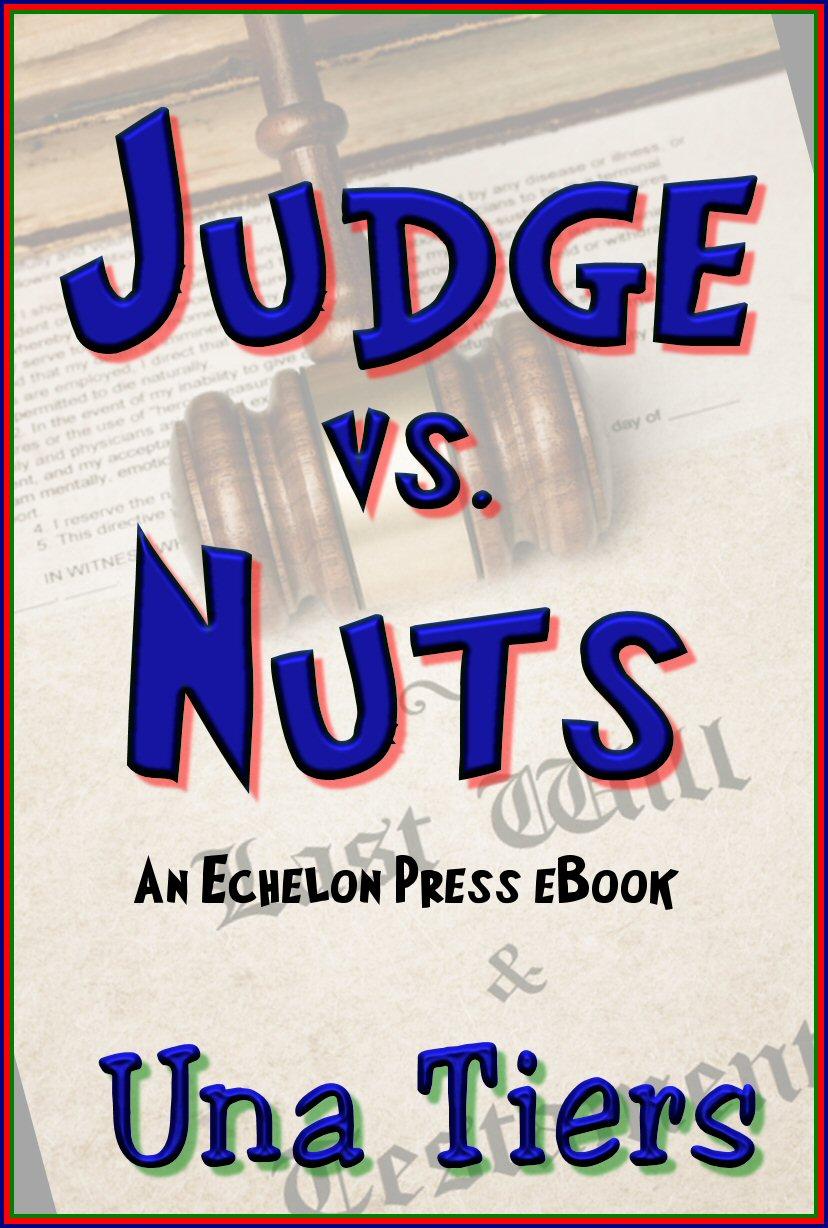
Judge vs. Nuts is about a lawyer, a goldfish and a dead judge.  It explores Chicago and murder.  It will make you laugh.  I think you will like my characters, puns and self-effacing remarks.

2. What motivated you to become an indie writer?

Honestly, a judge tried to arrest me and I eliminated my stress by murdering him (on paper).  Occasionally I added to the details, adding more victims as warranted.  Pretty soon I discovered mysteries outside of Sherlock Holmes and the result was Judge vs. Nuts.  Book signings became a hobby and I learned something at each one.

3. What is your opinion of the future of publishing?

Self-publishing has clearly rocked the publishing industry to its foundation.  It presents many opportunities for new authors.  My Kindle is packed with new authors and those without big exposure and I love what I am reading.  It isn’t pushed into what the big houses feel will sell.

E-books are here to stay, without a question.  I think they will exist companionably with print books.  The combination of e-books and self-publishing opportunities is also changing the publishing world and making it attainable to make your dream of writing a book come true.

At the Chicago Tribune book festival last year, e-books were almost ignored.  People toted around huge bags of paper books.  I don’t expect that to change but what an opportunity we have with the electronic options.

Continue reading

Edina Jackson

Edina Jackson is an author and businesswoman who wrote her first children’s novel after being inspired by her newborn son.  She offers a variety of marketing strategies that don’t cost much money.

1. Pretend for a moment I’m a parent looking for a book for my child.  Pitch me your book in five to ten sentences.

Dusty the Ditsy Dog is a fun, vibrant, easy to read book for the under fives.  It does not just tell a story, it has a message behind it.  The message is that if you put your mind to it, you can change the world.  It is a is fun book with a positive message.  Your child will enjoy getting to know Dusty and his friends in the fictional setting of Mistytown.

2. What motivated you to become an indie writer?

Going down the route of forcing your book down a publisher’s throat did not appeal to me.  With e-books, and other book formats, the publishing industry has taken a hit. They are not publishing books like they used to.  I decided to publish my book without the help of a large publishing house because I wanted to retain the authenticity of the story.  I decided to go with a small publishing company called BrightSpark Publishing.  I published in association with BrightSpark and my own company Intrigue Media Group.  I feel like I have more creative control, and I am able to decide how I want my book to be marketed.

3. Have you been traditionally published?  Why or why not?

Like I said, my publishing deal was a collaborative one.  So, it was a combination of indie and traditional.

4. How have you liked self-publishing so far?

So far it has been an interesting experience.

Continue reading

Katie Epstein

Katie Epstein found confidence in indie publishing and has learned the industry quickly.  Read about her experiences with traditional publishers and why self-publishing is a better fit.

1. Pretend for a moment I’m a reader looking for my next book.  Pitch me your book in five to ten sentences.

The Arranged Marriage is a romantic adventure set on the mythical Isle of Centurias.  It follows the story of Princess Rohesia who is fuming when she finds out her father has arranged her to marry the illegitimate son of a neighboring king, revoking the promise that she could choose her own husband.  Upon attempting to flee the island to seek freedom, Rohesia doesn’t expect to be saved by the very man she is running from, Sir Ison Mondar of Dondayas.  As they unite in their marriage, Ison and Rohesia have to find a way to work together to rid the island of a rebel group who is becoming more daring each day in its attacks.  They must learn to take a chance not only on their union, but on each other as the
fate of Centurias rests in their very hands.

2. What motivated you to become an indie writer?

When you have finally put the last edit on your manuscript, there is a need for other people to read your story and share in the character’s experiences.  It can be frustrating waiting for that one letter that will take you to the next level via the traditional route, and indie publishing gives you the opportunity to put yourself out there to dedicated readers who will give you a true critique.

3. Have you been traditionally published?

I have only sent my manuscript off to a dozen publishers, because I put too much of myself into the process and took all rejections personally.  No matter what people tell you about it all being part of becoming published, it can still hit you hard if you let it, and unfortunately I let it.  Through this learning curve I have realized that no one will take you seriously as a writer if you don’t take yourself seriously first, and to do that you have to have confidence in your capability.  Going through the indie publishing route has given me my confidence, so I can try the traditional publishing route again in the future as I learn more about the industry.

Continue reading