Ethan Jones

Ethan Jones took some time away from his busy writing schedule to discuss his action-adventure series and why he chose the indie writing path.  Learn why book giveaways work for him and why indie authors have to invest so much of their own time and effort to make their projects a success.

1. Give me the “elevator pitch” for your book in five to ten sentences.

Arctic Wargame is the first book in Justin Hall series.  Justin has been demoted because of a botched rescue operation in Libya, which was not his fault.  Now he’s a desk jockey.  Eager to return to field work, he volunteers for a reconnaissance mission, when two foreign icebreakers appear in Canadian Arctic waters.  His team discovers a weapons stash, along with a plan that threatens Canada’s security.  At the same time, the team falls under attack by one of their own and is stranded helpless in the Arctic.  It is now a race against time for Justin and his team to save themselves and their country.

2. Why did you become an indie writer?

I shopped my two novels, Arctic Wargame and Tripoli’s Target to agents and publishers over the course of 2009-2011.  I received some great feedback.  A few agents asked for a partial manuscript and two or three for a full.  But no one was willing to make an offer or sign a contract.  In the meantime, I kept writing.

I had not considered self-publishing because it seemed like a lot of work and I had truly hoped an agency or a publisher would pick up my works.  Upon the suggestion of a good friend, I dusted off my first novel, Arctic Wargame.  I found three great beta readers, all published writers, and we took a new stab at my gibberish.  Then I worked with two great editors and proofreaders, to create the best possible work.  After formatting it professionally, Arctic Wargame finally saw the light of publishing through Amazon.

Continue reading

C.N. Bring

C.N. Bring writes in the military suspense genre and has stuck to her own style of writing despite pressure from traditional publishers.  Learn why she’s skeptical of Facebook as a marketing tool and why word of mouth is so important to promoting your book.

1. Give me the elevator pitch for your book in five to ten sentences.

Commander Celia Kelly is a perceptive Naval intelligence officer rebuilding her life after the tragic death of her husband.  The suspicious suicide of a fellow officer has Celia questioning the mission she’s been assigned.

With the help of a one of a kind secretary, a by-the-book assistant, and a Navy SEAL, Kelly discovers she’s been set up.  Digging relentlessly, nothing is as it seems.  Someone is after twenty million dollars that disappeared when Kelly’s husband died and now that someone is after her.

2. Why did you become an Indie writer?

I was almost published traditionally, but I was asked to change the story too much.  The series is not a romance, but instead a military mystery, suspense.  The traditional publisher wanted to add a formula romance to the story. Though I wasn’t opposed to changes that might enhance the story, I was against losing my original audience. Truthfully, romance isn’t really my thing.  To be successful, we all have to find our own voice unlike anyone else’s. The hardest part about the business is they (publishers) want a safe sell.  They want a familiar story with a new voice.  It’s the publishing catch-22.  So I started to explore indie publishing.

Continue reading

R.M. Kelly

Author R.M. Kelly enjoys the art of writing and was inspired by her work with a small indie press to go into self-publishing.  Learn why she focuses her marketing efforts on the indie community, rather than traditional media, and which vendor she favors for book covers.

1. Give me the “elevator pitch” for your book in five to ten sentences.

My collection of short stories, Shorter Than The Wick, includes three about the Ghost Files team and their tales on a reality ghost hunting show run by idiots who happen to meet spirits from the other side. Another story is about a husband and father looking for any kind of forgiveness from his family during the Arab Spring after a tragedy.  One of my favorites is about the oldest vampire on earth loosing her ability to seduce blood from mortals after falling in love with a very modern man.

2. Why did you become an indie writer?

Because telling stories, creating worlds for a reader to live in, really comes naturally to me.  Writing is simply a part of me and the way I look at the world.  It’s fun and enraging at times but always important for me to have the time and opportunity to tell stories.

3. Have you been traditionally published?  Why or why not?

Well I’m an editor for a small indie e-book publisher, nuever.com, so that was simply what felt like the best approach to publishing. Getting my books out in the new medium as the e-book market grows.

Continue reading

Diana Nixon

Belarusian author Diana Nixon has realized numerous benefits with self-publishing and has begun her own fantasy book series.  Learn more about the sites she uses to promote her work and the one thing any author needs to ensure quality writing.

1. Give me the “elevator pitch” for your book in five to ten sentences.

The name of the book is Love lines.  It’s the first book of a fantasy series under the same title.  It shows the inner world of supernatural beings, their talents and powers.  Love lines is a story about beautiful love and true friendship. It’s a book for all ages with some humor and complicated relationship.

2. Have you been traditionally published?  Why or why not?

I’m a self-published author and I’ve never published my books traditionally.  Before publishing my first book I read a lot of blogs discussing the advantages and the disadvantages of self-publishing.  The control over the process was the main thing that made me choose self-publishing.  I can create covers I like, I don’t have to make changes about the book which I wouldn’t like, and I can choose marketing techniques I’m sure will be successful.  And finally, I want to be sure I have done everything possible and maybe even impossible to promote and sell my book, as sometimes the authors are not satisfied with the same work most publisher do.  I know how I want things to be done and I’m sure no one else can do them better than I do.

Continue reading

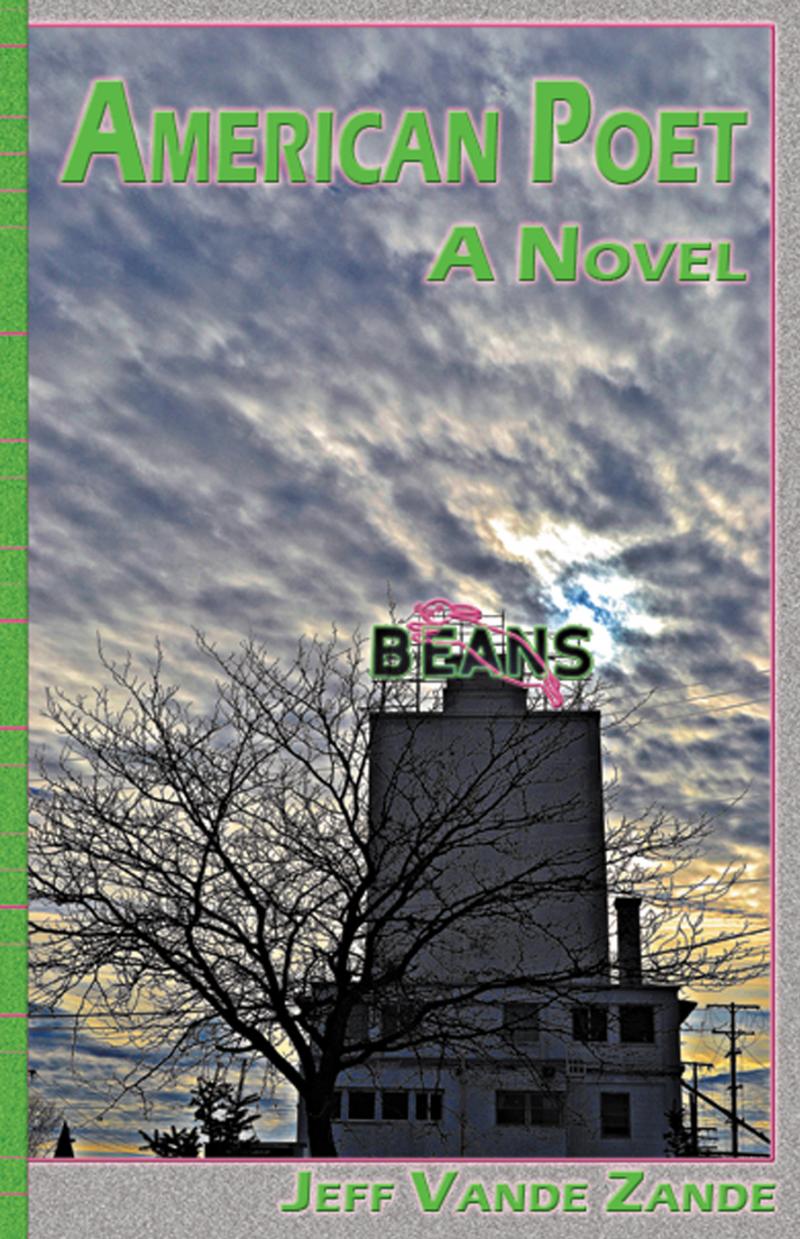
Jeff Vande Zande

Jeff Vande Zande has had success with small press publishing, an experience which has helped him positively adjust his expectations about success.  Jeff discusses that along with his thoughts on book signings and reaching your target audience.

1. Give me the “elevator pitch” for your book in five to ten sentences.

It’s a novel about poetry, Theodore Roethke, fathers and sons, and coming of age in America as an artist.  It’s the story of a young man who comes back to his hometown after an absence, only to find that he hasn’t grown up as much as he thinks.  Denver Hoptner graduated from the University of Michigan with a degree in writing poetry.  He returns to his boyhood home in working-class Saginaw, Michigan, and discovers just how little the world of work cares about his degree.  He struggles, too, to come to terms with his widower father.  After he hears that there’s been a fire in the attic of poet Theodore Roethke’s boyhood home, Denver commits himself to saving the historical residence, even when no one else seems to care.  It’s in action that he finds his true poetic self.

2. Why did you become an indie writer?

I didn’t really have luck with agents.  I received a few letters that said something along the lines of “Beautiful writing, but not sure how to market this.”  In my experiences with smaller presses, I just found that the editors were more interested in the “beautiful” part and didn’t worry so much about the marketing part.  My experiences with small presses have been positive, if not overwhelmingly lucrative.

3. Have you been traditionally published? Why or why not?

I suppose getting published from a small press is “traditional” publishing, just on a reduced scale.  So, yes, all of my books are traditionally published, but all from small presses.

Continue reading

Kevin Kierstead

1. Give me the “elevator pitch” for your book in five to ten sentences.

We are focused on small-time threats in America right now: terrorists, “lone-wolf” scenarios, gangs, etc.  We don’t see a real threat in the way of an entire country attacking us.  China, though, is fully capable of attacking us and they have a massive amount of strength–the only thing holding them back, if they decided to do it, would be the threat of a nuclear strike, so this book ponders what might happen if they could figure out a way around that problem.  Ultimately, though, with that as the background story, this is a story about survival after a devastating tidal wave that was over 100-yards tall.  One young man, one young dog, one young woman and one old man come together in unlikely ways and begin to fight through their struggles together.

2. Why did you become an indie writer?

Honestly?  I have a problem with authority!  But it wasn’t just that.  I did the whole agent/publisher dance on and off for 20 years.  Back in 1994, when I finished my first novel, I had it accepted by an agency called the Thornton Literary Agency and it was scheduled to be published under the Electric Umbrella but their company went into a hiatus and the rest is history.  That kind of unpredictability along with the growing trend of agents/publishers chasing “what’s hot” vs. looking for new talent in any genre is what pushed me here.  I love nothing more than having total control over my work.  Except for writing.

Continue reading

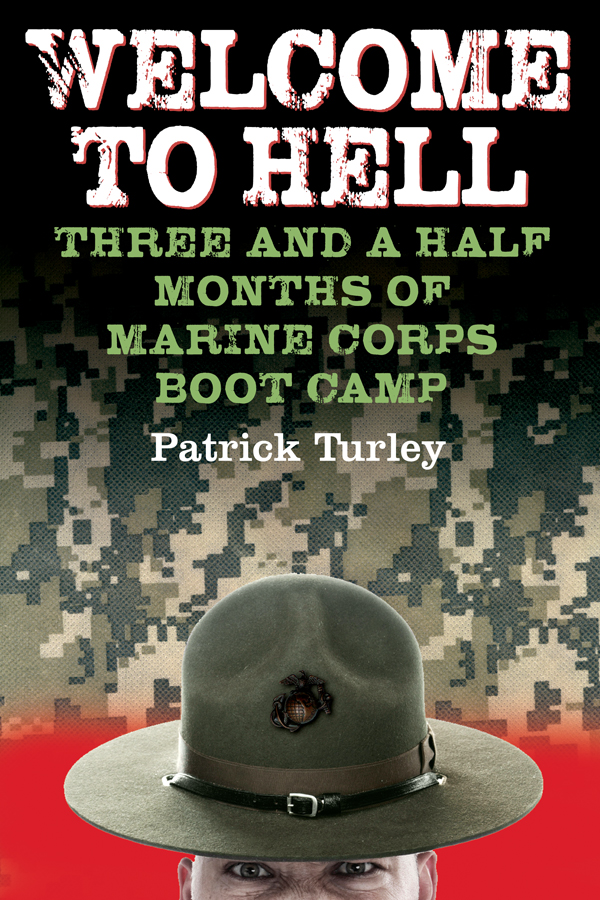
Patrick Turley

Patrick Turley has worked to create a niche for his Marine-based book and to give it the publicity effort it deserves.  Learn more about which methods work particularly well for him and why he feels every marketing approach should be considered.

1. Give me the “elevator pitch” for your book in five to ten sentences.

The only existing first-person, insider account of Marine Corps Boot Camp, documenting the good, the bad, the ugly and the hilarious in the making of the Few and the Proud.  A microcosm of how the “slacker generation” responded to a nation in need in the shadow of terror, Patrick Turley walked, ran and double-timed through the place and captured it in his book Welcome to Hell: Three and a Half Months of Marine Corps Boot Camp. From the moment the drill instructor said “Welcome to Hell!” Turley and his fellow recruits felt a sense of foreboding that proved well founded. The author, who endured and survived the foreboding, looks back and captures those anxious times with a sharp line for detail and a smile for the people, DI’s and all, who shared the three and a half months.  Former Marine and Pulitzer Prize winning playwright John Patrick Shanley, after reading a draft of Welcome to Hell, put it in complete perspective: “It’s great to have gone to Marine Corps boot camp.  It’s terrible to be in Marine Corps boot camp.  It’s fun to read about Marine Corps boot camp.”

2. Why did you become an indie writer?

I feel like this is an important story to be told and a niche one that can carve its own market out as well as being an excellent and well-rounded story for a much broader mass appeal.

3. Have you been traditionally published? Why or why not?

No.  The industry for traditional publication is evaporating before our eyes.  Without a big name to command your own audience, mainstream publishers aren’t particularly interested in first-timers anymore.

Continue reading

Shaun J. McLaughlin

Shaun J. McLaughlin believes every writer must be in it for the art, and strives to make his writing stand out from the rest.  Shaun discusses his success with blogging and what he believes it takes for a writer to succeed.

1. Give me the “elevator pitch” for your book in five to ten sentences.

My self-published novel, Counter Currents, is a story of smugglers, river pirates, rebels, love, and war.  Most scenes are set against the grandeur of the Thousand Islands during the drama of North America’s forgotten war, the Patriot War of 1838.  Among the raiders was Bill Johnston, the Thousand Islands legend.  The protagonist, Ryan, a young immigrant, is drawn into Johnston’s world of piracy and secret societies.  Ryan falls for Johnston’s daughter, Kate.  Tugged by the opposing currents of romance and war, Ryan struggles to reconcile his troubled family history, his duty and his heart. Counter Currents is history illuminated by fiction.

2. Why did you become an indie writer?

I worked as a writer – journalist and technical writer – for over 30 years.  Since my teens, I wrote fiction on the side. For my first novel, I queried dozens of agents and publishers in Canada and the US.  Over half never responded. One small publisher in Iowa offered to publish it, but they closed down shortly after I signed the contract.  Weary of rejection, I studied the self-publishing arena and the related technologies, and made a decision to be my own publisher.

3. Have you been traditionally published?  Why or why not?

I do both.  In the same month (March 2012) that I self-published my first novel, my first history book, The Patriot War Along the New York-Canada Border, was published by South Carolina-based The History Press.  It covers the eastern half of the Patriot War of 1838.

There is an interesting story behind that.  I created a history blog in January 2010 in advance of my novel to help promote the book and the era.  An editor at The History Press discovered the blog and asked me to write a book about it.  I said yes, of course.

4. How have you liked self-publishing so far?

I am astounded at how simple it is to be self-published.  Between Smashwords, CreateSpace and Kindle/Amazon, anyone who can follow step-by-step instructions can produce books in multiple formats.  There is no barrier to publishing.  Technology has sidelined the gatekeepers and unleashed writers.  You’ve got to love that.

5. Tell me about the marketing techniques you’ve used to sell your books.  Which ones have been the most successful?

I have tried most of the popular marketing techniques: blogging, Twitter, Facebook, and guest posts on other blogs and e-magazines.  I had both books reviewed, and even paid for an ad on Goodreads.

My history blog, raidersandrebels.com, is the most successful.  It gets over 600 visits per month from history lovers. The key is to provide readers with free, interesting content.  That blog links to my imprint blog where I describe my books.  A small percentage of visitors become customers.

Two history articles that I wrote for the Thousand Islands Life e-magazine early in 2012 did well, as did a book review on that mag.  The magazine’s audience is in the heart of the region where both my books take place.  The exposure led to a regional spike in sales, especially for the history book.

6. What’s the most important thing you’ve learned about self-publishing that you didn’t know when you started out?

My research into the business of self-publishing taught me that my book is one of millions available.  It is one leaf in a forest of 10,000 trees trying to be noticed.  You cannot be in this business for the money.  Like a painter or musician, you must be in for the art.

7. If you could do one thing differently in publishing your books, what would it be?

Next time I will spend no time trying to find a publisher for my fiction.

8. Indie authors face the challenge of marketing their books without the resources of traditional publishers. What advice do you have for an indie just starting out?

From my observation, the authors that succeeded financially did not hit the big time with their first book.  They built up a fan base, good book by good book, until they broke out.  In brief: write well, write often, be patient.

9. What are you currently working on?

I have a detailed outline for the sequel to my novel.  It will be set partly in Australia, which I will visit in the fall of 2012 to scout locations.  I plan to research a second history book on the Patriot War to cover events along the western front.

10. If you could market your brand – not just one particular book, but your overall brand of writing – in one sentence, what would it be?

I write about history (and by extension, historical fiction) like a good journalist covers current events: how people face their trials and triumphs never gets dull.

11. How can readers learn more about your books?

My publishing imprint has info on both books: raidersandrebelspress.com.

Anderson O’Donnell

Anderson O’Donnell specializes in dystopian fiction and constantly feeds his healthy addiction to the art of writing.  Anderson talks about making the most of social media and going beyond its superficial uses to enhance his marketing efforts.

1. Pretend for a moment I’m a reader looking for my next book.  Pitch me your book in five to ten sentences.

Kingdom is a thrill-a-minute, bio-punk myth that manages to wrestle with the most pressing issues of the new millennium.  It’s a novel of tomorrow night, when the big party gets raided by the monsters we’ve been building for the last half-century.  Hip and hellish, wild and weird, Tiber City is the dystopian megalopolis into which we will all soon move—whether we know it or not.  Toss William Gibson, Andrew Vachss and David Fincher into the petri dish, irradiate them, then infuse the result with Transylvanian meth, and you’ll have some sense of what the reader can expect.

2. What motivated you to become an indie writer?

Frustration with how risk-adverse the traditional publishing industry has become.  I get it: sales margins are razor thin, and the natural inclination, in any industry, is to reduce risk.  But for the writing and publishing industry, risk reduction means going all in on books by a recognizable brand name—Snookie, for instance.  I mean, that’s their answer…Snookie.  But like I said, I can’t blame them.

3. Have you been traditionally published?  Why or why not?

No, I haven’t been traditionally published, but not for lack of effort.  I sent out query letters to a number of agents and publishing houses, and while Kingdom attracted some interest, nothing panned out.  But I received good feedback from a few other traditionally published authors, enough so I decided not to stick the project in the desk drawer.  I believe in Kingdom; and I think readers are going to respond to the world I’ve created.

Continue reading

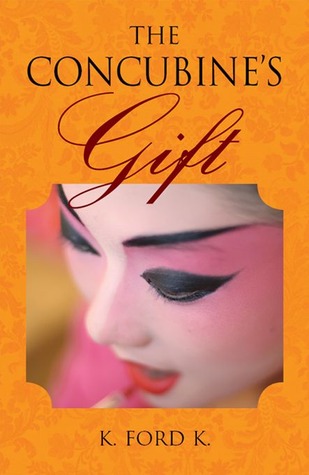
K. Ford K.

K. Ford K. went from freelance writing to indie publishing, finding frustration along the way with traditional publishers.  Now enjoying the freedom of self-publishing, K. discusses the varied tools she uses to reach readers.

1. Give me the “elevator pitch” for your book in five to ten sentences.

What if a timid, sexually-inhibited woman suddenly developed the psychic ability to see what everyone else needed to be blissfully happy in bed?  And what if she started blurting out sexual advice against her will?  That thought was the seed for my new novel, The Concubine’s Gift, and the poor, long-suffering character of Bernice Babbitt was born.

2. Why did you become an indie writer?

I became an indie author by choice.  I was a freelance writer, publishing articles and short stories in newspapers and magazines and had several near misses with major publishing houses.  Many times they decided to publish my novels and then changed their minds at the last minute.  I was starting to feel like I was in an abusive relationship.  Editors told me they loved my work; I cozied up to them and then they slapped me with a rejection. After awhile I was back and the same thing happened all over again.  ‘Indie-authorhood’ has been wonderful.  I love being in charge of my own career and being able to make all the editorial and marketing decisions about my novels.  I’ve been lucky in that readers have been very supportive.

3. Tell me about the marketing techniques you’ve used to sell your books.  Which ones have been the most successful?

Some of the marketing techniques that have been the most successful were getting book bloggers to review my book and being active on the Goodreads site.  I have hosted lots of book giveaways and those are always fun.

4. Are there any marketing techniques you intentionally avoided or discontinued, and if so, why?

I have my novel listed on Amazon’s KDP Select.  The best thing is the free days of promotion but I think I will discontinue after one more month so that I can list the book on other sites such as Smashwords.

Continue reading