Ken La Salle

Ken La Salle is active on a variety of artistic fronts, and his book, Climbing Maya, premiers today from Solstice Publishing.  Ken recounts his journey to self-publishing, recommends some vendors he’s used, and points out which methods you should avoid in your marketing.

1. Give me the “elevator pitch” for your book in five to ten sentences.

Climbing Maya asks the question: “What is success?” and doesn’t let go until it has the answer.  Is it fame?  Is it family?  Do the old answers of career and money really hold up?  How can we have one word for something that means so many things?  How is it the dictionary gets it wrong?  When I lost my job, I looked to one friend taking care of his dying wife and another friend killing himself with alcohol, and decided to find the answer.  Climbing Maya weaves my search for an answer in the storyline of what happened to my friends and myself as we came to terms with this pivotal question.

2. Why did you become an indie writer?

I certainly did not become an indie writer out of any choice.  As a matter of fact, I’ve always pushed marketability and accessibility in my work.  I thought those two goals would help me find the mainstream.  As it turned out, however, they had little to do with it.

When I first conceived of Climbing Maya, of writing a book about success, I was unemployed and trying to think of ways I might be able to sell my writing.  I sat with my wife one night and said, “I could write a horror novel or I could write a philosophical memoir on success.”  You know, I wanted to give her clear choices.  Not surprisingly, my wife who is an incredible supporter and friend said, “Write what you want to write.”  So, I wrote Climbing Maya.  I later went back and wrote the horror novel, a zombie book called Wormfood Island.

Wormfood Island was picked up by Northern Frights Publishing, a small publisher out of Canada that is run by one of the best guys around.  Unfortunately, Northern Frights had to exist in a rotten economy and Wormfood Island did not come to pass, which hurt a great deal because I thought the horror novel would be the most marketable.  Around this time, I had a lot of my writer friends tell me I should be self-publishing.  You know, get on the digital bandwagon.  While I felt (and still feel) that mass exposure through a larger venue is the way to go, I knew there was some work that I could release myself, work that might have been too far from the mainstream for some and other work that I hadn’t considered approaching a publisher with, such as my compilations.

In the same month that Northern Frights had to back away from Wormfood Island, I got word from the woman who is now my agent about how much she loved Climbing Maya Climbing Maya is now being published by Solstice Publishing.

Continue reading

Patricia Herlevi

Patricia Herlevi reflects on her music background as she discusses her book, Agnes et Yves: Ma Vie en Bleu.  Learn how she makes marketing work without having to break the bank.

1. Pretend for a moment I’m a reader looking for my next book.  Pitch me your book in five to ten sentences.

“French Kiss” meets arts journalism meets Parisian artists meets Katherine Hepburn.  In hot pursuit of an affair with a Spanish Don Juan, Francophobe Agnes’ plans are derailed by a French painter and transportation strike.  Bonjour Paris!

I wrote this novel as an old fashion style comedy with some mistaken identity, especially around “Pablo”, plots twists, and a surprise ending.  I adapted the novel from a screenplay of the same title, but for the novel I brought back the mother character, and brought in more psychological baggage which I dealt with through comedy of errors.

2. What motivated you to become an indie writer?

Thinking back to my music career which spanned from 1986 to 1996, I have a knack for do-it-yourself projects.  I also think that it is a real confidence builder to take on a project yourself and see how far you can take it.  My motivation for going it independent with music came from a music industry with a closed door policy.  I sent out over 50 demo tapes over the years, and received a large pile of rejection letters.  I still wanted to record and perform music so I found a way to do that without a recording contract.

Now that I am authoring books, I thought I would see how far I could go on my own in building a target audience, and cooperating with other independent authors.  The learning curve is steep, especially at my age, but I have to admit, I enjoy the challenges.  Those challenges spark creative solutions.

3. Have you been traditionally published?  Why or why not?

No, I have not traditionally published any books yet.  I am not averse to publishing books traditionally.  I contacted agents and went the normal route, receiving a fair share of rejection letters and some encouragement.  Then a friend suggested I try Lulu.  At first this felt daunting so then I went with CreateSpace instead.  Since my novel has commercial appeal, especially for the Francophile markets, I don’t know the reasons why it has not been picked up by a commercial publisher or agent.

Continue reading

Lisa Winkler

Lisa Winkler is a journalist, educator, and of course indie author, having self-published her debut book, On the Trail of the Ancestors: A Black Cowboy’s Ride Across America.  She discusses her experiences with both the Kindle Select program and book promoters.

1. Pretend for a moment I’m a reader looking for my next book.  Pitch me your book in five to ten sentences.

Growing up black in Brooklyn, Miles Dean wanted to be a cowboy.  He galloped through the streets on his bicycle, ambushing outlaws on street corners, imitating the heroes he watched on television westerns.  More than three decades later, Dean, a Newark, NJ schoolteacher, rode Sankofa, his 11-year-old Arabian stallion, from the African Burial Grounds in lower Manhattan to the California African American Museum in Los Angeles.  Dean used an unpaid leave of absence to follow his childhood dream: his 5,000 mile- journey through12 states took six months.

Conceived to celebrate the contributions of African Americans in US history, this inspirational story brings the reader into large cities and small towns, connecting with the horseback ride and the many people Dean met.  Through his daily regimen of riding his horse, the reader witnesses the physical and emotional discipline required to complete such a journey.  It’s a story about an ordinary man who accomplishes something extraordinary.

2. What motivated you to become an indie writer?

I had submitted my book proposal and sample chapters to over100 agents.  After researching self-publishing, I felt this was the way to go.

3. Have you been traditionally published?

I have had articles and essays published.

4. How have you liked self-publishing so far?

It’s been an enormous learning experience.  I am finding that the marketing can take control of your life—but traditionally published authors need to do their own marketing these days as well.

Continue reading

Frank Coles

Frank Coles brings a wealth of experience to his writing and has enjoyed success in indie and traditional publishing.  Learn how he’s mastered marketing across a variety of media (social and traditional formats) and why reviews are so important.

1. Pretend for a moment I’m a reader looking for my next book.  Pitch me your book in five to ten sentences.

Dark Market (Assassin’s Rule): Kill anyone, anywhere, anytime.  Never get caught.

John Savage is a special force of one.  A corporate investigator who had to leave when an investigation went wrong.  He’s become a 21st century warrior serving overseas, but not for any one government, only the highest bidder.

When he finds a dead body with links to his old life, he returns and finds that what forced him out was only the beginning of a conspiracy to commit murder on a grand scale: the Dark Market, in which anyone can take part and anyone can be a victim.  Now Savage must battle to finish what he started.

2. What motivated you to become an indie writer?

I get a buzz from writing, the blank page is like siren call from another world for me.  I’ve been writing professionally in one way or another for nearly two decades – TV, journalism, advertising, branding.  Writing has taken me to the North Pole and all around the world.  Then I became an ‘author’ four years ago.  Since then my writing output has dropped.  It became all too much about guessing what agents, editors and sales departments were up to.  Learning all about the shadier parts of the business that are in plain view and pitching all the time – but so slowly – because the business is so slow.

Now don’t get me wrong, my bread and butter has always been pitching, whether it’s TV programs and formats or journalism and brand concepts.  But there is a big disconnect in publishing between, well, everything: traditional and indie, agents and editors, slush piles and proper business development, taking risks and playing it safe, publishing times.  It’s a book in itself!

Continue reading

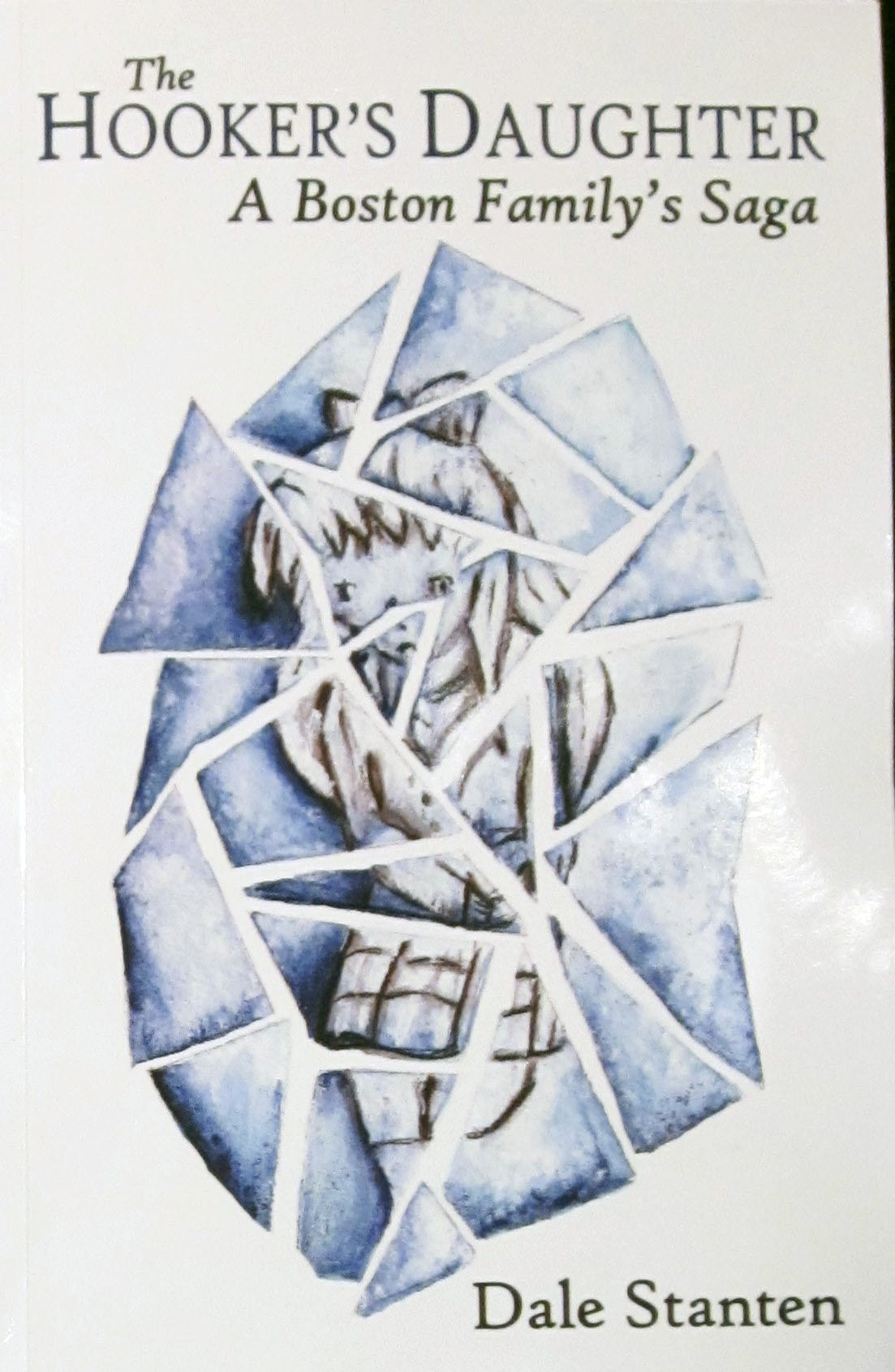
Dale Stanten

Dale Stanten reflects on her dysfunctional upbringing and her determination to overcome it with her book, The Hooker’s Daughter.  Learn more about her favorite marketing technique and the most important thing she’s learned about self-publishing.

1. Pretend for a moment I’m a reader looking for my next book.  Pitch me your book in five to ten sentences.

In 1950s Jewish Boston, my mother established a home-based business as a prostitute to remedy her husband’s inability to provide for his family.  At age six, I was answering the front door for johns.  Kids were forbidden to play with me and even the Girl Scouts asked me to leave.  What a terrible irony, in a family with so many strange and twisted realities, that my gay sister, “coming out” at age 16, was the only thing my parents focused on as contemptible.  My memoir is a story of survival driven by my ability to extract positive qualities from a dysfunctional life.  My unconditional love for my mother challenges the reader to examine beyond that which is socially acceptable and identify that which is universal.

2. What motivated you to become an indie writer?

I started writing this book 12 years ago so my children would understand their mother’s background.

This book began with my efforts in a writing group which met in the back room of a local bakery-café.  The group was both fascinated and shocked by my story as it emerged, and eagerly awaited each new installment.  I was touched by this unselfish outpouring of interest and found welcomed motivation in their support.  It was a difficult decision to expose myself by publishing this memoir.  What would people say?  Am I being foolish?  Why am I doing this?  I had periods of doubt and anxiety and many sleepless nights.  However, making my private life public finally devalued the impact of the gossip and embarrassment and the baggage I did not pack.  No nore secrets!

3. Have you been traditionally published?  Why or why not?

Today, a traditional publishing house requires the author to do the majority of the marketing and publicity.  Unless you have a platform and your name is Clinton or Bush, it is difficult to obtain any assistance.  Ultimately, I decided to self-publish.  This gave me more control of the process.

Marketing can absorb a great deal of time and effort.  However, I love marketing!  I built my original business from nothing and understand that personal contact and follow through are very important.

Continue reading

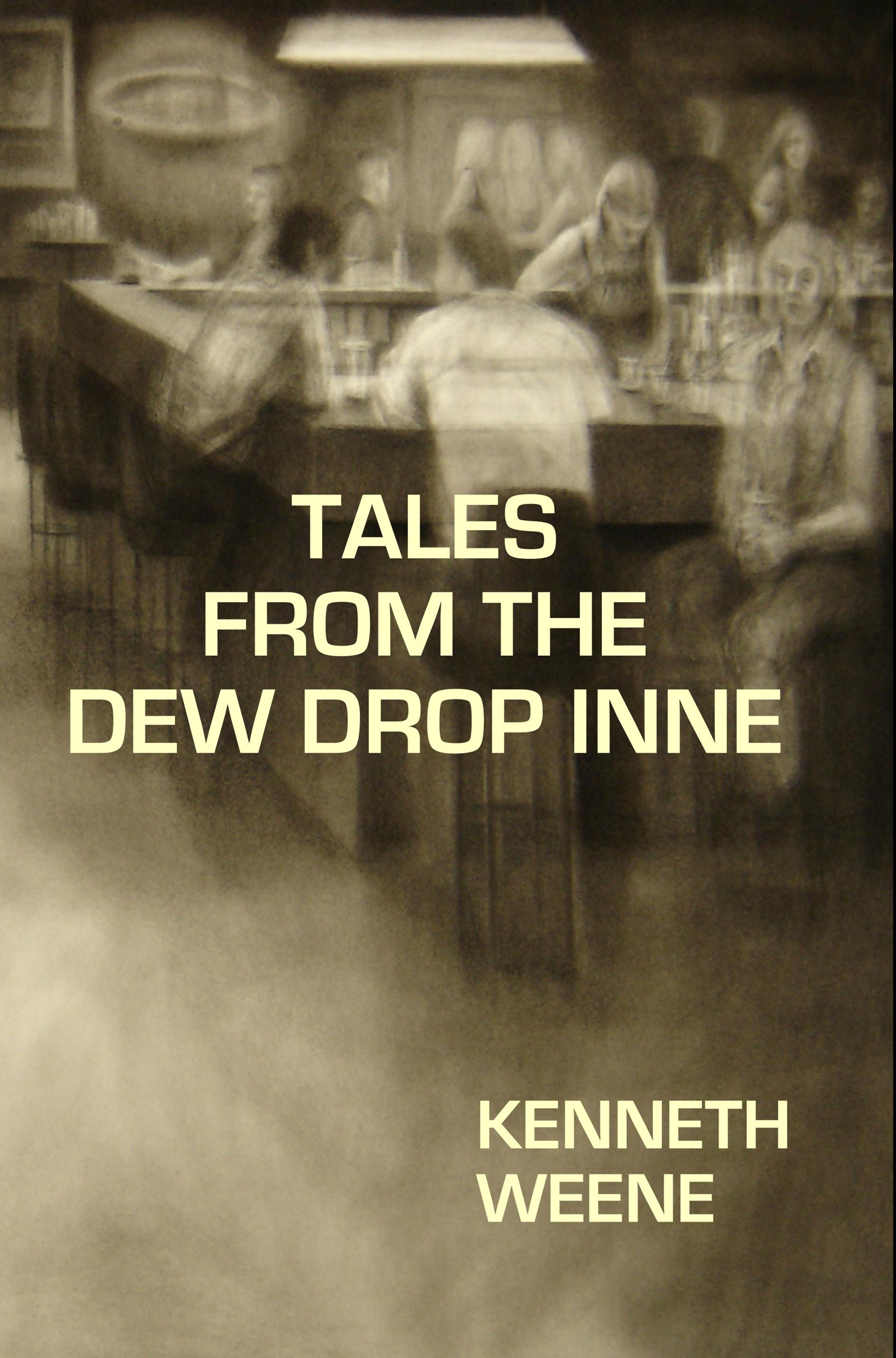
Kenneth Weene

Kenneth Weene works through a small publishing house through which he and other authors do their own marketing.  Learn more about that, Kenneth’s book trailers, and his advice on how to properly use social media in your marketing efforts.

1. Pretend for a moment I’m a reader looking for my next book.  Pitch me one of your books in five to ten sentences.

Set in a small bar in Albuquerque, New Mexico, Tales From the Dew Drop Inne tells the collective bittersweet stories of the people who make the place their home – people who have not fallen off the social ladder but who are hanging on desperately at the bottom. These integrated stories of men and women, who may not be successes but who still are so very human, offer laughter, pathos, and a sense of camaraderie.

2. Have you been traditionally published?  Why or why not?

My books are halfway between traditional and indie publishing.  All Things That Matter Press is a small house so we, the authors, have to do the marketing ourselves.  But as a publisher they offer cover design and editing as part of the contractual deal.  They take no money but make their profit from our sales.  Would I prefer to move to a “larger” house, one that could provide more marketing service?  Sure.  But I do appreciate the sense of family that we have created.  The owners of All Things have been very supportive, and many of the authors work together and are wonderfully supportive.

I must admit that I would never want to self-publish or go with one of those “indie publishers” that sell their services.  That would feel like I was their mark rather than their valued writer.

Continue reading

Michael Davidson

Michael Davidson has not only become a successful indie author, but has used his experience to create his own publishing company.  Learn more about his imprint and his success in using book reviews to publicize his writing.

1. Pretend for a moment I’m a reader looking for my next book.  Pitch me your book in five to ten sentences.

The last time I pitched my book I hit the batter.  Just don’t say I didn’t warn you.  Austin Nights is the unadorned love story of two people who move to Central Texas from Miami Beach, one lost, the other lost but with direction.  And there’s a cat.

2. What motivated you to become an indie writer?

Other indie writers.  Seeing them do it.  Realizing it was possible.

3. Have you been traditionally published?  Why or why not?

Some short stories of mine have been traditionally published, both in this country and in Canada.  I went through the usual process of submitting material, getting an excited response from the editor, making changes, and getting remunerated with either contributor’s copies and/or a check.  No matter how meager the check was, it, like the contributor’s copies, rocked.  This was all the motivation I needed to keep trying.

After I wrote my first novel I sent out query letters to agents and got a couple manuscript requests.  I remember Barbara J. Zitwer’s response.  She represented (and still represents) the author of Matchstick Men, and she said if I worked on the pacing of my novel she’d like to read it again, but, as it stood, it didn’t work for her.  Not fast enough.

Rather than work on the pacing, I tucked it away in a box and started writing other stories.  It’s still in a box, high in my closet, and I never communicated with Barbara J. Zitwer again.  Maybe, once I get done with this interview, I should send her a query letter concerning my latest novel?

4. How have you liked self-publishing so far?

Love it.  Like anything else, you learn as you go along, and it feels great when you start seeing your work find traction in the Amazon rankings.  Like there’s hope.

Continue reading

Una Tiers

Una Tiers took a run-in with the law and turned it into a book, uniquely using the experience to relieve stress.  Here, she offers numerous marketing suggestions in varying media and explains her take on the publishing industry.

1. Pretend for a moment I’m a reader looking for my next book.  Pitch me your book in five to ten sentences.

Judge vs. Nuts is about a lawyer, a goldfish and a dead judge.  It explores Chicago and murder.  It will make you laugh.  I think you will like my characters, puns and self-effacing remarks.

2. What motivated you to become an indie writer?

Honestly, a judge tried to arrest me and I eliminated my stress by murdering him (on paper).  Occasionally I added to the details, adding more victims as warranted.  Pretty soon I discovered mysteries outside of Sherlock Holmes and the result was Judge vs. Nuts.  Book signings became a hobby and I learned something at each one.

3. What is your opinion of the future of publishing?

Self-publishing has clearly rocked the publishing industry to its foundation.  It presents many opportunities for new authors.  My Kindle is packed with new authors and those without big exposure and I love what I am reading.  It isn’t pushed into what the big houses feel will sell.

E-books are here to stay, without a question.  I think they will exist companionably with print books.  The combination of e-books and self-publishing opportunities is also changing the publishing world and making it attainable to make your dream of writing a book come true.

At the Chicago Tribune book festival last year, e-books were almost ignored.  People toted around huge bags of paper books.  I don’t expect that to change but what an opportunity we have with the electronic options.

Continue reading

Chris Stralyn

Chris Stralyn is a suspense writer who started his career with a simple essay contest and is today a self-published author.  Read about his unique marketing approach involving coffee mugs and how it’s bearing fruit with increased sales.

1. Pretend for a moment I’m a reader looking for my next book.  Pitch me your book in five to ten sentences.

This Time You Lose is an intense read.  It is the terrifying story of Lisa Kaamp, who operates a small childcare business out of her home in the sleepy little town of Nogeksum, Michigan.  Highly respected and known for going the extra mile for her daycare kids, Lisa thought she had handled every daycare emergency possible.

But nothing prepared her for the nightmare she now faced.  Lisa awakes one morning to find herself bound and gagged, four strange men in her home, and the daycare children being held hostage in the next room.  Terrorized by her captors as the authorities work to meet the ransom deadline, she tries negotiating with the men for the release of the children, and soon realizes that at least one of them has no intention of letting anyone go.  With the deadline quickly approaching, Lisa must do the unimaginable to protect the children and get everyone out alive.

2. What motivated you to become an indie writer?

I never intended to be a writer.  Short-order cook, security guard, safety officer, childcare provider, and teacher were all titles I’d worn – but never writer.  Then I entered an essay contest for “The Worst Vacation Ever” and won.  Writing became my new hobby, and soon I had several articles in print with local publications.  This was followed by a short story, The Khaki Pants, which was published by RDR Publishing in an anthology that went on to sell over a million copies.

A suspense thriller was my next undertaking, and in 2008 This Time You Lose was named a finalist in the TNBW Strongest Start Novel Competition.  Four months later it earned the distinction of being a TNBW Readers Choice Top Ten Novel, and has remained on the Top Ten list ever since.

Continue reading

V.R. Janis

V.R. Janis writes young adult fantasy infused with Native American elements.  She explains her tips for using social media and other marketing avenues.

1. Pretend for a moment I’m a reader looking for my next book. Pitch me one of your books in five to ten sentences.

If you are looking for an adventure, Hidden Powers is for you, with magic, elves, dragons and struggle. This book combines the Anishinaabe culture and language with fantasy.  A young elf maiden flees the world she has always known and enters a confusing human world.  She faces foes that are determined to destroy the world she loves.

This book is for young adults, but anyone can read and get lost in the world that this writer has created.

2. What motivated you to become an indie writer?

I explored all of my options and decided this was the best for me.  I retain the rights to my book and determine what happens with it.  I control every aspect of my book from the cover to the price.

3. Have you been traditionally published? Why or why not?

No, I have not been traditionally published because I did not pursue that option.

4. How have you liked self-publishing so far?

There are good parts and there are bad parts, but overall I have enjoyed the experience.  I dislike having to do all the marketing myself, but as far as I know that is the only downfall.

Continue reading