Diane Rapp

Mystery writer Diane Rapp gave up on writing after a traditional publisher with which she had a deal went bankrupt.  But she found her way to self-publishing and explains why she’s happy she did.

1. Pretend for a moment I’m a reader looking for my next book.  Pitch me one of your books.

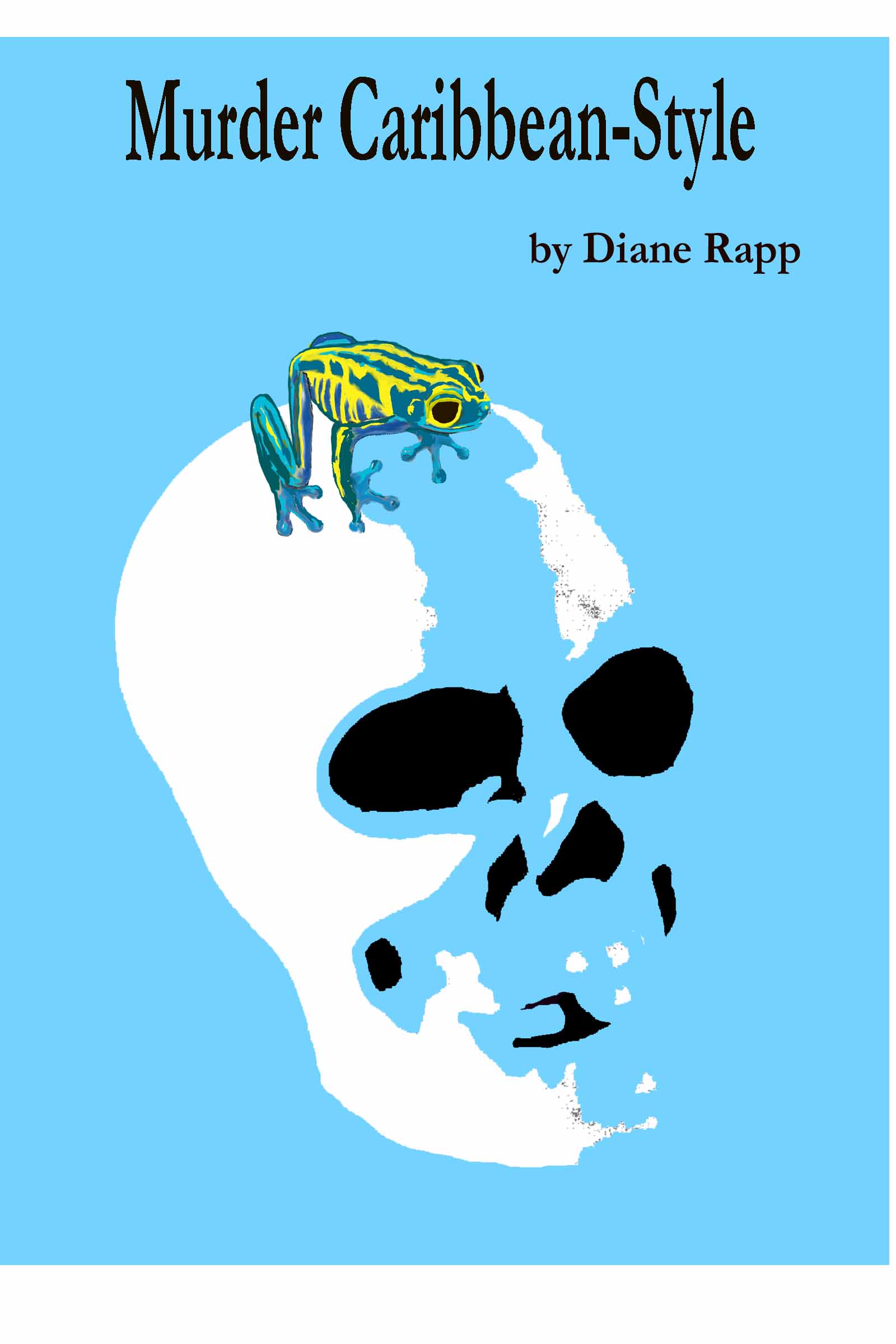
When Kayla Sanders accepts a free Caribbean cruise aboard the Aurora, she gets sucked into a modern-day mutiny culminating in the murder of her ex-lover, Patrick MacIntyre.  Plunging into a frenzied investigation to discover the killer before police arrest her friends, Kayla bumps into Steven Young every time she uncovers a clue and they soon join forces to unravel the mystery.  Can Kayla trust him enough to fall in love again?  Like a tightrope walker balancing between passion and peril, Kayla risks her life to unearth the truth behind Patrick’s death and free herself from the past.

2. What motivated you to become an indie writer?

I spent thirty years in business for myself, selling real estate, owning a retail store, and doing freelance advertising work.  When I finished my first novel, it drove me crazy to have “agents” take my work and never inform me about their progress.  As a real estate agent I knew that half the job was keeping your client informed.  Now as an indie writer I count on myself to work hard.  If I need better results I work harder.  If I go on vacation, my laptop travels.  It’s a wonderful age we live in.

3. Have you been traditionally published?  Why or why not?

I published a travel guide to the Caribbean (co-authored with my daughter) and we did three updated editions.  When I signed a contract with a publisher on my mystery novel Murder Caribbean-Style, I got so excited.  The publisher went bankrupt and returned the rights to me.  I gave up writing until my husband found an article about becoming an indie publisher.  It “kindled” my hope and I worked hard to launch four e-books on Amazon.  Sales are increasing every month and I get a higher percent of sales than with traditional publishing.

Continue reading

Amy Peterson

Amy Peterson (writing plays under the pen name Ash Sanborn) aspires to be a playwright and has e-published her play, along with other writings.  She explains her varied and unique approach to networking and marketing.

1. Pretend for a moment I’m a director or producer looking for my next play.  Pitch me one of your plays in five to ten sentences.

The Feast of Jovi Bono (known to friends as TFOJB) is a new play, a challenge to actors to tell their stories in slam poetry/spoken word art.  It’s the story of forgiveness between mothers and daughters, exes, the life-beaten and the life that beat them.  What if a tent city moved next door to your house?  You’re just one person – what can one person do to help create life from destruction?

Most plays in this century do not have a narrator, but ours has a snarky chef to make us laugh and tie the feast together.  There’s a rugby game, cake getting all over, an expanding table that Malcolm (Jovi’s best friend) keeps tripping over, padparadsha oranges, and stories that light up the night.

2. What motivated you to become a playwright?

TJOJB has not had the usual development process mostly because of the slam poetry.  First I did send it to the developmental readers at my local theater (Spencer Community Theater in Iowa) and of the three readers, two of them had very helpful feedback.  I took many of their suggestions.  The next step would have been a staged reading in which I would have found a partner-director, assembled the cast (which usually consists of whoever shows up) and had one or at most two rehearsals.  The reading would be in front of an invited audience who would then provide further feedback.  This is where the process broke down: the slam poetry is actually quite a challenge to the actors and would require more than a rehearsal or two for any one to effectively perform it.  A cold reading would create the effect the early readers feared: that it would be a group of actors standing around reciting poetry.  If that’s the case, what on earth are we doing?

From there I sent the script to a few publishers, all of whom said it was not for them, but to please consider sending them any future plays.  They weren’t getting it.  The slam poetry cannot be confined to the page.  Then I received an email from Stageplays.com.  They were dipping their toes into e-publishing plays – a very new concept – and for a very reasonable price, I could partner with them to get the script out there, available to directors, along with my contact information so I could work with them on staging it.  TFOJB will have its premiere Labor Day weekend.  It is my hope that video and other promotional material uploaded on Stageplay’s website will help artistic directors and performance committees from theaters throughout the nation decide this is something they need to do for their theaters and for their communities.

Continue reading

Julie Hawkins

Julie Hawkins has found creative freedom as an indie, and focuses her writing on Civil War fiction.  She talks about the techniques she used to tap into a specific market.

1. Pretend for a moment I’m a reader looking for my next book.  Pitch me your book in five to ten sentences.

In the spring of 1861, a country once united is fractured by war.  In north Alabama, Hiram Summers, a farmer and father of three, enlists to protect his inherited property.  His son, David, also desires to go, but is instead obligated to stay behind to care for the farm. Hiram travels to Virginia with the Fourth Alabama Infantry Regiment, where he is quickly and inevitably thrust into combat.  In the meantime, David searches for adventure at home by traipsing to Huntsville with his best friend, Jake Kimball, to investigate rumors of invading Yankees.  Their escapade turns into harsh reality when they discover the true meaning of war, and after two years of service, Hiram sees enough tragedy to last a lifetime.  A Beautiful Glittering Lie addresses the naivety of a young country torn by irreparable conflict, a father who feels he must defend his home, and a young man who longs for adventure, regardless of the perilous cost.

2. What motivated you to become an indie writer?

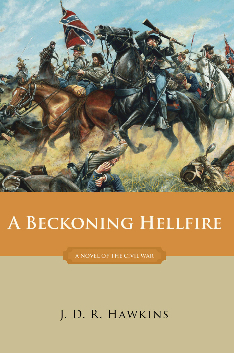
I am just starting out in the book publishing industry, but I would eventually like to be published by a traditional publisher.  Indie publishing is a good way to springboard my work into that industry.  Since I published my first book, A Beckoning Hellfire, independent publishing has changed dramatically, so that now authors can have bestsellers without being picked up by traditional publishers.

3. You have not been traditionally published.  Why?

Working independently gives me the freedom to express my views without conforming to the traditional market.  It has more flexibility and opportunity than ever before.  Traditional publishers are looking for bestselling authors with an accomplished track record.  What I have found by attending conventions is that there are a lot of independent writers who are equally talented.  Being published independently doesn’t reflect the quality of writers who are out there.

4. How have you liked self-publishing so far?

My experience with self-publishing so far has been very good.  It has given me a vehicle in which to publish a story that I feel passionately about.  It has also enabled me to establish a following of readers who have an ongoing interest and relationship in the Civil War market.

Continue reading

Sherry Woodcock

Sherry Woodcock is a spiritual writer who turned her blog into a book and uses her personal experiences to shape her writings.  She talks about using a launch party as an element of her marketing campaign and why writers must “get out there” to create awareness of their books.

1. Tell me briefly about your books – what are they about and what motivated you to write them?

My books took life from a blog I started in January of 2010, called Daily Spiritual Tools.  The first one took the name of my blog as the title.  The second one is only available as an e-book and is called Daily Spiritual Tools, Learning How to Forgive and Let Go.

These books and my blog are focused on spiritual practices I call “tools.”  I’ve always been a voracious reader and spent hours reading spiritual and metaphysical books.  From these books, and clairvoyant training I pursued in the nineties, I gathered countless ways of connecting on a daily basis to that inner consciousness that many call God.  I began writing about them, in what my readers say is a clear and easy to read style.  The truth is I wrote for me, to find my voice.

2. How have your sales been?

Since October, when I released Daily Spiritual Tools, I’ve sold 75 paperback copies and six e-book versions.

3. You have not been published by a traditional publisher.  Why?

I went with non-traditional publishing because my topic is popular with a small group of readers.  Targeting spiritual but not religious
readers is not something that most traditional publishing houses would take a risk on.  I did send out query letters and letters to agents, but had little success.

Continue reading

Marcia Barhydt

Marcia Barhydt has had success as both an indie author and a traditionally published author.  She talks about working with a publisher and networking with small groups to sell her book.

1. Pretend for a moment I’m a reader looking for my next book.  Pitch me your book in five to ten sentences.

My first book, Celebrate Age, is a collection of articles that I wrote for Timeless Woman about a huge variety of topics of interest to women over 50.  The subtitle of my book is “Thoughts, Rants, Raves, and Wisdoms Learned after 50”.  I talk about a diverse selection of topics including how important our girlfriends are to us now, how it helps our lives to learn how to live in the moment, the pitfalls of online dating for older women, finding balance in our lives, jokes about older women and why they’re bad, and how to get out of the box we sometimes find ourselves in.

2. What motivated you to become an indie writer?

For 32 years I was a flight attendant.  When I retired at age 55, I decided to do what I knew best and became a self-employed customer service trainer.  After about five years of doing that, I started writing a customer service column for a local paper and that led to me writing for Timeless Woman.

Since I didn’t get paid by Timeless Woman, I thought I could make up a small income if I turned my articles into a book.  And I also thought I might be able to touch more women, to give them my thoughts on some of the issues that we face today.  I knew nothing about publishing, so I decided to do it myself.  Ergo, an indie writer!

3. Have you been traditionally published?  Why or why not?

My upcoming book, One Small Voice, will be published by a traditional publisher.  And I’m doing that because I have the money to afford that now and, don’t laugh, but my publisher can do the formatting of this next book for me.  I did the formatting for Celebrate Age and it made me nuts!  I hated doing it!  Self-publishing left me with a good looking book; a publisher will leave me with a great looking book that looks more professional.

4. How have you liked self-publishing so far?

I was fortunate with my first book to know a woman, my printer, who gave me lots of tips about making the cover, the index, and formatting the pages.  I’m glad that I’ve self-published, glad for the knowledge and experience it gave me, and especially glad to know that I could do it again any time I wanted to.

Continue reading

Kathy Lynn Harris

Kathy Lynn Harris has had success as an indie author with her book, Blue Straggler.  She talks about why self-publishing was an attractive alternative to the traditional model and the role pricing has had in selling her books.

1. Pretend for a moment I’m a reader looking for my next book.  Pitch me your book in five to ten sentences.

Ah, the elevator pitch!  Here you go: being a 30-something, fairly directionless single female in South Texas is a world all its own.  Kathy Lynn Harris’s Blue Straggler is a laugh-out-loud, yet poignant, exploration of that experience — from the quirky, memorable characters who make up Bailey Miller’s circle of family and friends to that feeling of your makeup sliding right off in the humidity.  You will easily identify with Bailey’s sometimes humorous, often semi-tragic, choices that eventually lead her out of Texas, to a small mountain town in Colorado, and back.  Along the way, she searches for not only herself but also answers to long-held secrets from her “legitimately unbalanced” great-grandmother’s past.  Bonus: She may even find love with a moody mountain man along the way.

2. What motivated you to become an indie writer?

With the help of traditional literary agents, I shopped two of my novel manuscripts around.  All the big houses told me the stories were “too quiet.”

I travel for my day job and saw that more and more people were using e-readers.  I knew Amazon and Barnes & Noble had programs for publishing e-books.  I revisited my main goal for my writing: to simply have others read my work and enjoy it; not to have my name on a blockbuster published by Simon & Schuster.  So, I thought, why not just put the book out there?  It’s been such a great experience.

3. Have you been traditionally published?

I have had numerous works printed in traditionally published anthologies.  And now, thanks to the success of the e-book version of Blue Straggler, an independent publisher, 30 Day Books, has picked up the book.  The paperback version comes out March 1.

Continue reading

Ted Gross

Ted Gross is a short story writer who’s busy with a variety of writing projects.  In this interview he offers a laundry lists of recommendations for indie writers to successfully get their books out there.

1. Pretend for a moment I’m a reader looking for my next book.  Pitch me your book in five to ten sentences.

Ancient Tales, Modern Legends, a short story collection by Ted William Gross, presents the reader with engaging and thought-provoking stories spanning the ages.  Covering subjects of love, loss, pain, desire, need, frustration and hope, these stories are meant to entertain as well leave an indelible impression upon the reader.

This is not a book to dismiss easily.  Enjoy it, grow with it.  You will, in turn, be haunted by it and the stories will remain with you long after you have closed the pages.

As almost all authors will tell you, their work in writing is a labor of love.  “Ancient Tales, Modern Legends” is a collection of stories that were written over many years, sometimes in great pain, sometimes with great joy, and is certainly a labor of love for both the author and the reader.  As colleagues read them, and some were published, I was prodded to publish the rest.  It is my hope that they will make you, the reader, stop and think, perhaps just about the waywardness of life.  They all are short stories in the pure art form of this genre.

2. What motivated you to become an indie writer?

I followed the industry for many years.  I have watched the indie book explosion.  I have also closely watched the trends.  My feeling is that the days of traditional publishers where they were the “bully” on the block has come to an end.  It is an age of “let the reader choose”.  You can write just so many query letters, have just so many books accepted and then cancelled on you before you either give up or find another avenue.  Indie book publishing offers another avenue.  And it is becoming more and more legitimate in the eyes of readers.  And certainly easier to actually go through the “publishing routine”.

In the end, simply a matter of practical thought and decision.

Continue reading

Sean MacUisdin

Sean MacUisdin is a sci-fi writer who lets his imagination tell the story.  Sean talks about balancing writing and marketing and why he’s exploring the use of e-book trailers on YouTube.

1. Pretend for a moment I’m a reader looking for my next book.  Pitch me one of your books in five to ten sentences.

Were you ever afraid of boredom more than the unknown?  Did tedium and predictability, those bywords so often associated with the responsibility of adulthood, give you pause for a moment, and inspire you to do the unexpected?  Meet Alexander Armstrong: seventeen years old, poised to graduate high school and preparing for the comprehensive education and career laid out by his parents. That is until, fueled by an immature desire for adventure, he stole away one night and hopped a train for Vancouver where, in a fit of teenage pique, he signed up for service in the United Nations Off-World Legion.

Eight weeks later, as he jumps from the bed of a transport truck into the mud of the colony of Samsara, twenty light years from Earth, Alexander is confronted not by a sterile and deliberately planned colony of his dreams but by a world of transplanted tribes, warlords, and refugees.  It is a world where the tundra camel and steamboat reign supreme over the trackless steppes and mountainous lakes and rivers; where pirates, Chinese Tongs, Kazakh bandits, and Gliesiun warriors pale before the presence of his decuria leader, Subedar Angus Motshwega, better known throughout the Legion as MacShaka the Tartan Zulu.

2. What motivated you to become an indie writer?

To be honest, I was motivated by what often felt like insurmountable odds in getting my book to print.  Agents, publishers, awards, and no end of luck seemed to be the factors I needed to bring my books to print, so I opted, after a course at the local college, to take the e-book approach.

3. Have you been traditionally published?  Why or why not?

I have only had a poem published in a Canadian anthology.  I tended to write more than market, since I spent much of my time over the last decade away with the Royal Canadian Navy.  It’s only recently with a shore posting that I have had the time to concentrate on marketing my books.

Continue reading

Gilly Fraser

Gilly Fraser has been traditionally published and so has seen both sides of the writing profession.  She advises indies to edit their books and work tirelessly to get them in the hands of readers.

1. Pretend for a moment I’m a reader looking for my next book.  Pitch me your book in five to ten sentences.

If my book Forbidden Love and Other Stories were to be reborn as a curry, it would be hotter than a korma, but not as spicy as a vindaloo.  It would probably be something like a Chicken Tikka Masala!  The four short stories in this collection have nothing in common except romance, and a touch of humor.

In Slippery When Wet, Maxine has to decide if she’s living a dream come true or a nightmare when the man of her fantasy turns up unannounced in a swimming pool.

In the title story Forbidden Love, rock star Jake Lee is drawn back to his roots and the girl who first inspired him.  But has he left it too late to go home?

In The Great Pretender, a tale of love and retribution is played out through the ages – but not unobserved.

And in Melissa and the Cowboy, lust can happen along at the most inopportune moment.

2. What motivated you to become an indie writer?

I love the independence of it.  It’s not an easy option – far from it – but I relish the opportunities and the freedom it affords to the writer.  I’m aware that this freedom is open to abuse by those who are content to publish sub-standard material and so it’s up to those writers who genuinely love their craft to produce the very best work possible.

3. Have you been traditionally published?  Why or why not?

Yes – I had nine books published by Mills & Boon under the pen-name of Rachel Elliot and I’m very proud of that.  I hope the rights will soon revert to me so that I can publish the backlist, though I’m quite keen to rewrite the books to some extent to make them fresh and up to date.

Continue reading

Kathryn Jones

Kathryn Jones has worked with a local publisher, but chose to self-publish after learning she could make more money doing it herself.  Here she explains her use of postcards and CreateSpace as part of an overall marketing strategy.

1. Pretend for a moment I’m a reader looking for my next book.  Pitch me one of your books in five to ten sentences.

Struggling?  Want to make your life better?  Perhaps you feel as if your life is already taking you down the right path.  Want to improve it?  Try talking to God.  Conquering Your Goliaths: A Parable of the Five Stones is for anyone desiring to travel beyond mediocrity, pain and fear.  Want to take your life to the next level?  You’ll want to read this book.

2. What motivated you to become an indie writer?

I like having my hand in all of the variables of publishing: book cover creation, formatting, marketing….

3. Have you been traditionally published?  Why or why not?

Not traditionally in the sense of a national publisher picking up my book, but my first book was published by a local publisher.  I did most of the marketing and figured that I could make more money doing the book myself while still being able to market my book.

4. How have you liked self-publishing so far?

I love it!  My husband is a big help; he has learned to do all of the formatting, all of the technical stuff to get a book looking great, and I help him decide on a cover and the general layout of the book.  CreateSpace is a great place to get your work published.  Less than $50 is spent getting a title in print, and books are printed as they are sold (POD) so the investment is small.

Continue reading