Vincent Formosa

51e+WDmB0SL._SY346_British author Vincent Formosa combines his background in history with his love for aviation. Read about how he navigates a crowded self-publishing field and why Twitter is not the platform best suited for him.
1. Tell me briefly about your latest book – what is it about and what motivated you to write it?

My latest book out is a novel titled Run The Gauntlet. It follows the life of an RAF light bomber squadron from the outbreak of World War 2 to the end of May 1940 and the fall of France.

I was inspired to write it after reading an article in an aviation magazine about the air war in France during the German Blitzkrieg. It related a few details about a Blenheim bomber squadron (the Blenheim was a twin engine light bomber in the RAF at the time, 3 men per crew) that lost 18 out of 21 crews in 10 days and that figure did not include the replacements who had also been shot down.

I was staggered by this. The thought of a squadron that had fought and trained for years before the war to be almost casually wiped out really brought home to me the cost of war. So I started the novel, doing a lot of research along the way, trying to encompass that press on attitude while conveying the harshness of combat.

2. How have your sales been?

Sales so far have been slow. My first novel came out in 2011. My second novel came out at the end of 2016.

I’m playing the long game on this one. I’m writing for a bit of a niche genre (aviation military fiction) and while there are lot of aviation magazines, they don’t review fiction, so it’s proving difficult to get myself out there and known. I realize that when someone buys your book and then looks to see there are no more by you, you miss an opportunity for a secondary buy. So as time goes on, I’ll have more books out there and it will naturally blossom. A reader will read one, say “I enjoyed that,” and then see there are others they can buy. So one sale can turn into four or five.

3. You’ve chosen to use indie publishing for your books. Can you elaborate as to why you made this choice?

About 8 years ago I came across Joe Konrath’s blog where he discussed what had led him to self-publish and I found his argument very reasoned. 99.9% of new authors will not get much in the way of promotion from a publisher, so for the virtue of getting my book physically on a bookshop shelf, I’m giving away quite a percentage of royalty.

So if I’m not getting any promotion help, why not do it myself and get more royalty for me?

Continue reading

Cerynn McCain

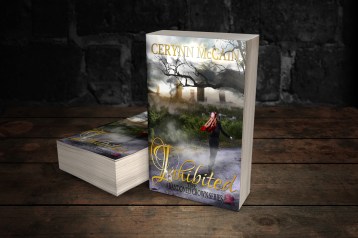
Book cover 1.JPGCerynn McCain favors the control authors have with self-publishing. Here she talks about the challenges of networking as well as one marketing technique she avoids.
1. Tell me briefly about your book – what is it about and what motivated you to write it?

A brief blurb about the book: In a world where the Àraid have been nearly forgotten, The General remembers. He knows there are still a few hiding. He’s just waiting for one to reveal themselves so he can wipe them out.

Christa knows this. She knows he’s watching her. She knows she needs to keep up the facade of being human. For years staying hidden has been easy, but something has changed. The General lost something valuable, and Christa now must keep it out of his grasp. But how far is she willing to bend before she has no choice but to reveal her powers and risk him finding them?

I started writing it right after my best friend moved away. I was a rather lonely person after that, and the characters I created in the story really helped me get through, so I decided to publish it hoping it might help others as well.

2. How have your sales been?

Honestly? I try not to look. I published it because I loved it. I’m worried if I start checking my sales I’ll start obsessing about the numbers and not focus on continuing the story for me, rather than for publicity.

3. You’ve gone the self-publishing route. Have you sought an agent or any work with traditional publishers? If not, why not? If so, what has been your experience with traditional publishing?

I did try to get an agent for a while, I queried about 20 agents. However, I think I sabotaged myself because I’m not good at pitching my book. I love it. I stand by it. I have a very hard time telling other people they will love it because not everyone loves the same stuff so I had a really hard time writing my query. Also a lot of agents don’t want
to pick up first time authors writing the first book in a series because they worry I won’t finish the series. I plan to query again after the full series is out. A long shot, I know, but I might as well try.

Continue reading

Larry Montgomery

lm.jpg

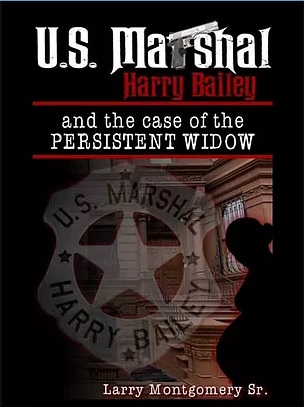
Larry Montgomery is a prolific writer who is working hard to make his name in a crowded market.  He discusses a variety of specific marketing techniques he uses to try to do so.

1. Tell me briefly about your current writing project – what is it about and what motivated you to write it?

My current project is titled The Case of the Persistent Widow. It is the first of a 12-book series entitled, “The Parables of Life.” I was inspired after reading a number of biblical parables from the King James version and wondered how these stories would play out in these days and times. While the original purpose of each of the biblical parables was Jesus’ attempt to simplify concepts for living a Christian life when you delve into them there is a lot of similarities to situations people, Christians or not, could find themselves in.  If you like mysteries, whodunnits, or stories where the good guy isn’t just interested in getting in someone else’s pants; and if you have ever wondered how a 2,000-year-old biblical parable could apply to your life today, then read this book.

2. How have your sales been?

My test marketing on Amazon.com, as a self-published author, had surprising results. Based on those results, I decided to dive into an all-out marketing relationship with my current publisher, Newman Springs, and take the project directly to the market.

3. You’ve gone the self-publishing route. Have you sought an agent or any work with traditional publishers? If not, why not? If so, what has been your experience?

As I mentioned above self-publishing is a means to an end, the end being to get your work out into the marketplace. Self-publishing within the context of a limited campaign platform will only drive so much buying traffic to the author’s sales network. However, direct engagement within a multi-marketing platform is where the market separates the wannabes from the newbies. You can’t learn to swim in your bathtub but once you jump into the ocean, it is a sink or swim experience.

Continue reading

Janos Meteo

janosJanos Meteo uses what he calls “grassroots guerrilla marketing” to get his books into as many hands as possible. Read about his efforts to overcome the challenges of self-publishing.
1. Tell me briefly about your book, Fractured Glow – what is it about and what motivated you to write it?

It’s about an actor on, what he feels, is the cusp of success. He is shooting a movie and documents each day. The book starts off as a journal with short entries, but eventually morphs into a novel with each consecutive date as a full chapter instead of the day summarized. The main character is well-to-so, but sociopathic and carrying baggage. No matter how hard he tries, things always tend to go sour.

I had a dream about it and wrote it down the following morning, like I do occasionally (I have a bunch of novel ideas based exclusively on my dreams), and decided there was enough meat for a story. So I wrote it.

2. How have your sales been?

I have no idea. I just published it in November 2018 (it’s early December as of writing this) and have been promoting it person by person and online for now. I believe at least a few people have bought it.

3. You’ve gone the self-publishing route. Have you sought an agent or any work with traditional publishers? If not, why not? If so, what has been your experience?

I self-published just to start. I don’t really know anyone or have any means to promote on a grander scale. Also, it’s my first book and I’m unknown, so I thought it would be best to promote from the ground level. Grassroots guerrilla marketing, if you will, just for now until I get my bearings.

The experience has been good so far. I’ve met a lot of interesting people. I have not worked with an agent or sought a traditional publisher, but I’m not ruling it out.

Continue reading

Michael Nye

MLfront cover4facebook

Michael Nye believes that self-publishing maximizes an author’s creative control. Learn which marketing methods he avoids and the (many) words of wisdom he has for new authors just starting out.

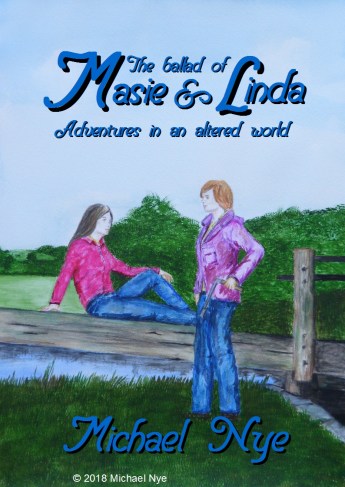
1. Tell me briefly about your latest book, The Ballad of Masie & Linda.  What is it about and what motivated you to write it?

After writing my fourth book, Nearwater, I began to wonder how two of the minor characters in it (Masie and Linda) would develop after escaping the abuse each had received for the first sixteen years of their lives. Because I needed to find out, I had to write the adventure. Masie and Linda are, and always will be, a little haunted by their similar pasts, but they feel free to talk about what happened because each knows that the other will understand, having had similar or the same experiences themselves.

Of all of them, this has been the most difficult to get down on paper as it deals with quite dark subject matter in a way that, I hope, is neither depressing, nor so up-beat as to be unreal. More than anything, the story explores the theme (present in all my books) of the nature of enduring friendship.

2. How have your sales been?

Best way to describe sales is slowish but steady. I get royalty payments from Amazon every now and then, which makes me happy that someone is reading my work.

3. You’ve chosen indie publishing as opposed to traditional publishing. Can you elaborate more on your choice?

I studied Fine Art at Sunderland Polytechnic in the late seventies/early eighties and the books have an echo of this training. I see them as entities in themselves and need to keep as much as I can under my own control. I doubt I would react too well at having a company involved in advising me on content or cover of my work. Some of my tutors at Sunderland Polytechnic would, no doubt, testify to that one!

Continue reading

J.T. Joseph

tumblr_pj74a3nxnZ1y1y5s8o1_400

J.T. Joseph combines history with a touch of adventure. In this interview he discusses the pros and cons of using a hybrid publisher, plus the numerous social media platforms and websites he uses for marketing. 

1. Tell me briefly about your book – what is it about and what motivated you to write it?

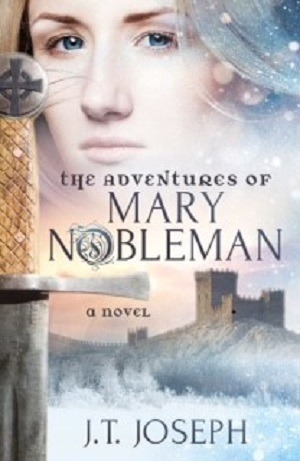
My novel, The Adventures of Mary Nobleman, is about a girl who discovers she is a descendant of the legendary King Arthur. I was partly inspired by The Da Vinci Code.

2. How have your sales been?

I’m not exactly sure, because my publisher keeps track of the details.

3. You’ve described your publisher as a mix of both indie and traditional.  Can you elaborate on this?

They consider themselves a hybrid publisher. It combines self-publishing and traditional methods, but I hope one day I’ll be with a traditional publisher.

Continue reading

Florence Osmund

Florence Osmund self-published her first book, The Coach House, earlier this year.  In that time she has picked up a lot of great marketing tips, and she shares them here.

1. Give me the “elevator pitch” for your book in five to ten sentences.

1945 Chicago.  Newlyweds Marie and Richard Marchetti have the perfect life together.  Or at least it seems until Marie discovers he secretly attends a mobster’s funeral.  And when she inadvertently interrupts a meeting between Richard and his so-called business associates, he causes her to fall down the basement steps, compelling her to run for her life.  Ending up in Atchison, Kansas, Marie quickly starts a new life for herself in a coach house apartment.  Ironically, it is the discovery of the identity of her real father and his ethnicity that changes her life more than Richard ever could.

2. Tell me about the marketing techniques you’ve used to sell your books. Which ones have been the most successful?

One thing is for sure: books don’t market themselves, so we indie authors have to be diligent and creative in our marketing efforts.  Two ‘musts’ I believe are creating a website and maintaining a blog.  People just expect it, and if you want to get the word out about yourself and your books, you have to have these.  Some other methods I’ve used are the creation of Amazon and Facebook author pages, adding links to my website and blog in my e-mail signature block, participating in online discussion groups, seeking out book reviews, subscribing to book promotion sites, sending out a good press release, including testimonials in my website and blog, participating in online interviews such as this one, contacting book club members, and networking with family and friends.  If all my Facebook friends were to re-post my book announcement, I would reach close to 10,000 more people.  That’s a lot of potential book sales!

Continue reading

Ro Lockhart

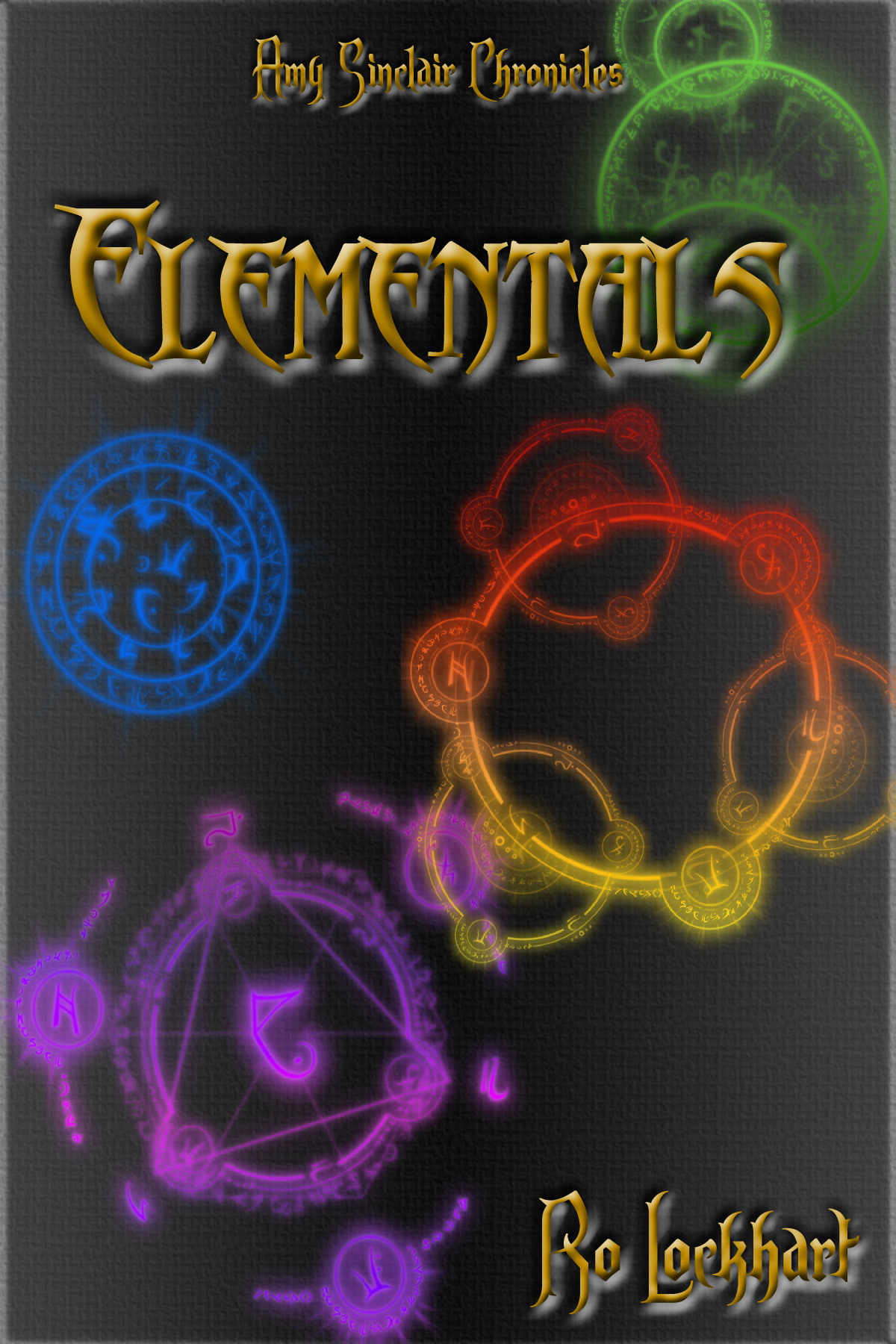
Ro Lockhart is a juvenile fiction/fantasy writer who just released her book, Elementals, in February on the Amazon Kindle.  Check out her list of marketing techniques below.

1. Pretend for a moment I’m a reader looking for my next book.  Pitch me your book in five to ten sentences.

My pitch: “Amy and her father decide to take a camping trip in the great outdoors to reconnect, only to find that their trip takes on some uninvited guests: an exotic but fierce elf, a Druid witch bent on revenge, and a whole slew of frightening elementals.

Between the prophetic dreams Amy’s having and Unna, a banished Druid with evil intentions and her minions on Amy’s tail, it’s a race against time to battle elementals, traverse and treachorous terrain, solve puzzles and find the courage neither of them thought they had.”

2. What motivated you to become an indie writer?

I’ve been writing since elementary school and I always had the grand notion that I would grow up and write a few books, they would fly off of shelves and I would be rich and famous. Well, that didn’t happen.

It took not only my own rejections from agents and publishers to help me see the light but other authors as well.

So many authors with phenomenal work were getting rejected left and right. But then I heard about the success of a few indie authors and realized that this is a new day where, if you really want to make it and have ambition (as well as a good story), you can be the weaver of your own destiny.

3. Have you been traditionally published?  Why or why not?

I have not been published traditionally because after the first few rejections, I found that if I went at it on my own I would do better than doing nothing at all.

Continue reading

Marcia Barhydt

Marcia Barhydt has had success as both an indie author and a traditionally published author.  She talks about working with a publisher and networking with small groups to sell her book.

1. Pretend for a moment I’m a reader looking for my next book.  Pitch me your book in five to ten sentences.

My first book, Celebrate Age, is a collection of articles that I wrote for Timeless Woman about a huge variety of topics of interest to women over 50.  The subtitle of my book is “Thoughts, Rants, Raves, and Wisdoms Learned after 50”.  I talk about a diverse selection of topics including how important our girlfriends are to us now, how it helps our lives to learn how to live in the moment, the pitfalls of online dating for older women, finding balance in our lives, jokes about older women and why they’re bad, and how to get out of the box we sometimes find ourselves in.

2. What motivated you to become an indie writer?

For 32 years I was a flight attendant.  When I retired at age 55, I decided to do what I knew best and became a self-employed customer service trainer.  After about five years of doing that, I started writing a customer service column for a local paper and that led to me writing for Timeless Woman.

Since I didn’t get paid by Timeless Woman, I thought I could make up a small income if I turned my articles into a book.  And I also thought I might be able to touch more women, to give them my thoughts on some of the issues that we face today.  I knew nothing about publishing, so I decided to do it myself.  Ergo, an indie writer!

3. Have you been traditionally published?  Why or why not?

My upcoming book, One Small Voice, will be published by a traditional publisher.  And I’m doing that because I have the money to afford that now and, don’t laugh, but my publisher can do the formatting of this next book for me.  I did the formatting for Celebrate Age and it made me nuts!  I hated doing it!  Self-publishing left me with a good looking book; a publisher will leave me with a great looking book that looks more professional.

4. How have you liked self-publishing so far?

I was fortunate with my first book to know a woman, my printer, who gave me lots of tips about making the cover, the index, and formatting the pages.  I’m glad that I’ve self-published, glad for the knowledge and experience it gave me, and especially glad to know that I could do it again any time I wanted to.

Continue reading

Stephanie Briggs

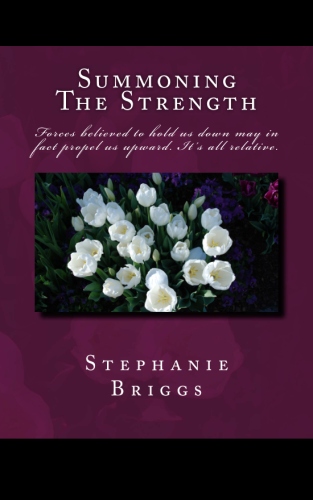
Stephanie Briggs has published her first book and has gone from never using social media to integrating it into her marketing campaign.  Here she shares what works for her and how a published author inspired her to try self-publishing.

1. Tell me briefly about your book – what is it about and what motivated you to write it?

Summoning The Strength is a fictional story about the amazing qualities of ordinary women in the life of the main character, Katherine Doyle.  Katherine grows up in Virginia during the 1950’s and 60’s.  She goes to Syracuse University in 1972.  She is a typical idealistic, naïve, and determined young woman of that era.  Her attitude is much like my own.  It isn’t autobiographical.  However, as the cover says, grandmothers, mothers, sisters, and daughters make the same journey no matter the vehicle.  The story captures the nature of a life well lived and shows how the worst of circumstances can help us discover the best of ourselves.

I was introduced to a circle of intelligent, independent, and hilarious women by a friend.  A discussion of a personal nature turned into a writing exercise, and then for me, an obsession.  I began to experience something that caught me completely by surprise.  I needed therapy.  Not the per hour kind, but the sit still with your emotional baggage until the bus to epiphany comes along, kind.  During this time, my most cherished friend of 23 years was losing a two year battle with cancer.  The pace of the story was affected by this event and the fact that I strive to be concise.  That surprise notwithstanding, I wrote almost without pause day and night.  (No kidding.)  I wanted to share the story and the writing experience with my friend and I read parts of it to her while we spent the last month of her life together laughing and reminiscing.

2. How have your sales been?

Do you hear what I hear?  I think that is the sound of crickets.  Not to worry.  Cha-ching would not only be an unrealistic expectation but also not what I am going for on my first time out of the gate.  It would be dizzying euphoria but isn’t necessary for my happiness. (Short answer: SLOW)

3. You have not sought a traditional publisher.  Why?

I read an article on CNET written by a published author talking about self-publishing.  The article compared the ever shrinking “brick & mortar” publishing houses to the trendy, although less-respected, self-publishing camp.  It extolled the virtues of self-publishing’s quick turn times and low production costs.  It also gave an honest assessment of the quantity over quality marketplace.  There were also some comparisons of the different options available to authors looking for ways to express themselves without the expense of agent or attaché.  I was sold.  I had something to say.  I channeled my inner James Bond and I didn’t look back.

4. You’re relatively new to self-publishing.  How have you liked it so far?

I have been pleased with CreateSpace.  The free tools, reasonably priced upgrades, and prompt responses from member services during the creation process made my first publishing experience a positive one.  I have also connected with like-minded, kindred spirits I never expected to meet.  (I am still smiling.)

5. What sort of marketing techniques have you used to sell your books, and which ones have been most successful?

CreateSpace provides a free bare bones e-store.  I have dressed it up as much as I can with a sophisticated grey background and banner photo I took last spring of some pink tulips.  (You can’t make a silk purse out of a sow’s ear.)  There is a link to my e-store on my blog.  I use the WordPress platform for jumping out there with fresh content to attract readers who like my writing style.  RSS feed of my posts go to my Amazon author page and Summoning The Strength’s Facebook page.  I share my posts on LinkedIn, Google, and StumbleUpon.  (I don’t Tweet.)

I also belong to a few writers’ groups which have yielded one very nice book review and this awesome interview.  Shameless self-promotion and begging seem to be the top tier money makers right now.

I sent copies to buyers for a couple of indie book stores and reached out to the airport book retailer Hudson News.  No takers from the indies yet, but I did receive a snarky email from the buyer at HN saying they don’t waste their premium space on vanity press (only best sellers need apply.)

6. Are there any marketing techniques you intentionally avoided or discontinued, and if so, why?

I avoided spending money on ads or email blasts popular with the scam-spam set.

Once my book sales break say 50, I will probably discontinue approaching strangers in the grocery store and at my favorite neighborhood bar & grill, which can be hit or miss.  This technique can also be embarrassing if a conversation starter in the produce department goes terribly wrong.  Plus it will become cost prohibitive when I have to start driving across town for avocados or a beer since the price of my book is only $9.99.

7. What’s the most important thing you’ve learned about self-publishing that you didn’t know when you started out?

I can do it.  I had never used any professional or social networking sites.  I am not tech savvy.  I leaned into the learning curve and am happy to say, I hung in there.

8. If you could do one thing differently in publishing your books, what would it be?

Hire tech support.  I have a love/no love relationship with technology.  My creativity flourishes when I discover a great tool or resource.  I sometimes become bogged down trying to navigate through the sheer volume of information required to learn how to use them properly.

9. Independent authors face the obvious challenge of marketing their books without the resources of traditional publishers.  What advice do you have for an indie author just starting out?

Reject rejection.  Feedback is just feedback.  Listen to it.  Focus on the positive. That right action alone will yield positive results.  When you make the most of the network you already have in place, your connections will multiply.  Be selective when joining online groups and try not to criticize, condemn, or complain in a public forum. People get enough of that in the news media and they will tune you out double quick. I know because that’s what I do.

10. What projects are you currently working on?

Each time I post to HonieBriggs.com, I learn something.  I’m using those eureka moments to build a bank of ideas for two books.  One is a follow up to Summoning The Strength.  Consistent feedback says people want to know what happens next.  There is more to the story worth a second book.  I also have an idea for a light-hearted look at my own growth and evolution as a person.  The working title is Baptist to Buddhist, My Forty Year Journey.  Because people can sometimes get hung up on religious labels, it is only a working title at this point.  You can see the style of that kind of book in my blog posts.

11. If you could market your brand – not just one particular book, but your overall brand of writing – in one sentence, what would it be?

My writing is word play with a purpose.  (That is my idea of fun.)

12. How can readers learn more about your books?

Visit honiebriggs.com for all things noteworthy.

Shop Honie’s e-store or Amazon for all things written by Stephanie Briggs.  There is more than one author named Stephanie Briggs out there.  (Accept no substitutions.)