Michael Stephen Daigle

IMG_7092.JPGMichael Stephen Daigle has had experience with both traditional and self-publishing.  He suggests a variety of in-person marketing techniques and explains which ones work best.

1. Tell me briefly about your latest book – what is it about and what motivated you to write it?

My last completed book is The Red Hand, book four in the Frank Nagler Mystery series. The title comes from the mark that the killer leaves at the scenes of his crimes. It is a prequel, set roughly twenty years before the The Swamps of Jersey, the first book in the series. It establishes themes that appear in all the other books, and defines the important relationship in Detective Frank Nagler’s life: with his wife, Martha. It also defines the Charlie Adams murder story that filters through the other books and the political crime scheme that is a constant.

I wrote The Red Hand to clarify those elements, especially as I plan the fifth book in
the series as a book-end to the entire story. Readers also wanted to read the Charlie Adams story. It should be available in the spring of 2019.

2. How have your sales been?

Sales are not as brisk as I would like, but I’ve learned not to panic about it. The marketplace is changing and I need to be flexible in my approach. Some of it is networking and some of it is determining how much I’m willing to spend to market the book.

3. You’ve used both self-publishing and traditional publishing. Which one do you prefer and why?

I self-published a short-story collection and a single short story, but pulled hem back. I was getting a lot of free looks but few sales. I also wanted to rework the collection. I have a small independent publisher who is enthusiastic about my books and has offered more support than I could have imagined. The choice reduced my costs, and frankly, got me published.

Continue reading

T.L. Chasse

17342950_1900215396857599_5463146575114977439_nT.L. Chasse has used author talks as a means of promoting her books.  She discusses the pros and cons of self-publishing and how writing fan fiction has shaped her craft.

1. Tell me briefly about your latest book – what is it about and what motivated you to write it?

My latest book is called Oh, Henry, A Vintage, Maine Novel, about a young man named Henry Titan who discovers that he was adopted. He spends the summer in a small town called Vintage, Maine, trying to track down his birth mother. Henry also happens to have a condition called achondroplasia. During his adventurous summer, Henry gets tangled up in small-town gossip, lies and treachery – there may even be romance in the air.

I was motivated to write this book after watching Peter Dinklage (“Game of Thrones”) talk in an interview. He stated that it was always hard for a dwarf to find roles of real people – rather than playing an elf or a leprechaun. I decided then to feature a young man with dwarfism in a novel.

It has been a wonderful experience. I contacted the New England Chapter of Little People of America. One of their admin set me up with a sensitivity reader, whose feedback was tremendously helpful. I’m so excited to launch Oh, Henry and am looking at a spring release.

2. How have sales for your books been?

My sales have been relatively low; however, that is my own fault. I have not been very proactive with marketing and PR. But the feedback that I have received on my first two novels, as well as the few beta readers for Oh, Henry have all been very encouraging.

3. You’ve gone the self-publishing route. Tell me more about that and how you got into it.

When I first decided to write, it was mostly for myself, as a hobby. After having several close friends who I had shared my stories with request copies, I decided to look into a print-on-demand venue. I went through Createspace and have been very happy with it.

Continue reading

K.M. Riley

kelly_origK.M. Riley prefers the support offered by traditional publishers.  But she knows marketing and networking are still essential, and she shares some of her methods.
1. Tell me briefly about your latest book – what is it about and what motivated you to write it?

Fever Rising is an action-packed dystopian where society has been divided into castes, and the genetically modified fighters are leading a revolution to overthrow the government that owns them.

I was motivated to write Fever Rising when I was working overseas. I had a lot of free time and the inspiration just hit me.

2. How have your sales been?

Sales are decent online. It takes a lot of work trying to promote oneself and make a name for the book. I’ve had more success at local Barnes & Nobles signings where I’ve sold out more than once. There I get a chance to talk to interested readers and answer any questions they might have.

3. You’ve had experience with both self-publishing and traditional publishing. Which do you prefer, and why?

I’ve had experience with both, but I still prefer a traditional publisher. As I’ve stated below, they’re there to help the author succeed, taking a lot of pressure involved in producing the book off the author’s shoulders.

Continue reading

Raymond Bolton

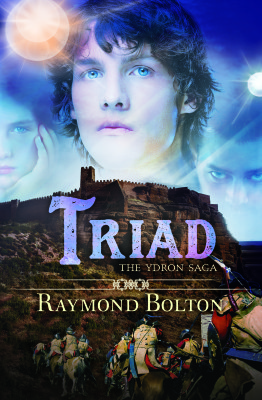
TriadEBookCover.jpgRaymond Bolton has been both self-published and traditionally published, and prefers the latter.  Find out why, along with the role that word count and a solid manuscript play in publishing.
1. Tell me briefly about your latest book – what is it about and what motivated you to write it?

My latest novel, Triad, an epic fantasy, is the final book in a trilogy. It was released by WordFire Press on December 3, 2018. By fantasy, I’m not talking about magic or sorcery. All of the books I write have to do with the paranormal and, in this series, my protagonists are anything but superheroes. Instead, they are ordinary people caught up in adverse circumstances with one unique talent available with which to thwart a nefarious warlord and his armies. In Thought Gazer, the protagonist is a telepath. Foretellers involves a prescient mother and daughter. They come together in the third in the series with a young man who is telekinetic. It has always struck me as odd that the physically handicapped rarely appear in books of this nature, since they are ubiquitous in ours, so I made Triad’s protagonist paraplegic.

2. How have your sales been?

Since I am now traditionally published, I’m not privy to all of the details. All I can tell you is that my royalty checks keep getting larger and my books are, without exception, rated at 4.5 stars or better all across the internet. An interesting side note: WordFire Press informed me that last year 75% of the sales of my debut novel, Awakening, came from China. I find that oddly amusing since, aside from its Spanish translation, it’s only available in English.

3. You’ve had experience with both self-publishing and traditional publishing. Which do you prefer and why?

I have to go with traditional publishing. Although self-publishing helped me establish a readership, having been acquired by WordFire, publisher of the Dune and Star Wars series, has given me credibility.

Continue reading

S.P. Jayaraj

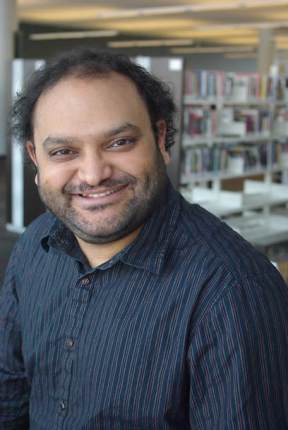
imgp3554S.P. Jayaraj knows the hard work it takes to make it as a self-published author.  Find out how he uses book fairs and Patreon to attract more readers.
1. Tell me briefly about your book – what is it about and what motivated you to write it?

My book is a story about Gradni, a young elf orphan boy who blames dragons for all the pitfalls in his life. He is determined to destroy them, but he struggles on this journey when he learns that the dragons are not the villains he was brought up to believe. It is a coming of age story in a high fantasy world that is influenced by global mythologies.

2. How have your sales been?

Initial sales were pretty decent considering that I’m still learning about how to market this book in a way that suits me.

3. You’ve gone the self-publishing route. Tell me more about that and how you got into it.

I did initially start sending my book out to agents, and though I got some positive responses, ultimately agents did not think it was a good fit for them. I understand that an agent really needs to feel a unique connection with a book to be able to represent it. I wonder if part of the problem was the vastness of the world that the story is set in which might have seemed overly ambitious and thus hard to trust which I do understand. I could have continued to look for an agent and believe that I might have found one that way; however, I wanted to get this book out there into the world so that I could work on following it up with more stories of Adijari.

Continue reading

Randall Moore

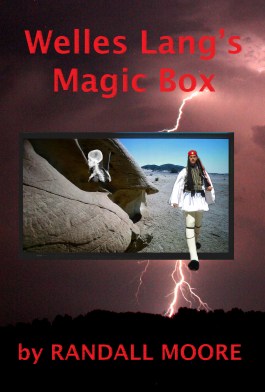
Welles Lang's Magic Box Cover_edited-1.jpgRandall Moore is working to make the switch from self- to traditional publishing. He shares his experience with the querying process and explains why book giveaways are not a preferred marketing method.

1. Tell me briefly about your latest book – what is it about and what motivated you to write it?

My latest published book is Welles Lang’s Magic Box. It’s about a genius cinema auteur who’s employing an innovation in performance capture with a side effect: not only are the actors’ performances captured but their souls are as well. It comes from an idea I had years ago about performers dying to be in a movie that will truly immortalize them. It’s a hybrid of horror and science fiction with action adventure and romance thrown in.

2. How have your sales been?

Sales have been tepid at best. I did a Goodreads giveaway of 100 digital copies and a Freebooksy giveaway of 1,300. I got one great review and some terrible reviews from people who failed to finish my book.

3. You’ve gone the self-publishing route. Tell me more about that and how you got into it.

Self-publishing started as a lark. It was exciting to see my short story for sale on Amazon. I made it free and had hundreds of downloads. I then expanded my short story into a novel, which became a trilogy. By now writing had become an all-consuming passion and I haven’t let up to this day.

Continue reading

Tony Flood

41rVOGuQpfL._UX250_Multi-talented Tony Flood has written about celebrities and created his own fantasy adventure book. Learn how he’s used press releases and a variety of social media platforms to market his books.

1. Tell me briefly about your latest book – what is it about and what motivated you to write it?

My celebrity book My Life With The Stars contains revelations and amusing anecdotes about famous people I have interviewed and/or written about as a journalist. It features Elvis Presley, Frank Sinatra, Joan Collins, George Best, Bruce Forsyth, Britt Ekland, Muhammad Ali and a host of others. I was encouraged to write it by my wife and fellow author Heather Flood, who pointed out that I had met so many famous people who people would be interested to read about.

2. How have your sales been?

The sales have been good but the best sales have been achieved by my fantasy adventure book Secret Potion, which June Whitfield says is ideal for Harry Potter fans. Like Harry Potter, it is for both children and adults.

3. You’ve used both indie and traditional publishing for your books. What has your experience been like with both?

Traditional publishing has probably brought me in more regular royalty payments from Andrews UK with the e-version of The Secret Potion.

Continue reading

Vincent Formosa

51e+WDmB0SL._SY346_British author Vincent Formosa combines his background in history with his love for aviation. Read about how he navigates a crowded self-publishing field and why Twitter is not the platform best suited for him.
1. Tell me briefly about your latest book – what is it about and what motivated you to write it?

My latest book out is a novel titled Run The Gauntlet. It follows the life of an RAF light bomber squadron from the outbreak of World War 2 to the end of May 1940 and the fall of France.

I was inspired to write it after reading an article in an aviation magazine about the air war in France during the German Blitzkrieg. It related a few details about a Blenheim bomber squadron (the Blenheim was a twin engine light bomber in the RAF at the time, 3 men per crew) that lost 18 out of 21 crews in 10 days and that figure did not include the replacements who had also been shot down.

I was staggered by this. The thought of a squadron that had fought and trained for years before the war to be almost casually wiped out really brought home to me the cost of war. So I started the novel, doing a lot of research along the way, trying to encompass that press on attitude while conveying the harshness of combat.

2. How have your sales been?

Sales so far have been slow. My first novel came out in 2011. My second novel came out at the end of 2016.

I’m playing the long game on this one. I’m writing for a bit of a niche genre (aviation military fiction) and while there are lot of aviation magazines, they don’t review fiction, so it’s proving difficult to get myself out there and known. I realize that when someone buys your book and then looks to see there are no more by you, you miss an opportunity for a secondary buy. So as time goes on, I’ll have more books out there and it will naturally blossom. A reader will read one, say “I enjoyed that,” and then see there are others they can buy. So one sale can turn into four or five.

3. You’ve chosen to use indie publishing for your books. Can you elaborate as to why you made this choice?

About 8 years ago I came across Joe Konrath’s blog where he discussed what had led him to self-publish and I found his argument very reasoned. 99.9% of new authors will not get much in the way of promotion from a publisher, so for the virtue of getting my book physically on a bookshop shelf, I’m giving away quite a percentage of royalty.

So if I’m not getting any promotion help, why not do it myself and get more royalty for me?

Continue reading

Cerynn McCain

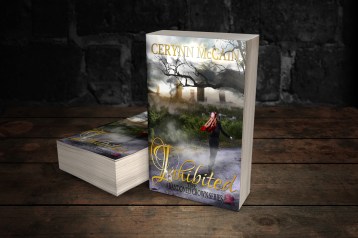
Book cover 1.JPGCerynn McCain favors the control authors have with self-publishing. Here she talks about the challenges of networking as well as one marketing technique she avoids.
1. Tell me briefly about your book – what is it about and what motivated you to write it?

A brief blurb about the book: In a world where the Àraid have been nearly forgotten, The General remembers. He knows there are still a few hiding. He’s just waiting for one to reveal themselves so he can wipe them out.

Christa knows this. She knows he’s watching her. She knows she needs to keep up the facade of being human. For years staying hidden has been easy, but something has changed. The General lost something valuable, and Christa now must keep it out of his grasp. But how far is she willing to bend before she has no choice but to reveal her powers and risk him finding them?

I started writing it right after my best friend moved away. I was a rather lonely person after that, and the characters I created in the story really helped me get through, so I decided to publish it hoping it might help others as well.

2. How have your sales been?

Honestly? I try not to look. I published it because I loved it. I’m worried if I start checking my sales I’ll start obsessing about the numbers and not focus on continuing the story for me, rather than for publicity.

3. You’ve gone the self-publishing route. Have you sought an agent or any work with traditional publishers? If not, why not? If so, what has been your experience with traditional publishing?

I did try to get an agent for a while, I queried about 20 agents. However, I think I sabotaged myself because I’m not good at pitching my book. I love it. I stand by it. I have a very hard time telling other people they will love it because not everyone loves the same stuff so I had a really hard time writing my query. Also a lot of agents don’t want
to pick up first time authors writing the first book in a series because they worry I won’t finish the series. I plan to query again after the full series is out. A long shot, I know, but I might as well try.

Continue reading

Larry Montgomery

lm.jpg

Larry Montgomery is a prolific writer who is working hard to make his name in a crowded market.  He discusses a variety of specific marketing techniques he uses to try to do so.

1. Tell me briefly about your current writing project – what is it about and what motivated you to write it?

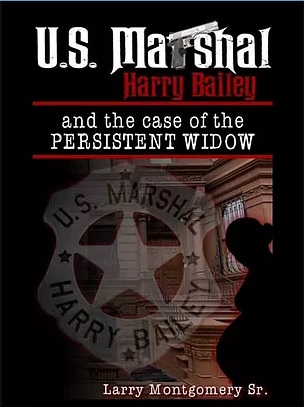
My current project is titled The Case of the Persistent Widow. It is the first of a 12-book series entitled, “The Parables of Life.” I was inspired after reading a number of biblical parables from the King James version and wondered how these stories would play out in these days and times. While the original purpose of each of the biblical parables was Jesus’ attempt to simplify concepts for living a Christian life when you delve into them there is a lot of similarities to situations people, Christians or not, could find themselves in.  If you like mysteries, whodunnits, or stories where the good guy isn’t just interested in getting in someone else’s pants; and if you have ever wondered how a 2,000-year-old biblical parable could apply to your life today, then read this book.

2. How have your sales been?

My test marketing on Amazon.com, as a self-published author, had surprising results. Based on those results, I decided to dive into an all-out marketing relationship with my current publisher, Newman Springs, and take the project directly to the market.

3. You’ve gone the self-publishing route. Have you sought an agent or any work with traditional publishers? If not, why not? If so, what has been your experience?

As I mentioned above self-publishing is a means to an end, the end being to get your work out into the marketplace. Self-publishing within the context of a limited campaign platform will only drive so much buying traffic to the author’s sales network. However, direct engagement within a multi-marketing platform is where the market separates the wannabes from the newbies. You can’t learn to swim in your bathtub but once you jump into the ocean, it is a sink or swim experience.

Continue reading