Kevin Kierstead

1. Give me the “elevator pitch” for your book in five to ten sentences.

We are focused on small-time threats in America right now: terrorists, “lone-wolf” scenarios, gangs, etc.  We don’t see a real threat in the way of an entire country attacking us.  China, though, is fully capable of attacking us and they have a massive amount of strength–the only thing holding them back, if they decided to do it, would be the threat of a nuclear strike, so this book ponders what might happen if they could figure out a way around that problem.  Ultimately, though, with that as the background story, this is a story about survival after a devastating tidal wave that was over 100-yards tall.  One young man, one young dog, one young woman and one old man come together in unlikely ways and begin to fight through their struggles together.

2. Why did you become an indie writer?

Honestly?  I have a problem with authority!  But it wasn’t just that.  I did the whole agent/publisher dance on and off for 20 years.  Back in 1994, when I finished my first novel, I had it accepted by an agency called the Thornton Literary Agency and it was scheduled to be published under the Electric Umbrella but their company went into a hiatus and the rest is history.  That kind of unpredictability along with the growing trend of agents/publishers chasing “what’s hot” vs. looking for new talent in any genre is what pushed me here.  I love nothing more than having total control over my work.  Except for writing.

Continue reading

Patrick Turley

Patrick Turley has worked to create a niche for his Marine-based book and to give it the publicity effort it deserves.  Learn more about which methods work particularly well for him and why he feels every marketing approach should be considered.

1. Give me the “elevator pitch” for your book in five to ten sentences.

The only existing first-person, insider account of Marine Corps Boot Camp, documenting the good, the bad, the ugly and the hilarious in the making of the Few and the Proud.  A microcosm of how the “slacker generation” responded to a nation in need in the shadow of terror, Patrick Turley walked, ran and double-timed through the place and captured it in his book Welcome to Hell: Three and a Half Months of Marine Corps Boot Camp. From the moment the drill instructor said “Welcome to Hell!” Turley and his fellow recruits felt a sense of foreboding that proved well founded. The author, who endured and survived the foreboding, looks back and captures those anxious times with a sharp line for detail and a smile for the people, DI’s and all, who shared the three and a half months.  Former Marine and Pulitzer Prize winning playwright John Patrick Shanley, after reading a draft of Welcome to Hell, put it in complete perspective: “It’s great to have gone to Marine Corps boot camp.  It’s terrible to be in Marine Corps boot camp.  It’s fun to read about Marine Corps boot camp.”

2. Why did you become an indie writer?

I feel like this is an important story to be told and a niche one that can carve its own market out as well as being an excellent and well-rounded story for a much broader mass appeal.

3. Have you been traditionally published? Why or why not?

No.  The industry for traditional publication is evaporating before our eyes.  Without a big name to command your own audience, mainstream publishers aren’t particularly interested in first-timers anymore.

Continue reading

Mike Madden

British indie author Mike Madden has written several books in several different genres and finds success and challenges in each one.  He details his success with Amazon’s KDP Select and discusses the other ways he’s marketed his work.

1. Give me the “elevator pitch” for your book in five to ten sentences.

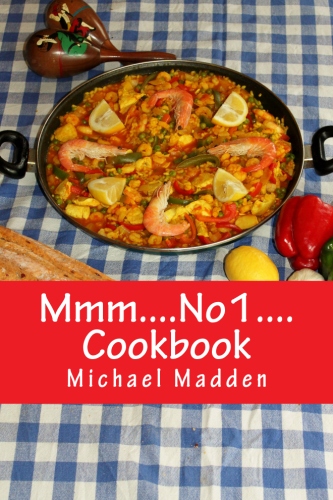
Mmm…No1…Cookbook was originally conceived so that I could keep all of my recipes in one place.  I am an avid cook (not chef!), and have around 40 cookbooks, as well as newspaper and magazine cutouts and handwritten recipes handed down from my mum.  This way all of my recipes are in one handy place, on my Kindle, and I can easily take that to the shop as my shopping list.  The recipes can be described as “Every Day Cooking For Every Day Lives”, there’s nothing too fancy in there, and they range from starters and soups, to main meals including lots of curries, and finally desserts and cakes.  I find that television chefs use too many obscure ingredients, and they seem to have every utensil under the sun to aid preparation.  These recipes are essentially very simple, and are presented in an easy step-by-step format.  The book was originally designed for the Kindle, so even in the paperback version there are no pictures, but do you really need to know what Key Lime Pie or vegetable soup look like before cooking it?

2. Why did you become an indie writer?

I am only an indie writer because I have not yet been “discovered” by a major publishing house!  Seriously though, I do not choose mainstream formats, preferring instead to challenge the market.  A cookbook on Kindle?  On Amazon.co.uk there are less than 1,000 available compared to 90,000 paper cookbooks.  No market or a gap in the market; I’ll let the market decide.

3. Have you been traditionally published? Why or why not?

As I mentioned earlier, I do not write in mainstream formats so am unlikely to appeal to a traditional publisher just yet; however, I have had plenty of praise for my writing.  My adult humorous novel Stags! reached number 1 on Amazon’s Free Kindle Humour list, and is currently in 3 Amazon bestseller lists for paid books.

4. How have you liked self-publishing so far?

Self-publishing is great for getting your work out there quickly and relatively easily, but it is also a great tool for learning.  I knew nothing about fonts until I self-published Stags!, and I knew nothing about Kindles until I started to look at that medium too.  You quickly realize that marketing is the hardest thing in the world, and the realization that no one will buy your book just because you believe in it is a harsh lesson, but one that all indie authors must learn quickly.

5. Tell me about the marketing techniques you’ve used to sell your books. Which ones have been the most successful?

I have tried book signings; for instance, my children’s picture book Ole And Zac And The Port Of Tumbattle has a pirate theme, so I sat outside a couple of local Tesco supermarkets dressed as a pirate and signed copies.  A book signing for Stags! was featured at the Levenshulme festival, as a result of which I got coverage in The Irish Post.

These are fine for small coverage, and I realized how much fun it can be to dress up as a pirate, but by far the most successful marketing technique has been via KDP Select.  This allows you to offer your book free for up to 5 days every 90 days, but during this time you must push it.  Twitter, Facebook, blogs, Goodreads, anything you can think of.

But it can’t just be a one way thing.  Follow blogs and they will follow back, but you must participate.  Download other free books and engage with other authors.  Contact Pixel Of Ink, Kindle Nation Daily, Digital Book Today, and others, and consider a paid promotion which can be done for as little as $29.99.

If you are successful you will get thousands of downloads.  Stags! got around 5,000 in 5 days, and then the fun really starts.  If you have done it right you should continue to push, push, push when it is a paid download again. Stags! hit around 200 paid downloads in the first week and then sales started to taper.  Bear in mind that the more sales you get, the more Amazon will “recommend” your book.

If you can get it into the top 20 in any category this will generate more sales.  When a potential customer looks at a bestseller category the first page has 20 entries.  A few will go to the next page of 20 entries, but after that visitors dwindle.  It’s a bit like getting on the first page for a Google search.

The next phase is to drop the price to less than $1. This hits the bargain promotions and sales will get an uplift. Continue to expand your network, and make use of your free KDP Select days every quarter.  There is no such thing as overnight success.  You have to work at it.

6. Are there any marketing techniques you intentionally avoided or discontinued, and if so, why?

I disregarded local newspapers and trying to get book reviews.  There is just simply not enough coverage.  If you have enough friends they will cover the local area for you, and even in your own area, if someone does not know you personally they will not be inclined to buy your book.

7. Which services or vendors do you recommend for the marketing methods you used?

Business cards and flyers are invaluable, but cheap and cheerful will do fine.  Make sure they have your email address on, mobile number if you really must, book details including website and blog details, and Amazon, Amazon, Amazon.  Amazon is king and is a very trusted site.  If your book is on Amazon people trust it.  In terms of internet marketing there are tons of free sites that will push your free days, including Pixel Of Ink, Digital Book Today, etc.

8. What’s the most important thing you’ve learned about self-publishing that you didn’t know when you started out?

It’s all about the marketing.  Apart from your family and friends no one will buy your book – you have to sell it to them. Or get Amazon to sell it for you by exploiting the free KDP Select feature as described.

9. If you could do one thing differently in publishing your books, what would it be?

For paperbacks I now exclusively use Createspace.  I have used Fast-Print, but only because Createspace did not support UK distribution.  Now they do.  Createspace is quicker and easier to use, produces a better quality product, and the finished book gives more profit to the author.  The only caveat to this is that the Createspace cover designs are limited, but I would not be surprised to see them expand these in the near future.

10. Indie authors face the challenge of marketing their books without the resources of traditional publishers. What advice do you have for an indie just starting out?

Start slowly and dedicate at least an hour per day to it.  Don’t expect it all to happen overnight, and do not disregard any channel.  It is a learning exercise as much as a marketing exercise, and by the time you get to book number 10 you will be well on your way to becoming an expert!

11. What are you currently working on?

I am currently working on a sequel to Stags!, the working title of which is Infidelity.  I got some really nice fan mail after my latest marketing exercises, and that prompted me to finally put pen to paper, metaphorically speaking.  I am also looking to produce a book of dark poetry in collaboration with a friend who does some terrific illustrations.  In the pipeline there is the biography of an English rock and roll singer, but he is based in Madrid so there are a few logistical issues with that one!

12. If you could market your brand – not just one particular book, but your overall brand of writing – in one sentence, what would it be?

Having launched three books in three very different genres, each one challenging the market in a different way, it would have to be “Laughing in the Face of Tradition”.

13. How can readers learn more about your books?

You can visit my website at michael-madden.co.uk and my blog at mmm-number-1.blogspot.com.

Shaun J. McLaughlin

Shaun J. McLaughlin believes every writer must be in it for the art, and strives to make his writing stand out from the rest.  Shaun discusses his success with blogging and what he believes it takes for a writer to succeed.

1. Give me the “elevator pitch” for your book in five to ten sentences.
My self-published novel, Counter Currents, is a story of smugglers, river pirates, rebels, love, and war.  Most scenes are set against the grandeur of the Thousand Islands during the drama of North America’s forgotten war, the Patriot War of 1838.  Among the raiders was Bill Johnston, the Thousand Islands legend.  The protagonist, Ryan, a young immigrant, is drawn into Johnston’s world of piracy and secret societies.  Ryan falls for Johnston’s daughter, Kate.  Tugged by the opposing currents of romance and war, Ryan struggles to reconcile his troubled family history, his duty and his heart. Counter Currents is history illuminated by fiction.

2. Why did you become an indie writer?

I worked as a writer – journalist and technical writer – for over 30 years.  Since my teens, I wrote fiction on the side. For my first novel, I queried dozens of agents and publishers in Canada and the US.  Over half never responded. One small publisher in Iowa offered to publish it, but they closed down shortly after I signed the contract.  Weary of rejection, I studied the self-publishing arena and the related technologies, and made a decision to be my own publisher.

3. Have you been traditionally published?  Why or why not?

I do both.  In the same month (March 2012) that I self-published my first novel, my first history book, The Patriot War Along the New York-Canada Border, was published by South Carolina-based The History Press.  It covers the eastern half of the Patriot War of 1838.

There is an interesting story behind that.  I created a history blog in January 2010 in advance of my novel to help promote the book and the era.  An editor at The History Press discovered the blog and asked me to write a book about it.  I said yes, of course.

4. How have you liked self-publishing so far?

I am astounded at how simple it is to be self-published.  Between Smashwords, CreateSpace and Kindle/Amazon, anyone who can follow step-by-step instructions can produce books in multiple formats.  There is no barrier to publishing.  Technology has sidelined the gatekeepers and unleashed writers.  You’ve got to love that.

5. Tell me about the marketing techniques you’ve used to sell your books.  Which ones have been the most successful?

I have tried most of the popular marketing techniques: blogging, Twitter, Facebook, and guest posts on other blogs and e-magazines.  I had both books reviewed, and even paid for an ad on Goodreads.

My history blog, raidersandrebels.com, is the most successful.  It gets over 600 visits per month from history lovers. The key is to provide readers with free, interesting content.  That blog links to my imprint blog where I describe my books.  A small percentage of visitors become customers.

Two history articles that I wrote for the Thousand Islands Life e-magazine early in 2012 did well, as did a book review on that mag.  The magazine’s audience is in the heart of the region where both my books take place.  The exposure led to a regional spike in sales, especially for the history book.

6. What’s the most important thing you’ve learned about self-publishing that you didn’t know when you started out?

My research into the business of self-publishing taught me that my book is one of millions available.  It is one leaf in a forest of 10,000 trees trying to be noticed.  You cannot be in this business for the money.  Like a painter or musician, you must be in for the art.

7. If you could do one thing differently in publishing your books, what would it be?

Next time I will spend no time trying to find a publisher for my fiction.

8. Indie authors face the challenge of marketing their books without the resources of traditional publishers. What advice do you have for an indie just starting out?

From my observation, the authors that succeeded financially did not hit the big time with their first book.  They built up a fan base, good book by good book, until they broke out.  In brief: write well, write often, be patient.

9. What are you currently working on?

I have a detailed outline for the sequel to my novel.  It will be set partly in Australia, which I will visit in the fall of 2012 to scout locations.  I plan to research a second history book on the Patriot War to cover events along the western front.

10. If you could market your brand – not just one particular book, but your overall brand of writing – in one sentence, what would it be?

I write about history (and by extension, historical fiction) like a good journalist covers current events: how people face their trials and triumphs never gets dull.

11. How can readers learn more about your books?

My publishing imprint has info on both books: raidersandrebelspress.com.

Anderson O’Donnell

Anderson O’Donnell specializes in dystopian fiction and constantly feeds his healthy addiction to the art of writing.  Anderson talks about making the most of social media and going beyond its superficial uses to enhance his marketing efforts.

1. Pretend for a moment I’m a reader looking for my next book.  Pitch me your book in five to ten sentences.

Kingdom is a thrill-a-minute, bio-punk myth that manages to wrestle with the most pressing issues of the new millennium.  It’s a novel of tomorrow night, when the big party gets raided by the monsters we’ve been building for the last half-century.  Hip and hellish, wild and weird, Tiber City is the dystopian megalopolis into which we will all soon move—whether we know it or not.  Toss William Gibson, Andrew Vachss and David Fincher into the petri dish, irradiate them, then infuse the result with Transylvanian meth, and you’ll have some sense of what the reader can expect.

2. What motivated you to become an indie writer?

Frustration with how risk-adverse the traditional publishing industry has become.  I get it: sales margins are razor thin, and the natural inclination, in any industry, is to reduce risk.  But for the writing and publishing industry, risk reduction means going all in on books by a recognizable brand name—Snookie, for instance.  I mean, that’s their answer…Snookie.  But like I said, I can’t blame them.

3. Have you been traditionally published?  Why or why not?

No, I haven’t been traditionally published, but not for lack of effort.  I sent out query letters to a number of agents and publishing houses, and while Kingdom attracted some interest, nothing panned out.  But I received good feedback from a few other traditionally published authors, enough so I decided not to stick the project in the desk drawer.  I believe in Kingdom; and I think readers are going to respond to the world I’ve created.

Continue reading

A.D. McLain

A.D. McLain writes across a variety of genres, most notably in paranormal romance, and has seen both the indie and traditional sides of publishing.  She discusses her latest work, Suriax, and explains the variety of direct marketing tools she uses to reach new readers.

1. Pretend for a moment I’m a reader looking for my next book.  Pitch me your book in five to ten sentences.

If it was legal to kill, would you?  Welcome to Suriax, a city where killing is accepted as normal and laws mean everything.  Kern must grapple with questions of morality, destiny and a queen who wants him dead.  Throw in a pact with a god and you have an event that will change the people of Suriax forever.

2. What motivated you to become an indie writer?

I love the freedom to set my own prices, run my own contests and free promotions, design my own cover and have control over when the book is released.  Whether you self-publish or go through a publisher you have to do almost all your own marketing.  The only difference is how much you get paid for your work.

3. Have you been traditionally published?  Why or why not?

I went through publishers and agents for my first two books.  That experience was disappointing.  The marketing my publishers did for me was miniscule, and I was constantly sent emails on how if I just paid them x amount of dollars they would do some additional marketing.  After six years of doing all my own networking and learning everything as I went along, I met other authors who went the self-publishing route.  The free services provided by sites such as Smashwords and Createspace are a far cry from the vanity publishers of the past.  There isn’t as much of a stigma now in self-publishing.  I don’t think I will ever go back to the old way.  I learned a lot from my other publishers, and I don’t regret the experiences, but I am glad I have another option.

Continue reading

Glenn Langohr

His time in prison, and the life he turned around afterwards, form the basis of Glenn Langohr’s writings.  Learn how he got all seven of his books in the top 100 of their categories and what you can learn by studying other authors.

1. Pretend for a moment I’m a reader looking for my next book.  Pitch me your book in five to ten sentences.

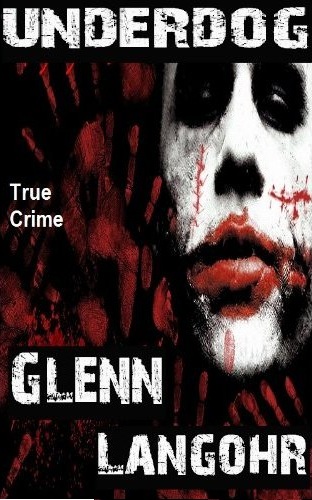
Curious about the drug war, gangs, or the atmosphere in the hardest core prisons in California?  I take you on a journey from a runaway childhood, to addict and drug dealer, into the drug war for an inside look at Mexican cartel wars, corrupt narcotic detectives and a California Prison Union bent on breeding bigger criminals.  Here’s a couple of reviews for my crime thriller, Underdog (Prison Killers Book 4).

“Ex-con Langohr can describe the hell of life inside better than any other writer.  His vivid passages on just surviving in prison describe a nightmare we’d rather not know about.  He compares the plight of abandoned dogs, locked and horribly mistreated in rows of cages in animal shelters, to California prison inmates, locked and abused in the same cages.  Not a book for the faint of heart.  We who sleep peacefully in our beds at night, unaware of the savagery going on behind prison walls, can only thankfully say: ‘There, but for the grace of God, go I’.”  John South, American Media

“With lazer-like precision Glenn Langohr lays bare the festering under-belly of our criminal justice system in a driving, graphic narrative that somehow finds the humanity in this most inhuman setting.” Phillip Doran, TV Producer and Author

2. What motivated you to become an indie writer?

My first novel Roll Call was written from prison and when I got out, I read the Publishing Guide for Dummies and studied a lot of other self-publishing guides.  What I learned excited me to the point I went with Amazon and Createspace to put it in print and on the Kindle.

3. Have you been traditionally published?  Why or why not?

For all seven of my books, I’ve gone indie.  I love the control and freedom of being able to lower the prices, personally engage with readers, and not have to give most of the profits away.  I have published a few articles about the drug war and prison conditions in magazines to build up the expert status on the subjects.

Continue reading

Jeff Rasley

Jeff Rasley’s experience with traditional publishing left him disillusioned and inspired him and his wife to start their own indie publishing company.  Read more about Jeff’s journey and how he learns the ropes of self-publishing.

1. Give me the “elevator pitch” for your book in five to ten sentences.

Monsters of the Midway:  The Worst Team in College Football? is my most recent book.

In 1969, amidst the culture of sex, drugs, rock and roll, the draft lottery, the anti-war movement and radical feminism, the University of Chicago resurrected its football team after it had been dead for 30 years.  A small town Hoosier kid who just wanted to get the best education possible joins the team to build his resume.  His teammates are jocks, pot smokers and nerdy intellectuals.  Along with his teammates he is swept into the tumult of the late 1960s.  He falls in love with a radical feminist who demonstrates against the return of football to Chicago.  He rooms with a secular Jewish kid taking ballet whose father has begun manufacturing something called a computer chip.

An assistant coach rides Jack for not fully committing to the team.  His favorite professor chides him to concentrate on his studies. What sustains Jack through the bewildering cultural milieu, and the pressure of balancing sports and studies, is the tolerant understanding of his head coach, reconciliation with his girlfriend, and the friendship of his teammates.

2. Why did you become an indie writer?

I thought I was very lucky to publish my first book the traditional way and the publisher even spent some money on a publicist.  But the publisher refused to use the title I had chosen and used one I did not like; issued the book on an “accelerated schedule” six months after it was finished; published with a few typos despite three levels of editing; demanded I engage in time-consuming and unproductive promotional events; let the publicist get away with doing nothing except mailing the book to reviewers and libraries;   and lost interest in promoting the book when sales did not quickly reach best seller level.

I have since published five direct.  The titles are my own choice and the books are published as soon as they are finished.  Now, I still find myself engaging in time-consuming and unproductive promotional activities and I might have missed some typos.  And I sure wish someone would pay me an advance.  But, the gain in control and responsibility is worth the sacrifice.

My wife, Alicia Rasley, has published twice as many books as I have.   We have become so jazzed about the process of direct publishing we started our own indie publishing company to help others through the process of direct publishing.  It’s called Knowledge Capture Publishing & Editing.

Continue reading

September Gray

September Gray is the author of Chasing Dolphins, a story she was inspired to self-publish when the traditional process took too much time.  In this interview she explains why she thinks indie authors should support one another and discusses the importance of good editing.

1. Pretend for a moment I’m a reader looking for my next book.  Pitch me your book in five to ten sentences.

Here is an excerpt from a customer review on Amazon.  This reader sums it up as well as I could: “I liked this.  It’s not often you have the (pleasure?) of finding a readable main character who is a great deal less than perfect.  Charlene comes across as flawed, battered by life, but believable.  Her background has made her needy, malleable, and low on self-worth.  She drinks too much, smokes too much, isn’t much of a mum, picks up hordes of unsuitable men, sleeps around, etc., but is nevertheless likeable.”

2. What motivated you to become an indie writer?

I’ve had a few short stories published in magazines.  I also have friends who have been traditionally published and I watched them spend literally years mailing out query letters before they finally made a sale.  The last straw for me came when I heard from an editor who claimed to love the story I’d sent her.  Three months later she sent me a rejection slip stating she couldn’t find a hook for the story, but would love to see more of my work.  I’m not always a patient person, so I decided to take matters into my own hands.

3. How have you liked self-publishing so far?

I just want to get my stories out there before readers.  It doesn’t matter to me how I do it.  I think a lot of writers are divided right now: go indie or go traditional?  For me, it isn’t one or the other.  If  a publishing house offered me a decent contract I’d consider it.  I’m just not willing to put my writing career on hold until that happens.

4. Tell me about the marketing techniques you’ve used to sell your books.  Which ones have been the most successful?

I enjoy being active on Goodreads and Twitter.  I promote others as much as possible.  If you are helpful to others, you are going to get noticed faster than if you come off as self-serving.  I’ve had other writers give me back links or a mention on their blogs as a thank you for doing the same for them.  This doesn’t have to be a competitive business.  It works best when we are all scratching each other’s backs.  On the other hand, I don’t promote anyone’s work unless I believe in it.

5. If you could do one thing differently in publishing your books, what would it be?

I would have someone other than myself do the editing.  It’s hard to be objective about your own work.  No matter how hard you try to catch every typo, you are likely going to miss something.  Formatting is a nightmare for me, so fixing those mistakes once they’re published can be a real problem.

6. If you could market your brand – not just one particular book, but your overall brand of writing – in one sentence, what would it be?

I write about somewhat disturbing, yet sympathetic, characters with a dark sense of humor.

7. How can readers learn more about your books?

Check out my Amazon author’s page here.

Patricia Herlevi

Patricia Herlevi reflects on her music background as she discusses her book, Agnes et Yves: Ma Vie en Bleu.  Learn how she makes marketing work without having to break the bank.

1. Pretend for a moment I’m a reader looking for my next book.  Pitch me your book in five to ten sentences.

“French Kiss” meets arts journalism meets Parisian artists meets Katherine Hepburn.  In hot pursuit of an affair with a Spanish Don Juan, Francophobe Agnes’ plans are derailed by a French painter and transportation strike.  Bonjour Paris!

I wrote this novel as an old fashion style comedy with some mistaken identity, especially around “Pablo”, plots twists, and a surprise ending.  I adapted the novel from a screenplay of the same title, but for the novel I brought back the mother character, and brought in more psychological baggage which I dealt with through comedy of errors.

2. What motivated you to become an indie writer?

Thinking back to my music career which spanned from 1986 to 1996, I have a knack for do-it-yourself projects.  I also think that it is a real confidence builder to take on a project yourself and see how far you can take it.  My motivation for going it independent with music came from a music industry with a closed door policy.  I sent out over 50 demo tapes over the years, and received a large pile of rejection letters.  I still wanted to record and perform music so I found a way to do that without a recording contract.

Now that I am authoring books, I thought I would see how far I could go on my own in building a target audience, and cooperating with other independent authors.  The learning curve is steep, especially at my age, but I have to admit, I enjoy the challenges.  Those challenges spark creative solutions.

3. Have you been traditionally published?  Why or why not?

No, I have not traditionally published any books yet.  I am not averse to publishing books traditionally.  I contacted agents and went the normal route, receiving a fair share of rejection letters and some encouragement.  Then a friend suggested I try Lulu.  At first this felt daunting so then I went with CreateSpace instead.  Since my novel has commercial appeal, especially for the Francophile markets, I don’t know the reasons why it has not been picked up by a commercial publisher or agent.

Continue reading