K.M. Riley

kelly_origK.M. Riley prefers the support offered by traditional publishers.  But she knows marketing and networking are still essential, and she shares some of her methods.
1. Tell me briefly about your latest book – what is it about and what motivated you to write it?

Fever Rising is an action-packed dystopian where society has been divided into castes, and the genetically modified fighters are leading a revolution to overthrow the government that owns them.

I was motivated to write Fever Rising when I was working overseas. I had a lot of free time and the inspiration just hit me.

2. How have your sales been?

Sales are decent online. It takes a lot of work trying to promote oneself and make a name for the book. I’ve had more success at local Barnes & Nobles signings where I’ve sold out more than once. There I get a chance to talk to interested readers and answer any questions they might have.

3. You’ve had experience with both self-publishing and traditional publishing. Which do you prefer, and why?

I’ve had experience with both, but I still prefer a traditional publisher. As I’ve stated below, they’re there to help the author succeed, taking a lot of pressure involved in producing the book off the author’s shoulders.

Continue reading

Raymond Bolton

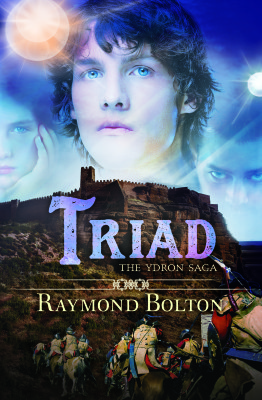
TriadEBookCover.jpgRaymond Bolton has been both self-published and traditionally published, and prefers the latter.  Find out why, along with the role that word count and a solid manuscript play in publishing.

1. Tell me briefly about your latest book – what is it about and what motivated you to write it?

My latest novel, Triad, an epic fantasy, is the final book in a trilogy. It was released by WordFire Press on December 3, 2018. By fantasy, I’m not talking about magic or sorcery. All of the books I write have to do with the paranormal and, in this series, my protagonists are anything but superheroes. Instead, they are ordinary people caught up in adverse circumstances with one unique talent available with which to thwart a nefarious warlord and his armies. In Thought Gazer, the protagonist is a telepath. Foretellers involves a prescient mother and daughter. They come together in the third in the series with a young man who is telekinetic. It has always struck me as odd that the physically handicapped rarely appear in books of this nature, since they are ubiquitous in ours, so I made Triad’s protagonist paraplegic.

2. How have your sales been?

Since I am now traditionally published, I’m not privy to all of the details. All I can tell you is that my royalty checks keep getting larger and my books are, without exception, rated at 4.5 stars or better all across the internet. An interesting side note: WordFire Press informed me that last year 75% of the sales of my debut novel, Awakening, came from China. I find that oddly amusing since, aside from its Spanish translation, it’s only available in English.

3. You’ve had experience with both self-publishing and traditional publishing. Which do you prefer and why?

I have to go with traditional publishing. Although self-publishing helped me establish a readership, having been acquired by WordFire, publisher of the Dune and Star Wars series, has given me credibility.

Continue reading

Geoff Turner

Archie'sMirror.jpgGeoff Turner sought several literary agents before landing with a publisher.  He discusses his journey and explains why even traditionally published authors need sound marketing strategies.
1. Tell me briefly about your book – what is it about and what motivated you to write it?

Archie’s Mirror is about a young boy’s search for his missing father. It’s a journey that takes him through the magical mirror of the title and into the mysterious Land Beyond. It’s a book for older children along the lines of Philip Pullman’s His Dark Materials trilogy or Neil Gaiman’s The Graveyard Book. I also wanted to write a story that explored the idea of story-telling itself. So, for kids, there’s what I hope is a rollicking fantasy adventure, but there are additional levels there that adults might want to explore, alongside a heady mix of jeopardy and humor.

2. How have your sales been?

Put it this way, I won’t be quitting my day job just yet. The thing I’ve realized about being an indie author – and I guess the same is true with self-published writers – it’s very much a marathon not a sprint. It’s very rare that you’ll find instant success. You have to keep at the marketing, you have to keep at the promotion, and you have to keep searching for your audience. Keep the faith and, with a bit of luck, that audience will be out there, somewhere.

3. You’ve gone the traditional publishing route. Tell me more about that and how you got into it.

By chance I saw that Prospective Press was looking to increase their roster of writers and was asking for speculative submissions. Archie’s Mirror was finished, and I was toying with self-publishing, having received a raft of rejections from literary agents. I figured there was nothing lost by sending Prospective the manuscript. At the very least I thought I might get some feedback on what was wrong with it – the agents had just sent me their standard letters – but, as it happened, the book struck a chord with them and they offered to publish it.

Continue reading

Randall Moore

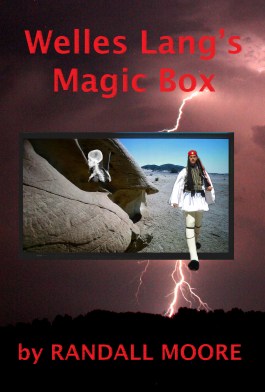
Welles Lang's Magic Box Cover_edited-1.jpgRandall Moore is working to make the switch from self- to traditional publishing. He shares his experience with the querying process and explains why book giveaways are not a preferred marketing method.
1. Tell me briefly about your latest book – what is it about and what motivated you to write it?

My latest published book is Welles Lang’s Magic Box. It’s about a genius cinema auteur who’s employing an innovation in performance capture with a side effect: not only are the actors’ performances captured but their souls are as well. It comes from an idea I had years ago about performers dying to be in a movie that will truly immortalize them. It’s a hybrid of horror and science fiction with action adventure and romance thrown in.

2. How have your sales been?

Sales have been tepid at best. I did a Goodreads giveaway of 100 digital copies and a Freebooksy giveaway of 1,300. I got one great review and some terrible reviews from people who failed to finish my book.

3. You’ve gone the self-publishing route. Tell me more about that and how you got into it.

Self-publishing started as a lark. It was exciting to see my short story for sale on Amazon. I made it free and had hundreds of downloads. I then expanded my short story into a novel, which became a trilogy. By now writing had become an all-consuming passion and I haven’t let up to this day.

Continue reading

Crystal Reavis

51JOgfNkZwL

Crystal Reavis recently published her book through a small publisher.  Learn more about her marketing methods and the important words of advice she has for new authors.

1. Tell me briefly about your book – what is it about and what motivated you to write it?

My book is a fantasy set in our world. It’s the first book in my series. Areal, my main character, is a paralegal who begins to have strange things happen to her. A man calls her and tells her she is being watched; soon after she begins to see people with black eyes, people watching her at her house. She also starts to meet new people who may not be what they seem. She learns angels and demons exist and that she may play a big role in their war for the world.

What motivated me to write it was my husband. I have been writing for years and never published anything. He told me he would love for me to pursue writing as a career. I figured I was already writing and had the time, so why not? Literally a few days later I had the idea for this series. I wrote the book we are talking about, Areal, in about four months. I just fell in love with it and couldn’t leave it for very long.

2. How have your sales been?

My sales are climbing. I sold about 11 books in the first month (not great), but I am picking up momentum. Many of my readers are waiting for a signed copy and I am working on getting those out. Once the signed copies are sent out I will have sold about 50-60 books. I am slowly getting better sales.

Continue reading

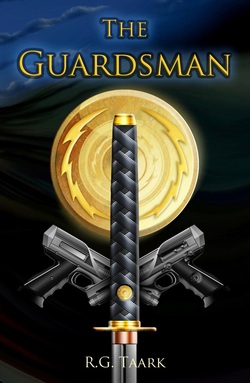
R.G. Taark

R.G. Taark is a sci-fi writer who has already experienced success with the indie writing process.  Learn which marketing methods work for him and what he would have done differently he could go back.

1. Give me the “elevator pitch” for your book in five to ten sentences.

My Guardsman series is a science fiction mystery, set in a “Bladerunner” style world, with direct action and very human goals and desires.

2. Why did you become an indie writer?

I first started writing as a hobby.  My life was turned upside-down and I had to start over again at 33.  While I was working on the state licensing requirements for my “real life” business I started writing books and stories I had in my head during my spare time.  I enjoyed writing and found a mentor who taught me what I needed to do to make my disparate scribblings into a coherent book.  When I was done I published my first book and the second followed quickly.

Continue reading

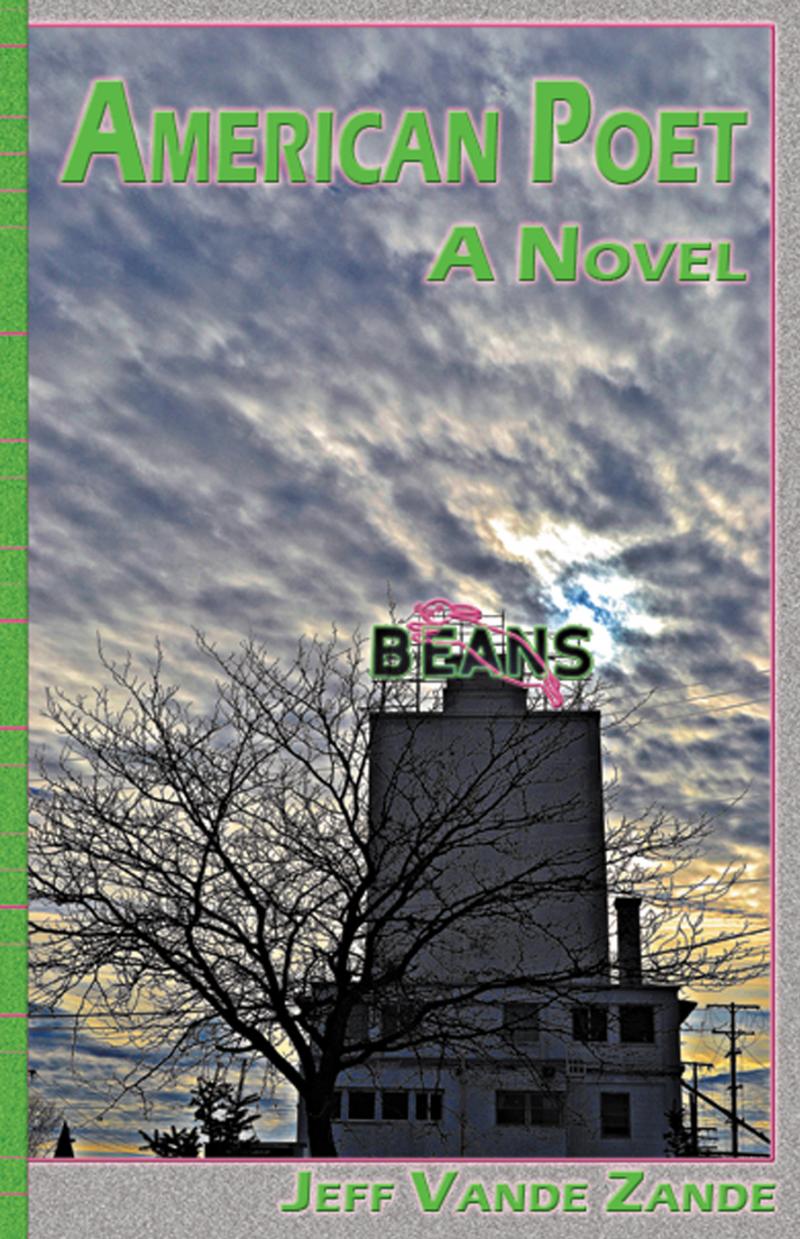
Jeff Vande Zande

Jeff Vande Zande has had success with small press publishing, an experience which has helped him positively adjust his expectations about success.  Jeff discusses that along with his thoughts on book signings and reaching your target audience.

1. Give me the “elevator pitch” for your book in five to ten sentences.

It’s a novel about poetry, Theodore Roethke, fathers and sons, and coming of age in America as an artist.  It’s the story of a young man who comes back to his hometown after an absence, only to find that he hasn’t grown up as much as he thinks.  Denver Hoptner graduated from the University of Michigan with a degree in writing poetry.  He returns to his boyhood home in working-class Saginaw, Michigan, and discovers just how little the world of work cares about his degree.  He struggles, too, to come to terms with his widower father.  After he hears that there’s been a fire in the attic of poet Theodore Roethke’s boyhood home, Denver commits himself to saving the historical residence, even when no one else seems to care.  It’s in action that he finds his true poetic self.

2. Why did you become an indie writer?

I didn’t really have luck with agents.  I received a few letters that said something along the lines of “Beautiful writing, but not sure how to market this.”  In my experiences with smaller presses, I just found that the editors were more interested in the “beautiful” part and didn’t worry so much about the marketing part.  My experiences with small presses have been positive, if not overwhelmingly lucrative.

3. Have you been traditionally published? Why or why not?

I suppose getting published from a small press is “traditional” publishing, just on a reduced scale.  So, yes, all of my books are traditionally published, but all from small presses.

Continue reading

A.D. McLain

A.D. McLain writes across a variety of genres, most notably in paranormal romance, and has seen both the indie and traditional sides of publishing.  She discusses her latest work, Suriax, and explains the variety of direct marketing tools she uses to reach new readers.

1. Pretend for a moment I’m a reader looking for my next book.  Pitch me your book in five to ten sentences.

If it was legal to kill, would you?  Welcome to Suriax, a city where killing is accepted as normal and laws mean everything.  Kern must grapple with questions of morality, destiny and a queen who wants him dead.  Throw in a pact with a god and you have an event that will change the people of Suriax forever.

2. What motivated you to become an indie writer?

I love the freedom to set my own prices, run my own contests and free promotions, design my own cover and have control over when the book is released.  Whether you self-publish or go through a publisher you have to do almost all your own marketing.  The only difference is how much you get paid for your work.

3. Have you been traditionally published?  Why or why not?

I went through publishers and agents for my first two books.  That experience was disappointing.  The marketing my publishers did for me was miniscule, and I was constantly sent emails on how if I just paid them x amount of dollars they would do some additional marketing.  After six years of doing all my own networking and learning everything as I went along, I met other authors who went the self-publishing route.  The free services provided by sites such as Smashwords and Createspace are a far cry from the vanity publishers of the past.  There isn’t as much of a stigma now in self-publishing.  I don’t think I will ever go back to the old way.  I learned a lot from my other publishers, and I don’t regret the experiences, but I am glad I have another option.

Continue reading

Christos Jonathan Hayward

Christos Jonathan Hayward has worked hard to hone his style over the years, producing numerous Orthodox Christian writings.  Read about his shift from hardback books to e-books and which site he avoids in marketing his book.

1. Pretend for a moment I’m a reader looking for my next book.  Pitch me one of your books in five to ten sentences.

My website at JonathansCorner.com since 2001 has housed twenty years of writing and creative work.  The very best have been crystallized into The Best of Jonathan’s Corner: An Anthology of Orthodox Christian Theology, and some people are already calling it a classic.  All my other books have gotten five stars with the Midwest Book Review; this one is set to have a review out in April.  It’s a collection of the best religion, spirituality, and faith works that I have to offer, and it has also been called an excellent entrance point to my vast collection of works. (The total collection is a fair bit longer than the Bible–there’s a lot there.)  And if you buy one e-book of mine, I don’t think anyone would object to your choosing this one.

That, and take a look at the foreword.

2. What motivated you to become an indie writer?

Well, two things.

First of all, impulses to creative writing.  Second, these impulses came just when the web was appearing, and helped me begin to establish a presence, when by sheer random luck I got into the web before it was important.  I don’t think I accomplished something so much as being in the right place at the right time.

3. Have you been traditionally published?  Why or why not?

I’ve been published with Packt Publications, a professional programming book called “Django JavaScript Integration”.  The experience was overall positive, but I don’t know if I’ll go that route again.

4. How have you liked self-publishing so far?

It’s been a nice “a la carte” way of publishing.  Normally the author does most of the publishing with or without a publisher’s support; this was pointed out to me by a friend who’s an editor, a published author, and chose to go indie with her own Waltzing Australia.

Continue reading

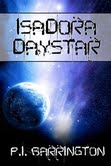
P.I. Barrington

P.I. Barrington blends sci-fi and romance in a unique and accessible way with her book Isadora DayStar.  Read why she prefers traditional over indie publishing and how she uses reviews in her marketing strategy.

1. Pretend for a moment I’m a reader looking for my next book.  Pitch me your book in five to ten sentences.

When drug-addled assassin Isadora DayStar finally snags a major interplanetary killing job, she thinks it will both support her habit and revise her status as the laughingstock of her profession.  Instead, she embarks on a journey that brings her face to face with her tortured past.

2. What motivated you to become an indie writer?

First, I think I wanted to see what I could do with a novel that didn’t have too much romance and, more importantly, how people would respond to something darker in sci-fi.  Also, I think I wanted more control of what I was writing, how I was promoting it, breaking out of rules of genre and publishing.  I wanted something that both men and women would find interesting rather than staying within the usual boundaries of what women read which is mostly romance.

I wanted to bring women to the idea of reading something outside their comfort zone that was still interesting and engaging to them.  I also desperately wanted to have men read and respond to my novels too.  I thought they would respond positively by the grittiness as opposed to tossing the book thinking “Ugh, romance.”  The first man to review it loved it so much he compared it to Gene Roddenberry.  I wanted to be free enough to write something commercially viable and attractive to both men and women.

3. Have you been traditionally published?  Why or why not?

Both now with Isadora.  I personally prefer traditional publishing for several reasons. First you have editors who are generally excellent and are just as committed to making your work a success.  They double check your work and let you know what needs to be fixed.  I have no problem with that at all.  Second, the responsibility of creating cover art for your novels is not on your shoulders and I was blessed with literally the best cover artist in the world for my first trilogy, Future Imperfect.  Third, psychologically, you have the security of a publisher behind you, regardless of how much they participate or don’t in your promotional efforts.

I first tried a traditional publisher rather than self-published because I wanted the experience of working with one and for the reasons listed above, including to see if I was good enough for someone to accept my work.  I have no complaints about that experience whatsoever.  It taught me so much and I’m so appreciative of that.  It boosted my professionalism and made me take my writing seriously.

4. How have you liked self-publishing so far?

It’s much more work.  As I said, with traditional publishing, you have people who double check everything and help you polish your manuscripts and create your book covers.  With self-publishing, you’re responsible for all that.  It’s more frustrating doing it yourself, especially trying to stay on top of things on your own.  As I said, self-publishing is a lot more work but the freedom you gain with it balances it out for the most part.

5. Tell me about the marketing techniques you’ve used to sell your books. Which ones have been the most successful?

Usually, creating a professional relationship between myself and reviewers works well for me.  I approach them personally and try to be as professional as possible at the first contact.  I make sure to let them know I am appreciative and I also make sure they know that I want as honest a review as possible.  I used to be a newspaper reporter so I still believe in not influencing the press so to speak.  Amazingly, that very first man to review my work was completely unsolicited.  He got word of it via a Facebook remark, picked it up and loved it—I thanked the person who mentioned it and the reviewer as well.

Courtesy goes a long way.  I’m just about to start my very first blog tour this month (April) and I’ve never done one before so I’ll see how that goes—I think it will be pretty positive.

6. Are there any marketing techniques you intentionally avoided or discontinued, and if so, why?

Well, lately I’ve been staying away from big book sites like GoodReads or Shelfari and a lot of group sites.  I’m not good at them and it leads to frustration for me.  Plus I don’t have the time to devote to them as they need; you really can’t take advantage of what they offer unless you participate regularly.  I’m always writing—always.  Plus, I’m not a people person so that makes it more difficult too.

7. If you could do one thing differently in publishing your books, what would it be?

If I’d known people would respond so positively and that you could submit to agents and editors as a debut author, I’d have done that.  I thought you had to have all these writing credentials so I went with publishing first.  But I’ve seen so many agents and editors who have accepted authors with nothing published before that I regret not researching that first of all.

8. What projects are you currently working on?

I must tell you first off that I am very superstitious about talking about things before they happen—comes from years of working in Hollywood!  Let’s see, what can I tell you?  I am working on two sci-fi projects (both with definitely more romance than my previous stuff—it’s a major plot line actually) a mystery, and a sci-fi novella I started years ago.

9. If you could market your brand – not just one particular book, but your overall brand of writing – in one sentence, what would it be?

P.I. Barrington is the brand.  Under that banner there are different genres: sci-fi, commercial, horror shorts on occasion, a little bit of romantic-type stuff.  P.I. Barrington is the brand that I want people to associate with intense writing; I want it to be instantly recognizable as quality work.

10. How can readers learn more about your books?

They’re available on Amazon.com, Smashwords.com, and DesertBreezePublishing.com.  I also have an official website with information at thewordmistresses.com (my sister, Loni Emmert, and I both co-author and write independently).

Blogs: pibarrington.wordpress.com, thewriterlimitsauthors.blogspot.com, and occasionally a column or two for CuriosityQuills.com.