Morgan Amos

51nKIGsVA0L._SX311_BO1,204,203,200_Mystery/thriller author Morgan Amos has learned many things – both good and bad – during her self-publishing journey.  Find out the one mistake she made starting out that can be key to a book’s success or failure.

1. Tell me briefly about your book – what is it about and what motivated you to write it?

“From the Killer’s Eyes” focuses on the small town of Somers and takes the reader into the life of Bradley Beckington and Katie Caldwell. Katie and Bradley meet and fall for one another, but what Katie doesn’t know is that Bradley has a sinister past that threatens to tear them apart, and if Katie isn’t careful she could wind up dead. The motivation for my book stemmed from watching a lot of Lifetime TV movies and seeing what they were producing. I tend to read a lot of thriller and mystery books also, and I am into true crime, so I got the idea to write my book from that.

2. How have your sales been?

Being honest, my sales haven’t been great. When I first released my book back in 2014, my dad helped me to sell copies, but once that stopped so did my sells, unfortunately. I promoted through social media and word of mouth, and I continue to, and it’s definitely been a process.
Continue reading

Fred Gordon

fredgordon1. Give me the “elevator pitch” for your book in five to ten sentences.

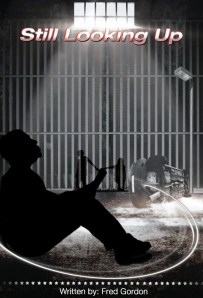
My name is Fred Gordon, I’m a C5-C6 quadriplegic.  I wrote an autobiography of my life called Still Looking Up.  I wrote the book in hopes of inspiring any reader but especially people with spinal cord injury.  In my years of being in a wheelchair I’ve heard horror stories of depression, not wanting to live and the hard times of adjusting to a new situation.  I’ve been blessed to have not gone through any hard times with adjusting, and I want to give back to those that do.  Not just SCI or wheelchair individuals but anybody that has gone through something that had the potential to stop their progression through life.

I try to give a picture of my life before the chair, so when they see my life after the chair they can see not much changed as I grew from a misguided teenager into manhood.  I tried to tell my story as it happened, from going to jail, to losing the love of my life, to the initial accident, to getting saved and married.  I put it all on the table, good and bad.

2. Why did you become an indie writer?

It’s funny you asked that because I wasn’t sure what an indie writer was before this interview.  I don’t know, when I used to get sick and had to go to the hospital, I would talk to the nurses and share my life with them, and a lot of them would say I should write a book.  I heard that for years and then one day, a quiet voice said, you need to write that book.  So I started writing.  I didn’t have a real plan, I’ve been winging it for real.

Continue reading

Sabrina Ricci

cover1. Give me the “elevator pitch” for your book in five to ten sentences.

The world will not end in 2012, Amara just knows it.  The 20-year-old college reporter is set on debunking the Maya calendar myths and restoring the peace. But when a covert group starts hunting her, she and her roommate Cayden are forced to uncover her grandfather’s mysterious past.

At 20-years old, Mahaway is the brightest scribe in Ox Te’ Tuun, a powerful ancient Maya city.  Then in 900 A.D., her life is torn apart by a greedy new king’s war.  She, her best friend Yochi, and a new friend Ichik must band together to fight back and save their home.  In doing so, they expose a deadly weapon, one that threatens to ruin everything.

Though these two young women live in different ages, their paths’ cross when Amara is tasked with discovering and stopping a secret before December 21 to save herself, and the world.

(On a side note, you’ll learn some interesting facts about the classic Maya reading my book. I did a lot of research, and tried to incorporate as much as I could.)

2. Why did you become an indie writer?

For a few reasons.  Writing is something I have to do—if I go for long periods of time without writing, I feel anxious and restless.  After getting my M.S. in publishing and working for a couple publishers, including Simon & Schuster and Random House, I decided that I really liked e-books and experimenting with different models.  Digital publishing has really leveled the playing field for indie authors, I think, and I wanted to learn everything I could about it.

Continue reading

Katherine Holmes

Katherine Holmes has worked with small press publishers and as a self-published indie author.  Learn more about her impressions of both processes, as well as which marketing method she believes helps indies the most.

1. Give me the “elevator pitch” for your book in five to ten sentences.

Winner of Prize Americana, Curiosity Killed the Sphinx and Other Stories is a collection of short fiction exploring the complexities of life.  Laying the profound beside the mundane, author Katherine L. Holmes creates rich and complicated characters who search for identity, meaning, and purpose within a world often dangerous and sometimes even cruel.  Her readers relate to such struggles and find comfort as they face similar challenges of their own.

A couple clashing with early computers, a divorced woman finding her scattered family to be strangers, a girl running away to the shop where her parents’ antiques were sold, Midwestern college students in weather and water emergencies – these are some of the conflicts examined by the author.  Past solutions tempt these characters as they consider contemporary choices.

2. Why did you become an indie writer?

Short story collections are difficult to market.  I entered the Prize Americana contest and won.  I was awarded publication by a small press publisher, Hollywood Books International.  I’ve published poetry and fiction in journals and believe in the small press process.

Continue reading

Jake Prytherch

Jake Prytherch uses the responsibilities of his daily life to motivate his writing ventures and to keep himself on his toes.  He hopes to keep his readers on the edges of their seats too, and Jake talks about that, his marketing strategy, and why free giveaways are important.

1. Give me the “elevator pitch” for your book in five to ten sentences.

Heal The Sick, Raise The Dead is a horror mystery about a journey from relative safety tinged with depression into a land of blood and violence. Although there are walking corpses in this book, it is not a “zombie” book. There is very little firepower, there is no army taking out waves and waves of corpses… it is a story about close quarters, grime, and the true terror that a return from the dead would elicit.  The protagonist, Guy, is helped (and hindered) on this journey by a strange set of companions, including a huge man with an insatiable hunger for everything (including violence), a small vicious man with an odd ability, and a silent child who watches everything with cold grey eyes.  It is a story about unraveling the truth before their sanity unravels instead.

2. Why did you become an indie writer?

I have always wanted to become a writer but have never had the confidence to pursue projects, and even though I actually finished my first novel The Binary Man in 2010 I simply left it to stew on my computer, not wanting any negative feedback.  That feeling changed when I recently turned thirty and my wife gave birth to my second daughter. I’ve got a lot of responsibilities now, which feels very empowering!  I think I’m doing alright as a father even though it’s a pretty hard job to do well, so I’ve finally decided to take the plunge and try and get a writing career off the ground, as it surely can’t be any harder!  I’ve decided to pursue the indie route at the moment as it best suits my current circumstances.  I can set my own hours around my job and family (generally very early mornings fueled by coffee), and I have no one to answer to if it all falls flat.

Continue reading

Guy Portman

Guy Portman is relatively new to the self-publishing world but is already picking up a lot.  Find out what he’s learned about effective use of social media and what he would do if he could start the process again.

1. Give me the “elevator pitch” for your book in five to ten sentences.

The following is the blurb for Charles Middleworth: What happens when Adrian, an actuary, has his banal and predictable existence turned upside down by sinister forces that he can neither understand nor control?  How will he react to a revelation that leaves his life in turmoil? Will he surrender or strive for redemption in an altered world, where rationality, scientific logic and algorithms no longer provide the answers?

2. Why did you become an indie writer?

It seemed like the most rational decision considering the current publishing situation.

3. Have you been traditionally published? Why or why not?

I have not attempted to go down the traditional route.  Charles Middleworth is not what I imagine publishers would necessarily consider a commercially viable commodity, like a vampire and/or erotica book for example.

4. How have you liked self-publishing so far?

It’s been a rewarding journey into the unknown.  I have a great deal yet to learn and appreciate the fact that it is going to take time to generate sales.

Continue reading

Lee Barrett

Lee Barrett believes in the inevitability of self-publishing, embracing the new power that authors have to shape their own destinies.  Learn more about his novel, how he embraces social networking, and the sort of marketing you should be doing as you write.

1. Give me the “elevator pitch” for your book in five to ten sentences.

Barge Pilot is a novel exploring modern fatherhood (at least, modern fatherhood prior to the Great Recession).  Jack Webber is a mostly retired lawyer grappling with the dual burdens of chronic disease and a strained, almost non-existent relationship with his sons.  Faced with the apparent suicide of Jack’s friend, who also happens to be the town drunk, Jack and a well-developed cast of characters try to find their way through the pitfalls of modern manhood.

2. Why did you become an indie writer?

With the exception of a few wild cards like J.K. Rowling and the like, there seems to be a real “career track” for becoming a professional, traditionally published author.  Although writing has always been vital to my personal sanity, that was not a career track that spoke to me.  In fact, I have sort of instinctively believed that I needed to reach a point in life where I finally had something to write about and that required that I have a career, a family, and engage in some of the great adventures that make up life.

Continue reading

Jeff Vande Zande

Jeff Vande Zande has had success with small press publishing, an experience which has helped him positively adjust his expectations about success.  Jeff discusses that along with his thoughts on book signings and reaching your target audience.

1. Give me the “elevator pitch” for your book in five to ten sentences.

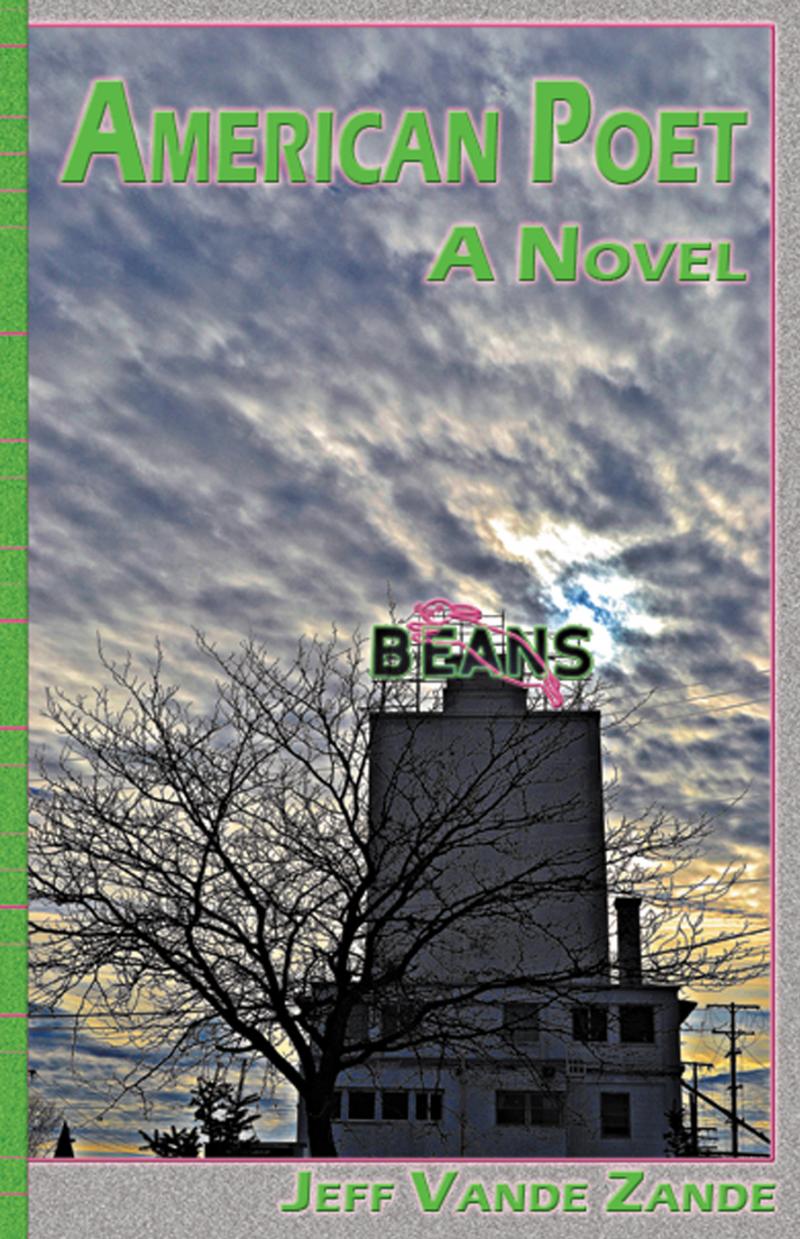
It’s a novel about poetry, Theodore Roethke, fathers and sons, and coming of age in America as an artist.  It’s the story of a young man who comes back to his hometown after an absence, only to find that he hasn’t grown up as much as he thinks.  Denver Hoptner graduated from the University of Michigan with a degree in writing poetry.  He returns to his boyhood home in working-class Saginaw, Michigan, and discovers just how little the world of work cares about his degree.  He struggles, too, to come to terms with his widower father.  After he hears that there’s been a fire in the attic of poet Theodore Roethke’s boyhood home, Denver commits himself to saving the historical residence, even when no one else seems to care.  It’s in action that he finds his true poetic self.

2. Why did you become an indie writer?

I didn’t really have luck with agents.  I received a few letters that said something along the lines of “Beautiful writing, but not sure how to market this.”  In my experiences with smaller presses, I just found that the editors were more interested in the “beautiful” part and didn’t worry so much about the marketing part.  My experiences with small presses have been positive, if not overwhelmingly lucrative.

3. Have you been traditionally published? Why or why not?

I suppose getting published from a small press is “traditional” publishing, just on a reduced scale.  So, yes, all of my books are traditionally published, but all from small presses.

Continue reading

Anderson O’Donnell

Anderson O’Donnell specializes in dystopian fiction and constantly feeds his healthy addiction to the art of writing.  Anderson talks about making the most of social media and going beyond its superficial uses to enhance his marketing efforts.

1. Pretend for a moment I’m a reader looking for my next book.  Pitch me your book in five to ten sentences.

Kingdom is a thrill-a-minute, bio-punk myth that manages to wrestle with the most pressing issues of the new millennium.  It’s a novel of tomorrow night, when the big party gets raided by the monsters we’ve been building for the last half-century.  Hip and hellish, wild and weird, Tiber City is the dystopian megalopolis into which we will all soon move—whether we know it or not.  Toss William Gibson, Andrew Vachss and David Fincher into the petri dish, irradiate them, then infuse the result with Transylvanian meth, and you’ll have some sense of what the reader can expect.

2. What motivated you to become an indie writer?

Frustration with how risk-adverse the traditional publishing industry has become.  I get it: sales margins are razor thin, and the natural inclination, in any industry, is to reduce risk.  But for the writing and publishing industry, risk reduction means going all in on books by a recognizable brand name—Snookie, for instance.  I mean, that’s their answer…Snookie.  But like I said, I can’t blame them.

3. Have you been traditionally published?  Why or why not?

No, I haven’t been traditionally published, but not for lack of effort.  I sent out query letters to a number of agents and publishing houses, and while Kingdom attracted some interest, nothing panned out.  But I received good feedback from a few other traditionally published authors, enough so I decided not to stick the project in the desk drawer.  I believe in Kingdom; and I think readers are going to respond to the world I’ve created.

Continue reading

A.D. McLain

A.D. McLain writes across a variety of genres, most notably in paranormal romance, and has seen both the indie and traditional sides of publishing.  She discusses her latest work, Suriax, and explains the variety of direct marketing tools she uses to reach new readers.

1. Pretend for a moment I’m a reader looking for my next book.  Pitch me your book in five to ten sentences.

If it was legal to kill, would you?  Welcome to Suriax, a city where killing is accepted as normal and laws mean everything.  Kern must grapple with questions of morality, destiny and a queen who wants him dead.  Throw in a pact with a god and you have an event that will change the people of Suriax forever.

2. What motivated you to become an indie writer?

I love the freedom to set my own prices, run my own contests and free promotions, design my own cover and have control over when the book is released.  Whether you self-publish or go through a publisher you have to do almost all your own marketing.  The only difference is how much you get paid for your work.

3. Have you been traditionally published?  Why or why not?

I went through publishers and agents for my first two books.  That experience was disappointing.  The marketing my publishers did for me was miniscule, and I was constantly sent emails on how if I just paid them x amount of dollars they would do some additional marketing.  After six years of doing all my own networking and learning everything as I went along, I met other authors who went the self-publishing route.  The free services provided by sites such as Smashwords and Createspace are a far cry from the vanity publishers of the past.  There isn’t as much of a stigma now in self-publishing.  I don’t think I will ever go back to the old way.  I learned a lot from my other publishers, and I don’t regret the experiences, but I am glad I have another option.

Continue reading