Ro Lockhart

Ro Lockhart is a juvenile fiction/fantasy writer who just released her book, Elementals, in February on the Amazon Kindle.  Check out her list of marketing techniques below.

1. Pretend for a moment I’m a reader looking for my next book.  Pitch me your book in five to ten sentences.

My pitch: “Amy and her father decide to take a camping trip in the great outdoors to reconnect, only to find that their trip takes on some uninvited guests: an exotic but fierce elf, a Druid witch bent on revenge, and a whole slew of frightening elementals.

Between the prophetic dreams Amy’s having and Unna, a banished Druid with evil intentions and her minions on Amy’s tail, it’s a race against time to battle elementals, traverse and treachorous terrain, solve puzzles and find the courage neither of them thought they had.”

2. What motivated you to become an indie writer?

I’ve been writing since elementary school and I always had the grand notion that I would grow up and write a few books, they would fly off of shelves and I would be rich and famous. Well, that didn’t happen.

It took not only my own rejections from agents and publishers to help me see the light but other authors as well.

So many authors with phenomenal work were getting rejected left and right. But then I heard about the success of a few indie authors and realized that this is a new day where, if you really want to make it and have ambition (as well as a good story), you can be the weaver of your own destiny.

3. Have you been traditionally published?  Why or why not?

I have not been published traditionally because after the first few rejections, I found that if I went at it on my own I would do better than doing nothing at all.
Continue reading

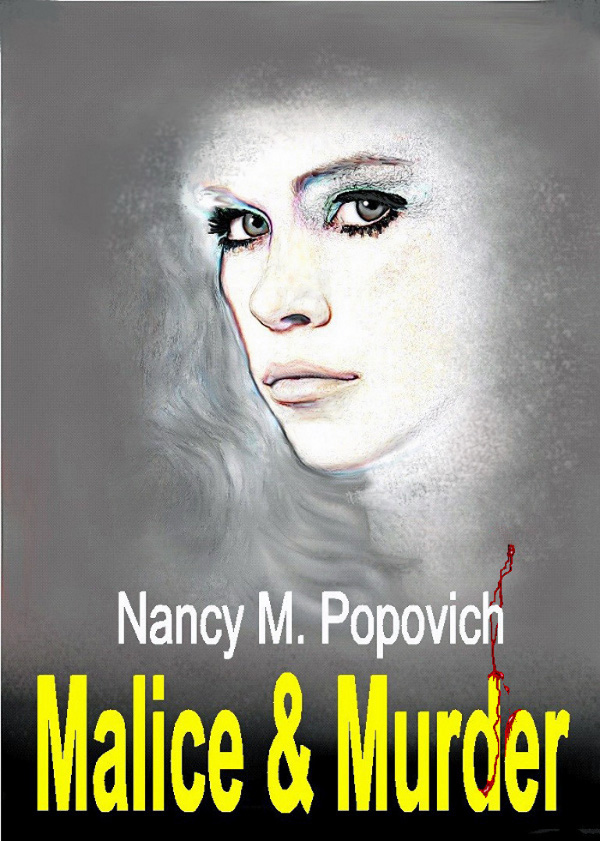
Nancy Popovich

Nancy Popovich’s latest book, Malice & Murder, developed from a spy series she wrote and is currently the focus of her marketing and promotion energy.  Read about her methods as well as the learning curve she experienced as an indie writer.

1. Pretend for a moment I’m a reader looking for my next book.  Pitch me your series in five to ten sentences.

If you enjoy reading the adventures of ordinary people caught in extraordinary circumstances, continuing characters that grow and evolve, and the escapades of a group of agents from various intelligence agencies, you will love the four books in the Spy Series (Spies & Lies, SecretsBacklash and The Puppet). The action moves them back and forth from Canada to England, and Paris.  Family ties take on new dimensions as our intrepid group reacts to the situations and revelations thrust upon them.  The climax of the last book in the series, The Puppet, is the springboard for my latest book, Malice & Murder.

2. What motivated you to become an indie writer?

See #3 below.

3. Have you been traditionally published? Why or why not?

I have not been traditionally published, and it was not for lack of trying.  I could paper a room with rejection slips – and not all agents and publishers answered my queries. After a length of time, I stopped beating my head against that particular brick wall. My stories sat on my computer for almost ten years.

In answer to #2, when I discovered that it was possible to indie publish, I took the plunge, sink or swim.

4. How have you liked self-publishing so far?

I like the control of self-publishing.  But it requires dedication, business sense and hard work.  Make no mistake, the fun part is writing, but self-publishing must be approached in a business-like manner.  A self-published author must do for themselves or hire assistance for all that is done by traditional publishers—professional editing, beta reading, cover design and publicity.

Continue reading

P.B. Dillon

P.B. Dillon, sci-fi author from New Zealand, turned away from traditional publishing after a bad experience.  He discusses that and which methods he now uses as an indie author.

1. Pretend for a moment I’m a reader looking for my next book.  Pitch me your book in five to ten sentences.

The Mage-Wrought Warrior is a fantasy series, the first two books of which are Mage-Wrought and Urgitwoods.  It’s the story of Lito, a hero like no other.  Given life by Garvin, he must struggle against impossible odds to save the life of Tyrealla, Garvin’s daughter – all the while wrestling with the riddle of his own existence.

It won’t be easy: they’re about to be attacked by the Kelits, fierce warriors who paint themselves blue and file their teeth.  Their leader is a Dark Mage who will stop at nothing to accomplish his goal.  The Dark Mage seeks immortality – which he believes he can gain through the use of a jewel that forms part of Tyrealla’s favorite necklace.

Added to this are the complications that Lord Cirovan believes Lito was made to protect him; Tyrealla treats him as if he were repulsive; and, because of how he came into being, Lito doubts that he qualifies as fully human.

Will Lito be able to help defeat the invading Kelits?  Will he be able to save Tyrealla from the Dark Mage?  Will he win her over, or learn to accept who and what he is?

2. What motivated you to become an indie writer?

Publishing has changed.  There’s no mystery to it any more.  If you are online, you have access to all the tools you need – and unless they think they’re on to a major bestseller, I’m not sure traditional publishing offers any additional value.

3. Have you been traditionally published?  Why or why not?

Yes.  I was hugely naive and thought it was the right thing to do at the start of my career.  It took ages; attracting an agent/publisher from New Zealand (where I live) isn’t easy, partly because of the geographic separation which should mean nothing but does.  And then, when I finally got my book deal, I realized that I no longer had control over the cover, the editing, or even the book title – and was still expected to do all the marketing myself.

It wasn’t a pleasant experience.  Turned me away from writing for a number of years.

As soon as the rights reverted to me I decided to start doing it myself.  That was mid-way through last year.  Now I’m in control and can do things my way, and it’s much better – and I’ve already sold more copies than the traditional publisher did.

Continue reading

Amy Peterson

Amy Peterson (writing plays under the pen name Ash Sanborn) aspires to be a playwright and has e-published her play, along with other writings.  She explains her varied and unique approach to networking and marketing.

1. Pretend for a moment I’m a director or producer looking for my next play.  Pitch me one of your plays in five to ten sentences.

The Feast of Jovi Bono (known to friends as TFOJB) is a new play, a challenge to actors to tell their stories in slam poetry/spoken word art.  It’s the story of forgiveness between mothers and daughters, exes, the life-beaten and the life that beat them.  What if a tent city moved next door to your house?  You’re just one person – what can one person do to help create life from destruction?

Most plays in this century do not have a narrator, but ours has a snarky chef to make us laugh and tie the feast together.  There’s a rugby game, cake getting all over, an expanding table that Malcolm (Jovi’s best friend) keeps tripping over, padparadsha oranges, and stories that light up the night.

2. What motivated you to become a playwright?

TJOJB has not had the usual development process mostly because of the slam poetry.  First I did send it to the developmental readers at my local theater (Spencer Community Theater in Iowa) and of the three readers, two of them had very helpful feedback.  I took many of their suggestions.  The next step would have been a staged reading in which I would have found a partner-director, assembled the cast (which usually consists of whoever shows up) and had one or at most two rehearsals.  The reading would be in front of an invited audience who would then provide further feedback.  This is where the process broke down: the slam poetry is actually quite a challenge to the actors and would require more than a rehearsal or two for any one to effectively perform it.  A cold reading would create the effect the early readers feared: that it would be a group of actors standing around reciting poetry.  If that’s the case, what on earth are we doing?

From there I sent the script to a few publishers, all of whom said it was not for them, but to please consider sending them any future plays.  They weren’t getting it.  The slam poetry cannot be confined to the page.  Then I received an email from Stageplays.com.  They were dipping their toes into e-publishing plays – a very new concept – and for a very reasonable price, I could partner with them to get the script out there, available to directors, along with my contact information so I could work with them on staging it.  TFOJB will have its premiere Labor Day weekend.  It is my hope that video and other promotional material uploaded on Stageplay’s website will help artistic directors and performance committees from theaters throughout the nation decide this is something they need to do for their theaters and for their communities.

Continue reading

Ted Gross

Ted Gross is a short story writer who’s busy with a variety of writing projects.  In this interview he offers a laundry lists of recommendations for indie writers to successfully get their books out there.

1. Pretend for a moment I’m a reader looking for my next book.  Pitch me your book in five to ten sentences.

Ancient Tales, Modern Legends, a short story collection by Ted William Gross, presents the reader with engaging and thought-provoking stories spanning the ages.  Covering subjects of love, loss, pain, desire, need, frustration and hope, these stories are meant to entertain as well leave an indelible impression upon the reader.

This is not a book to dismiss easily.  Enjoy it, grow with it.  You will, in turn, be haunted by it and the stories will remain with you long after you have closed the pages.

As almost all authors will tell you, their work in writing is a labor of love.  “Ancient Tales, Modern Legends” is a collection of stories that were written over many years, sometimes in great pain, sometimes with great joy, and is certainly a labor of love for both the author and the reader.  As colleagues read them, and some were published, I was prodded to publish the rest.  It is my hope that they will make you, the reader, stop and think, perhaps just about the waywardness of life.  They all are short stories in the pure art form of this genre.

2. What motivated you to become an indie writer?

I followed the industry for many years.  I have watched the indie book explosion.  I have also closely watched the trends.  My feeling is that the days of traditional publishers where they were the “bully” on the block has come to an end.  It is an age of “let the reader choose”.  You can write just so many query letters, have just so many books accepted and then cancelled on you before you either give up or find another avenue.  Indie book publishing offers another avenue.  And it is becoming more and more legitimate in the eyes of readers.  And certainly easier to actually go through the “publishing routine”.

In the end, simply a matter of practical thought and decision.

Continue reading

Gilly Fraser

Gilly Fraser has been traditionally published and so has seen both sides of the writing profession.  She advises indies to edit their books and work tirelessly to get them in the hands of readers.

1. Pretend for a moment I’m a reader looking for my next book.  Pitch me your book in five to ten sentences.

If my book Forbidden Love and Other Stories were to be reborn as a curry, it would be hotter than a korma, but not as spicy as a vindaloo.  It would probably be something like a Chicken Tikka Masala!  The four short stories in this collection have nothing in common except romance, and a touch of humor.

In Slippery When Wet, Maxine has to decide if she’s living a dream come true or a nightmare when the man of her fantasy turns up unannounced in a swimming pool.

In the title story Forbidden Love, rock star Jake Lee is drawn back to his roots and the girl who first inspired him.  But has he left it too late to go home?

In The Great Pretender, a tale of love and retribution is played out through the ages – but not unobserved.

And in Melissa and the Cowboy, lust can happen along at the most inopportune moment.

2. What motivated you to become an indie writer?

I love the independence of it.  It’s not an easy option – far from it – but I relish the opportunities and the freedom it affords to the writer.  I’m aware that this freedom is open to abuse by those who are content to publish sub-standard material and so it’s up to those writers who genuinely love their craft to produce the very best work possible.

3. Have you been traditionally published?  Why or why not?

Yes – I had nine books published by Mills & Boon under the pen-name of Rachel Elliot and I’m very proud of that.  I hope the rights will soon revert to me so that I can publish the backlist, though I’m quite keen to rewrite the books to some extent to make them fresh and up to date.

Continue reading

Susan Hira

With a business background, Susan Hira knows how to approach self-publishing from a variety of angles.  In this interview she suggests a laundry list of marketing tips, including how she uses YouTube to promote her book.

1. Tell me briefly about your book – what is it about and what motivated you to write it?

Here’s a long summary of the book:

In Susan Hira’s bold debut, The Werwolf on Eagle’s Nest Mountain, Hira places the fictional child of the most infamous Nazi high up in the mountains of a Minnesota ski resort.  Written for middle school children to young adults, this mystery thriller adds a dramatic twist on history.

All Nick, Jack, and Mike wanted to do was have an epic snow session at a large resort.  But due to budget constraints, their new history teacher insisted that the ninth grade winter class trip be held at the Eagle’s Nest Mountain Ski and Snowboard Resort, a dilapidated dump with only three lame lifts.  When the kids attempt to shred the prime fresh powder in the Arctic Bowl at the top of the mountain, a sniper attacks and forces them to jump from a lift in mid-air.

Before the assassin can strike again, the boys decide to investigate and discover a secret lair inside the mountain used to warehouse and redistribute stolen goods.  They realize that all clues lead to an elite guerrilla movement started near the end of World War II known as the “Werwolf” organization and the long-lost gold and art plundered by the Nazis during the war.  The ringleader of the newly formed gang, a direct descendant of a Hitler Youth Werwolf, is raising money to fund the new regime.  Like an assault rifle firing at close range, the boys’ beliefs of good versus evil are shattered as they navigate the emotional fallout from those trying to live down the infamy of their ancestors, some with pride, while others with shame.

As Nick, Jack, and Mike battle for their lives armed only with skis and snowboards, they must figure out whom to trust – or their electrifying ride down the mountain will be their last.

I wrote this book because I injured my knee snowboarding and had to take a season off to heal and do physical therapy.  My father and I are snowboarding buddies and always shredded together, so I missed our time talking and goofing off when I was sidelined.  He is very knowledgeable about World War II, so he served as the historical editor on the book which allowed us to spend time together in a different way than in the past.  I think we both impressed each other with our contributions to this book!

Writing the snowboarding/skiing scenes were a blast!  I felt like I was on the slopes again; it made missing the snowiest winter in years bearable.

2. How have your sales been?

Not enough to quit my day job.

3. You have not been published by a traditional publisher. Why?

I knew when I started writing it that traditional publishers would not want to take a chance on a book for young adults that features a lot of World War II history including the Werwolf organization.  Also, I have a business background and enjoy the other sides of self publishing including marketing, accounting, and cost analysis.

Continue reading

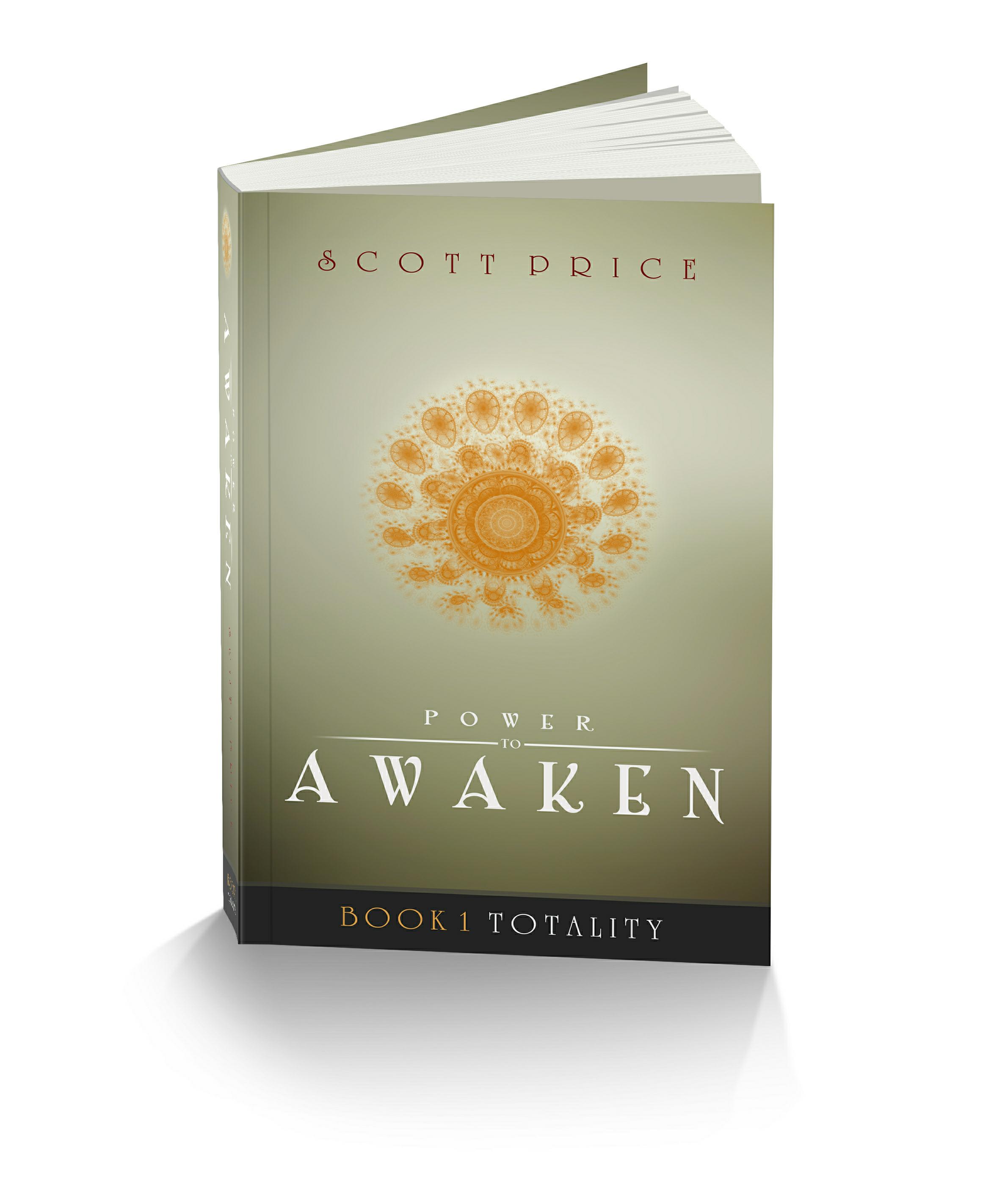
Scott Price

Scott Price writes in the spirituality and self-help genre and is the author of Power to Awaken: Totality.  His incremental approach to marketing is more focused on direct interaction with readers, and he shares his thoughts on that here.

1. Tell me briefly about your book – what is it about and what motivated you to write it?

I was motivated to create Power To Awaken: Totality to find a special place beyond the current mold of “pop-spirituality” and the simplicity of the message of being presented.  This book provides a retreat for the reader to find their own stillness, self-reflection and silence which leads them to their own experience based on who they are and what they believe to be true.  I just found in my reading that there is a lot of telling from a position of authority when “spirituality” cannot be told, it just is everything seen and unseen and it has to be known on a person by person basis.  Thus this book gives some topics for contemplation and then quickly exposes the importance of going beyond the mind and into a space of trust and deep listening to connect with higher powers.

2. How have your sales been?

This project has just been released.  Sales of the best quality PDF version of the book through my site have been the highest.

3. Have you been published by a traditional publisher?  Why or why not?

I am submitting to a couple hand-selected publishers in this specific genre and will see how it goes.  The best thing I can do here is let the quality and uniqueness of the content speak for itself.

Continue reading

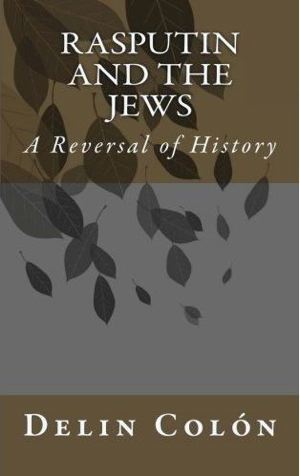
Delin Colón

Delin Colón has been both a writer and a promoter for other writers.  In this interview she discusses her well-researched book, Rasputin and The Jews: A Reversal of History, and her extensive recommendations for marketing and promoting.

1. Tell me briefly about your book – what is it about and what motivated you to write it?

My father had always told me that my great-great uncle was Rasputin’s secretary, and one of the few Jews permitted to live outside the ghetto called The Pale of Settlement.  Fifteen years ago, I found an out-of-print copy, in French, of my ancestor’s memoirs about Rasputin.  What amazed me were all the stories he told of Rasputin’s compassion for and aid to the oppressed Russian Jews, as well as his efforts to get the tsar to accord the Jews equal rights, as they were deprived of educations, most occupations and choice of residence.   Since some writers have disparaged my great-great uncle’s account, due to the amount of wild court gossip he included, I made it my mission to research and substantiate the specific incidents of aid to Jews that he documented.  After a dozen years, and reading over a hundred works in French and English, including many Russian works that were translated into French, I found that nearly every writer, from Rasputin’s daughter Marya to his killer, Yussupov, at least mentioned that he advocated equal rights for Russian Jews.  Some lauded him and others vilified him for this.  While some who knew him attempted to bring his humanitarianism to light, they were overshadowed by the largely anti-Semitic views and propaganda of the nobility, clergy and press.  I feel that, in my intensely documented book, I’ve accomplished his vindication.  Apparently, so far, all of my reviewers (by editors and readers alike) seem to agree.

2. How have your sales been?

Sales have been sporadic – some months great, others not so much.  But the book has a relatively narrow market, appealing to those interested specifically in Rasputin, Jewish history, anti-Semitism, etc.  In addition, I refuse to pay for a review and have not bought any advertising.  I have no doubt that those investments would bring a greater readership and attention, but it just doesn’t sit well with me.

Continue reading

David Beshears

David Beshears is a writer with a mission.  After his son was severely injured in an IED blast in Afghanistan, David started his own publishing company to raise funds for a community center for others who are disabled.  In this interview, David tells his story and discusses his extensive and insightful marketing experience and advice for indies.

1. Tell me briefly about your books – what are they about and what motivated you to write them?

First of all there’s Climb the Mountain, the story of our struggle to bring our son back from severe traumatic brain injury after he was injured in Afghanistan.  We spent six weeks at Walter Reed in Washington, DC, seven months at the Polytrauma facility in Palo Alto, California, and now home in Washington State.

While our focus these past few years has been our son, my literary interest is primarily science fiction, though I occasionally drift to fantasy, horror, young adult, and even dark comedy from time to time.  I’ve been writing since I was twelve.  I wrote a short story for extra credit when I was in the sixth grade.  The next day, my teacher handed me an empty theme book.  She told me to fill it up with stories.  The purpose in writing Climb the Mountain, and in publishing this and all my titles through our own company, was to support the creation of a community center for people with disabilities and their families.  After bringing our son home, we found there to be a critical need for such a facility.

2. How have your sales been?

Sales rise and fall depending on how actively I’m marketing.  When I’m pushing, I sell; when I’m not pushing, nothing.  So we’re in the 100s, not the 1000s.

Continue reading