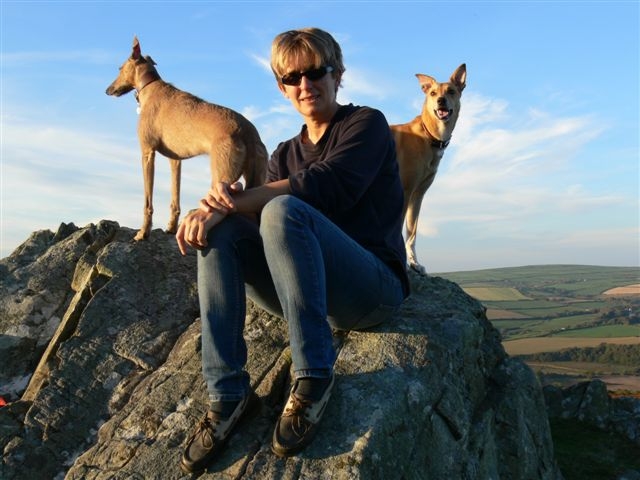
Rozsa Gaston

Rozsa Gaston approaches her writing with energy and a love for life.  She has also invested time in a unique marketing technique involving bookmarks and reverse psychology, and she shares some of her ideas here.

1. Tell me briefly about your books – what are they about and what motivated you to write them?

They’re about self-discovery and self-acceptance.  Paris Adieu, my latest book, has two themes: 1) how to be comfortable in your own skin and 2) how to fake it till you make it.  Paris Adieu’s heroine, Ava Fodor, is clueless about both at the start of the book.  By the end, she’s figured out a thing or two – thanks to the insights living in Paris has given her.  Ava studies French women, French food, French attitude – while French men study her.  By the end of Paris Adieu, she’s more or less transformed herself into the woman she wants to be.  And if she hasn’t entirely, at least she’s learned how to fake it till she makes it.  But where to take her act?  Back to New York, of course, where Ava grasps that her newfound sense of self will work for her in a way it never will if she stays in Paris.  After all, she’s not French.  What she is, is fabulous.  I’m still working on both themes.

2. How have your sales been?

Slouching toward fabulous, darling.  Why do you think I’m doing this interview?

3. Have you sought a traditional publisher?

I have and will continue to seek one.  In the meantime, I want to spend my time writing books, and sharing with like-minded people in cyberspace – which means all over the world – instead of sending out query letters that never get a response.  No interaction dulls my interest.
Continue reading

Jason King

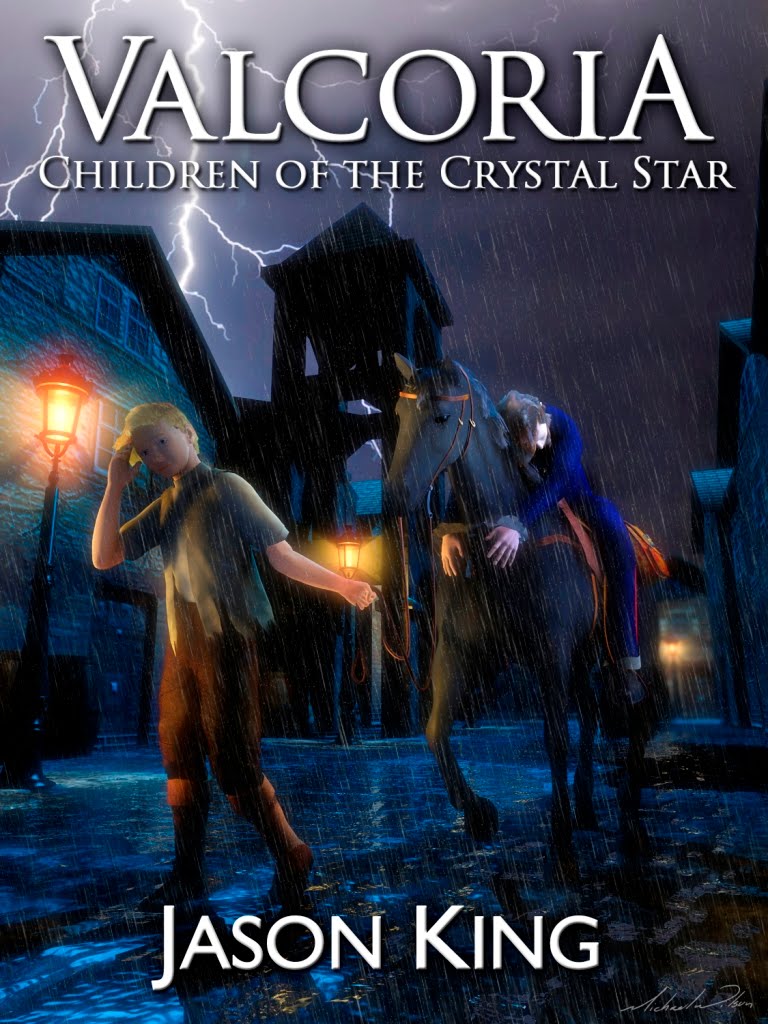
Jason King is a fantasy epic writer looking to carve out a unique niche in the genre.  Here he talks about his book, which marketing tools have worked, and which ones haven’t.

1. Tell me briefly about your book – what is it about and what motivated you to write it?

My book is called Valcoria: Children of the Crystal Star, and is a fast-paced, high-action, epic fantasy.  Those familiar with the works of Robert Jordan, Jim Butcher, and Brandon Sanderson will recognize a similar flavor in my writing.  Valcoria has several main characters, and often changes narrative points of view, but the plot centers around a teenage street-thief named Yuiv, and a soldier-swordsman named Sitrell who are thrown together when their city is attacked by an invading army.  Through the efforts of an anonymous sympathizer, they escape execution and are given vital information that they need to deliver to the leaders of their kingdom.

As they undertake an urgent quest to save the kingdom of Amigus, Yuiv and Sitrell soon learn that they are part of something much larger in scope than simple political intrigue or war.  They are players in a conflict between two gods, one striving to protect Valcoria and mankind, and the other seeking to rule and destroy it.

2. How have your sales been?

I’ve sold more e-books than printed copies, which is what I expected and in line with the current industry trends.  It hasn’t taken off the way I had hoped, but the blame for that is on my lack of marketing, something that I am trying to remedy.

3. You have not sought a traditional publisher.  Why?

Originally, I was pitching my manuscript to agents and publishers, but wasn’t having much luck.  A friend suggested I try Amazon KDP, and so I published Valcoria myself as something of an experiment.

Continue reading

Barbara Fleming

Barbara Fleming writes from personal experience with her book, The Backwards Buddhist: My Introduction to Dzogchen.  Here she talks about a variety of marketing techniques and why she would choose to only self-publish.

1. Tell me briefly about your book – what is it about and what motivated you to write it?

The beginning of the writing process was a challenge to write a book in a month.  The story, of necessity, was autobiographical so that it required no research.  Having just completed part one of recreating myself from the ground up by divesting myself of every spiritual thought or preconception I ever had from birth to age 50, it was a logical choice of subject matter.  The path I chose was so unlikely for me, it seemed a great example of the improbable becoming true.  My premise was I could choose to live in a world created by some perception of how things should be, I could just show up every day ready to embrace whatever arose, or I could experiment with any one of an infinite variety of combinations of the two.  Tibetan Buddhism is not the first place most westerners look to find their personal path, but it was mine, so that is what the journey is all about.  Finding a path with potential but no map and no fixed destination was my recipe for self-discovery.  Setting off on such a quest just because I could, and recording the journey to show the potential, complete with embarrassing pitfalls as well as triumphs, should anyone else want to do so, is the major point of the book.

2. How have your sales been?

Sales have been surprising.  My expectations were zero, so selling a few hundred was quite fine and I continue to sell.  The most surprising sales were triggered by the inclusion of my title on a college neuro-science course reading list, the subject being the Brain and Meditation, quite a hot topic these days.

3. You have not sought a traditional publisher.  Why?

I did not seek a traditional publisher because no one owes me any personal favors.

Continue reading

Paul Xavier Jones

Paul Jones is a sci-fi writer who draws influence from his own family and lifetime of reading.  In this interview he discusses why he’s avoided traditional publishing and which marketing techniques have not worked for him.

1. Tell me briefly about your books – what are they about and what motivated you to write them?

My Epic Fantasy “Ameca J” series is a trilogy that takes place in the fictional world of “Mythrania” and is based on my two daughters.  The inspiration comes from a lifetime of reading fantasy and science fiction, and a genuine desire to promote “family” values for my two girls who were always fighting.  So the inspiration was, what if it was only the two of them, trapped in an unknown, dangerous world populated by strange and savage creatures?  Would the eldest girl step up to the responsibility of keeping the younger safe?

My first “Blake Trubble” novel is a sci-fi/thriller, the idea for which came to me while I was researching the first Ameca J novel, and in particular the Large Hadron Collider experiment situated on the borders of France/Switzerland.  As a big fan of the Alien, Predator and John Carpenter’s “Thing” movies, I wanted to create a similar paranoia but this time in a sealed facility 15 miles in diameter and located underground.  Throw in two deadly enemies and 400 hostages and an unknown menace, and you have some great ingredients for a classic sci-fi/thriller.  Blake Trubble is the name of the main character, a major in the SAS, and allows me to use quite a few cheesy lines, such as “You want trouble, you’ll get it.  Major Trubble.”

2. How have your sales been?

Sales are slow.  But that is because I’ve self-published and self-promoted, which takes more time to do than actually writing the books themselves.

3. Have you sought a traditional publisher?  Why or why not?

I have not sought a traditional publisher.  There are several reasons why not, the first of which is the inspirational stories of Amanda Hocking and John Locke, both impressive success stories of people who have self-published and self-promoted.  Another reason is I have no patience for writing submissions and synopses; if I’ve just written a hundred thousand word novel, I am not going to try and condense it into two pages for some lazy publisher or agent.  Finally, the true judge of a good book should not be a publisher or agent, but rather the public.

Continue reading

Helen Carey

Helen Carey is both a traditionally published author as well as an indie.  She offers her views on both camps and what marketing techniques, including a YouTube video, she’s used in her own efforts.

1. Tell me briefly about your books – what are they about and what motivated you to write them?

I am best known for my London-based wartime novels, Lavender Road, Some Sunny Day and On a Wing and a Prayer which were all commissioned by Orion.  My neighbor in London had lived through the Second World War and her stories of people showing courage in adversity gave me the idea for a series of novels following the lives of a number of people living on one particular street.  In On a Wing and a Prayer one of the characters, Helen de Burrel, joins the SOE and is sent into Nazi occupied France.  A lot of readers told me that they had found the final scenes of that book very exciting as Helen evades the Germans to blow up the ships in Toulon Harbor.  I enjoyed writing those scenes too and it gave me the idea of writing a contemporary thriller or crime novel.

My latest novel, Slick Deals, is a pacy, exciting crime adventure set in Monaco, London and West Wales, where I now live.  The main characters are a chic London city-girl oil trader, Ella Crossley, and a rather scruffy American environmentalist, Nick Jardine.

2. How have your sales been?

All the books are selling well.  I am pleased with the progress so far.

3. You’re relatively new to self-publishing.  How have you liked it so far?

I have enjoyed having control over the content and design of the books.  Doing it yourself takes away all the frustrations about publishers failing to do things they had promised to do.  On the other hand there is the knowledge that if mistakes slip through they are your own fault!

Continue reading

Nancy Ellen Dodd

Editor and award-winning writer Nancy Ellen Dodd, M.P.W., M.F.A., teaches at Pepperdine University and has had extensive experience working with authors, including indies.  In this interview she touches on her work, what she’s learned during her career, and how to write your best work possible.

1. Describe your educational and writing backgrounds.

For more than 25 years I’ve invested thousands of hours of studying writing, including two graduate degrees: a master’s in Professional Writing (MPW, which is a multi-discipline approach to writing) from the University of Southern California and an MFA in playwriting at USC’s School of Theatre.  I have received numerous awards for my writing and some of my stories have been read on public radio.  I’ve also studied writing with several successful, award-winning writers.

My book, The Writer’s Compass: From Story Map to Finished Draft in 7 Stages, covers the full creative writing process. I’ve also published more than 130 articles and been editor of two print and two online publications.  Presently I’m academic editor of the Graziadio Business Review, a business journal for the Graziadio School at Pepperdine.  Currently, I teach screenwriting at Pepperdine University to undergraduate and graduate students.

2. Tell me briefly about The Writer’s Compass.

The Writer’s Compass is what I’ve learned after thousands of hours of studying writing and two graduate degrees.  Through this process I developed a story map based on the 3-Act structure chart and Aristotle’s and Freytag’s principles of dramatic writing to use as a tool for understanding your story.  For years I have been collecting and developing questions that writers should ask about their stories and I evolved these into a 7 Stage process for writing more efficiently with fewer drafts.  I’ve been using this method, teaching it in workshops, and using part of it to teach my screenwriting students for years.  I finally turned it into a book.

Continue reading

David Beshears

David Beshears is a writer with a mission.  After his son was severely injured in an IED blast in Afghanistan, David started his own publishing company to raise funds for a community center for others who are disabled.  In this interview, David tells his story and discusses his extensive and insightful marketing experience and advice for indies.

1. Tell me briefly about your books – what are they about and what motivated you to write them?

First of all there’s Climb the Mountain, the story of our struggle to bring our son back from severe traumatic brain injury after he was injured in Afghanistan.  We spent six weeks at Walter Reed in Washington, DC, seven months at the Polytrauma facility in Palo Alto, California, and now home in Washington State.

While our focus these past few years has been our son, my literary interest is primarily science fiction, though I occasionally drift to fantasy, horror, young adult, and even dark comedy from time to time.  I’ve been writing since I was twelve.  I wrote a short story for extra credit when I was in the sixth grade.  The next day, my teacher handed me an empty theme book.  She told me to fill it up with stories.  The purpose in writing Climb the Mountain, and in publishing this and all my titles through our own company, was to support the creation of a community center for people with disabilities and their families.  After bringing our son home, we found there to be a critical need for such a facility.

2. How have your sales been?

Sales rise and fall depending on how actively I’m marketing.  When I’m pushing, I sell; when I’m not pushing, nothing.  So we’re in the 100s, not the 1000s.

Continue reading

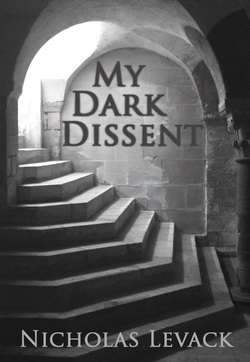
Nicholas LeVack

Nicholas LeVack has found success selling his short stories on the Kindle Direct Publishing platform.  On the verge now of releasing his first book, Nicholas discusses how he used social networks – both online and in real life – to broaden his market and move sales.

1. Tell me briefly about your books – what are they about and what motivated you to write them?

My currently released titles are My Self-Loathing Jailer, Downpour and My Dark Dissent, all of which are short stories that heavily use metaphors or conceits.  My Self-Loathing Jailer and My Dark Dissent are symbolic of personal struggles I dealt with in my youth and, in some capacity, still fight today.  They’re about how crippling insecurities can be in regards to their ability to isolate you from the rest of the world, even if just socially.  I don’t want to sound arrogant, but I think they’re good messages for those who suffer with depression or have experienced bullying, only they’re presented in a way an average reader might find a little less accessible, given the cryptic nature of the symbols and messages.  Downpour, though not a tragedy I’ve experienced personally, deals with an often dreaded situation and a state of mind – the absence of control in one’s life – I believe most of us have experienced at least once.

2. How have your sales been?

I honestly hadn’t expected my short stories to be a viable contender on the market at all.  However, I’ve at least made enough for my efforts to be justified.  And compared to some of the authors I’ve spoken to who’ve been e-publishing for longer than I have, I’d say I am doing pretty well for myself.  I believe the most important thing I can do to improve my sales is just keep writing, because readers will be more willing to spend their hard-earned cash on someone who looks established due to a lasting presence on the market. Fortunately, writing is what I do – I’m not just publishing my work to make a quick buck, it’s because writing is the only thing I’ve ever been able to consider as a career.  Even if I’ll never make ends meet with writing alone, I’ll strive for it as long as I am able, and I’ll keep putting out stories for people to either pass up or – and I’ll always be eternally grateful for this – actually purchase.

Continue reading

H.P. Stephenson/Kathryn Tedrick

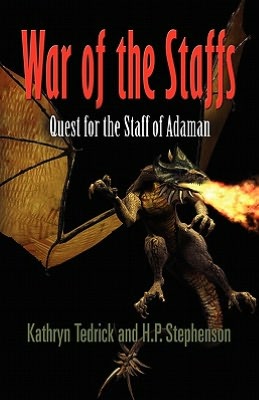
H.P. Stephenson and Kathryn Tedrick are the authors of War of the Staffs: Quest for the Staff of Adaman.  In this interview, they discuss why they use blogging and social media – and why they advise against using a marketing firm.

1. Tell me briefly about your book – what is it about and what motivated you to write it?

A powerful vampire wizard named Taza is brought through the void by Adois, a vengeful goddess who lends him her staff so that he can take over the planet, Muira, and turn it from good to evil.  He convinces a race of dark elves to take on the cloak of vampirism, but his careful planning is jeopardized when Prince Tarquin is born to fulfill a prophecy.  Tarquin, however, cannot succeed alone, and when Morganna, an Illanni noble woman, threatens Taza’s plans, she prevents her cousin from destroying the prophecy.

Tarquin is sent to the dwarvan militia to learn combat and survival skills by joining an elite group of soldiers known as the Borderers. He is championed by the wizard, Celedant, who begins his search for the Staff of Adaman – the only object capable of defeating the Staff of Adois.

Book one of the trilogy, The Quest for the Staff of Adaman, begins with the search for the first of two pieces of the ancient staff as Taza’s assassins hunt the prince to thwart the prophecy.  Tarquin, however, is not the only target.  Celedant must confront not only assassins, but powerful and dangerous creatures that Taza brings through the void to destroy him and the growing resistance among the dwarves, wood elves, and high elves.  But first, Celedant must take the final test to become a Master Wizard.  If he passes, he will be able to battle the Staff of Adois and the monster that wields it.  If he fails, not only will the world be overrun by evil, but Celedant will be lost in the Dragon’s Tear for all eternity.

[We] both love epic fantasy and have always wanted to develop our own series.

2. You’ve not worked with a traditional publisher.  Why?

We tried to go the traditional route, but although several seemed interested, they didn’t want to take a risk, or else did not handle epic fantasy.  So with so many people self-publishing e-books, etc., we decided to give it a try.

Continue reading

John J. Hohn

Author John J. Hohn has experience in marketing and sales that he’s been able to use, not only to drive plot, but to drive sales.  In this wide-ranging interview, John explains that background, as well as why he hired a publicist and why taking shortcuts can hurt indie writers.

1. Tell me briefly about your books – what are they about and what motivated you to write them?

I have published two books.  The first is a poetry chapbook entitled As I Was Passing By that I self-published in 2001.  I have been writing poetry since I was a boy and the time had come to publish a collection for my friends and family.

My novel, Deadly Portfolio: A Killing in Hedge Funds, was first published in the fall of 2010.  It was well-received by reviewers with established credentials on the Internet.  I began the book after retiring from my position as a financial advisor with Merrill Lynch in Winston-Salem, NC.  The book is the third novel for me.  The others are still in my file cabinet.  They represent my apprenticeship.

Deadly Portfolio flows out of my experience as a financial advisor, a position in which I had a unique perspective on the lives of my clients.  I came to know how they made decisions, how well they got along with their spouses, parents, and children, their trials at work or elsewhere in their lives.  I saw altruism and greed, generosity and miserliness.

The story is about four families and the tragedy that involves them all after one man, a financial advisor, bends the rules and makes an unauthorized trade in a client’s account.  His transgression sets off a string of events that ultimately claims the lives of three of the neighbors before Detective James Raker tracks down the killer and makes an arrest.

2. How have your sales been?

Sales have been steady.  I did not know what to expect at first.  I have sold approximately 500 copies, not including the Kindle version on Amazon.

3. What has been your experience with traditional publishing?

I tried to get an agent to represent my book for almost a year with no success.  I also sent queries to the few publishers who accept direct submissions.  I received a number of encouraging responses but no takers.

Continue reading